This video essay, featuring film scholar Leonard Leff, addresses the 1938 Alfred Hitchcock film The Lady Vanishes' British context and political underpinnings and the details and techniques that undeniably make it a 'Hitchcock picture.'
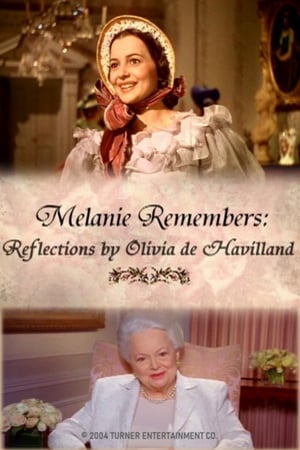
This documentary is featured in the 4-disc Collector's Edition DVD set, released in 2004, for Gone with the Wind (1939).
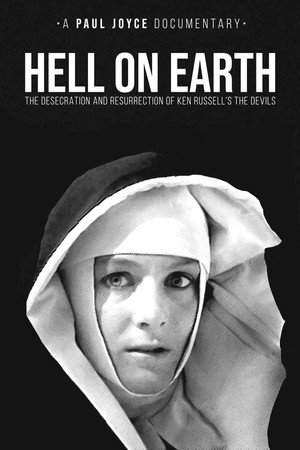
Hell on Earth is a documentary about Ken Russell's 1971 film, The Devils. Film critic Mark Kermode chats to Russell as well as two of the film’s stars, Georgina Hale and Murray Melvin. Also included are scenes that were cut from the released film for being too controversial.
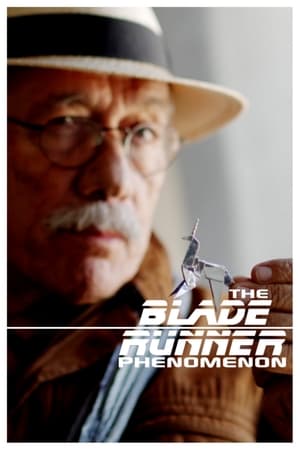
Ridley Scott's cult film Blade Runner, based on a novel by Philip K. Dick and released in 1982, is one of the most influential science fiction films ever made. Its depiction of Los Angeles in the year 2019 is oppressively prophetic: climate catastrophe, increasing public surveillance, powerful monopolistic corporations, highly evolved artificial intelligence; a fantastic vision of the future world that has become a frightening reality.
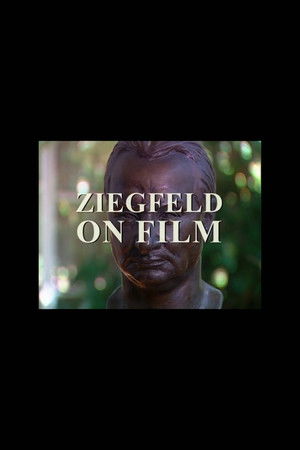
This short documentary includes interviews with Florenz Ziegfeld's daughter Patricia and actress Luise Rainer. Ziegfeld's life and the making of the film The Great Ziegfeld (1936) are discussed.
This short documentary film gives a little history of the parade, with film clips. But, its main focus is on the making of the 1947 classic holiday film "Miracle on 34th Street" and the 20th Century Fox shooting of the November 1946 parade and in Macy's department store.
When a group of filmmakers trek deep into the woods to investigate a missing persons case, they inadvertently start a chain of events that lead to horrific consequences.
An allegorical documentary about the workers of the world, whose common destinies and hopes for peace are symbolically united by the rivers that run through their respective lands. The film was shot on the Volga, the Mississippi, the Nile, the Yangtze, the Amazon and the Ganges and combines these images of five continents with the music of Dmitri Shostakovich and the poetry of both Bertolt Brecht and Paul Robeson.
Compilation of images by cameraman William Gericke (credited as producer and cinematographer), who for 50 years traveled around Brazil and recorded some rare images of the country's history in the 20th century.
This documentary by director Claire Billet and historian Christophe Lafaye details the massive and systematic use of chemical weapons during the Algerian War. Algerian fighters and civilians, sheltering in caves, were gassed by "special weapons sections" of the French army. The gas identified on military documents is CN2D, whose widespread use forced insurgents to flee "treated" sites, at the risk of dying there. The method is reminiscent of the "enfumades" used by the French expeditionary force during the conquest of Algeria in the 19th century. Between 8,000 and 10,000 such operations are believed to have taken place on Algerian soil between 1956 and 1962. This historical aspect is little known due to the difficulty of accessing archives, many of which are still classified, raising questions about memory, historical truth, and justice.
Filmed in Cordoba, Granada, Seville, and Toledo, this documentary retraces the 800-year period in medieval Spain when Muslims, Christians, and Jews forged a common cultural identity that frequently transcended their religious differences, revealing what made this rare and fruitful collaboration possible, and what ultimately tore it apart.
Whales have long been a profound mystery to us. They live in a world so removed from our own that we can barely imagine their lives. Their environment is different, their senses are different, their relationships are different. How might such almost alien creatures see the world?
The departure point for this film is a series of notebooks created during the Greek civil war of 1946-49 and first discovered years later, under an olive tree. Inside their pages, diary-like, deported women recount their experiences in Greek concentration camps. Many of them were active in the resistance under Nazi occupation. Actress Olympia Dukakis, who serves as the film’s narrator, was also the individual who originally called director Toska’s attention to the unique documents.
From the Barents Sea, a chill wind seems to blow constantly across a semi-deserted town at the edge of the world. Nevertheless, a little community holds out here. In a flawlessly filmed portrait of this extraordinary place, the theme linking the residents is their determination to chart their own course. Bardak was a marine, but his garrison broke up and his comrades sought a better life elsewhere. He stayed behind among the many empty buildings that are slowly but surely being consumed by the elements. Meanwhile, Dima, a young poacher, flouts as many rules as he can, but gives friendly directions to lost tourists and reads lovingly to his little daughter. Ferryman Alexander is locked in a silent generational battle with his teenage daughter Masha; her eyes are on the outside world. Further along, a little team of ships from the Second World War turns up, and a woman steadfastly runs a weather station.
Abrindo o Armário dives into the process of liberation and conquests of the gay movement in Brazil. Through interviews, archival images and artistic performances, the film shows how homosexuals from different generations faced resistance, conquered spaces and fought for the right to construct a political, social and collective identity.
Full-length documentary about the mystery of the hands of Che Guevara, Victor Jara and Juan Peron. What happened, what is hidden, what is known, what is unknown, and what about it’s the symbolic effects.
With the most tech startups and venture capital per capita in the world, Israel has long been hailed as The Startup Nation. WIRED’s feature-length documentary looks beyond Tel Aviv’s vibrant, liberal tech epicenter to the wider Holy Land region – the Palestinian territories, where a parallel Startup Nation story is emerging in East Jerusalem, Nazareth, Ramallah and other parts of the West Bank, as well as in the Israeli cybersecurity hub of Be’er Sheva. And we will learn how the fertile innovation ecosystem of Silicon Wadi has evolved as a result of its unique political, geographical and cultural situation and explore the future challenges – and solutions – these nations are facing.
Berlin Super 80 is a compilation of 18 short movies shot in Super 8 by West German experimental film makers during the late 1970s/early 80s. Featuring music by Malaria, Reflections, Einstürzende Neubauten, Frieder Butzmann and Die Tödliche Doris. It’s a hit or miss affair with films that range from the brilliant to the banal. Well worth watching for the flashes of genius.
A documentary feature that reveals the creative process of Chicago moviemakers. Using the city's famous river as a location, directors are placed in a variety of boats and share stories of how Chicago has influenced their careers.
Dziga Vertov-directed Soviet newsreel covering: A bet is placed on the outcome of the Trial of the Socialist Revolutionaries / The verdict / People in streetcars and on the street / A crashed aircraft / Reconstruction of streetcar line 13 / Peacetime use of tanks – airport construction work.