Film on presidential campaigns and the right to vote. Used as educational material in American classrooms.
In the final days of the American Civil War, an emigre Hungarian military officer attempts to map the situation of the enemy. Many veterans of the 1848 War of Independence in Hungary fought on the northern side. Experienced Fiala, Boldogh who struggles with homesickness and the reckless Vereczky all experience their enforced emigration in different ways and news of impending peace elicits different reactions from them all.
During the War of 1812 against Britain: General Andrew Jackson has only 1,200 men left to defend New Orleans when he learns that a British fleet will arrive with 60 ships and 16,000 men to take the city. In this situation an island near the city becomes strategically important to both parties, but it's inhabited by the last big buccaneer: Jean Lafitte. Although Lafitte never attacks American ships, the governor hates him for selling merchandise without taxes - and is loved by the citizens for the same reason. When the big fight gets nearer, Lafitte is drawn between the fronts. His heart belongs to America, but his people urge him to join the party that's more likely to win.
Belinda Simpson is now a doctor in a small Missouri town where an unknown plague is spreading fear and resentment amoung the townspeople. One local resident thinks the illness was spread from the town orphanage and wants to see it shut down. Belinda struggles to make sense of the disease and God's plan for the beleaguered town.
Kingdom of Hawaii, 1866. Fearful that leprosy would spread throughout the archipelago, the king banishes the sick to the island of Molokai. In 1873, the Belgian Catholic missionary Damien de Veuster arrives on the island to help improve the lives of its unfortunate inhabitants.
Back in the kitchen of the Gabriel family, the country is now in the midst of the general election for President. In the course of one evening in the house they grew up in, history (both theirs and our country's), money, politics, family, art, and culture are chopped up and mixed together, while a meal is made around the kitchen table.
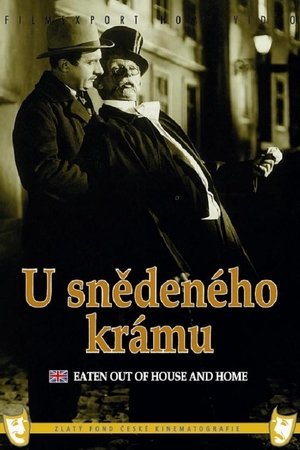
Based on a Anton Chekhov short story, this slight tale has some good moments as the drama of a young boy's journey unfolds. The lad comes from peasant stock, and one day his family decides it would be best for him to go live with his uncle in the city. The only problem is that the city is all the way across the Russian steppes, and at this time in history, that arduous journey could only be undertaken by horse and carriage. Reminiscent of the American pioneer wagon trains heading West, the tale lacks any attacks from hostile forces but is filled with charming vignettes. In one part of the journey, the boy comes across some fishermen along a river, harpooning their catch for the day. In another segment, he is entertained when some folk dancers do a lively show. But in general, it is too long and unmomentous a journey to hold attention well for nearly two hours.
The end of the Franco-Prussian war (1870-71) saw the birth of the panoramas of war, huge circular paintings depicting scenes of war, cruelty and desolation that were contemplated by thousands of spectators, a kind of inmersive static newsreels, a mass media prior to the era of mass media, a virtual reality on canvas.
Lawman Wyatt Earp and outlaw Doc Holliday form an unlikely alliance which culminates in their participation in the legendary Gunfight at the O.K. Corral.
The little-known story of a deadly race massacre and carefully orchestrated insurrection in North Carolina’s largest city in 1898 — the only coup d’état in the history of the US. Stoking fears of 'Negro Rule', self-described white supremacists used intimidation and violence to destroy Black political and economic power and overthrow Wilmington’s democratically-elected, multi-racial government. Black residents were murdered and thousands were banished. The story of what happened in Wilmington was suppressed for decades until descendants and scholars began to investigate. Today, many of those descendants — Black and white — seek the truth about this intentionally buried history.
After the death of Bela, Pechorin was unwell for a long time, and then left the fortress and Maxim Maximych and left for Georgia. Since then, the headquarters captain had no news of his friend, often recalled and carefully carried his diaries in his wanderings. Five years have passed... Once at a post station near Vladikavkaz, Maxim Maximych with delight learns that Grigory Pechorin also came here. The long-awaited meeting brings an unbearable pain and bitterness of disappointment to the old warrior. In his hearts, he mercilessly parted with the travel notes of the ensign. And his random companion finds on the yellowed pages the story of the soul of an amazing, extraordinary person who brings misfortune to others all his life.
The continued Westward journey of settlers Missie and Willie Lahaye. Their roots now firmly planted as they set up homestead in the far West, Missie begins to realize her passion for teaching as Willie cares for the couple's young daughter Kathy while expanding the family ranch with a little help from sons Jeff and Matthew. When the frontier railroad comes to town, the pleasure of a long-promised visit from Missie's father Clark is suddenly offset by the tragic death of young Kathy. As the untimely demise of their beloved daughter begins to drive an emotional wedge between Missie and Willie, the devastated father unexpectedly accepts an offer made by the powerful Samuel Doros to assume the role of town sheriff. Their faith shaken and their once close-knit bond suddenly torn asunder, Missie and Willie desperately attempt to bring their crumbling family back together as son Jeff faces a series of dangers while hopelessly falling for Doros' beautiful daughter Colette.
For six hundred years Sweden had controlled most of Finland until the war with Russia that ended in 1809, when Finland became a Grand Duchy of the Russian Czar. This period drama is set during that early 19th-century war and focuses on one of its heroes, Sven Tuuva. Sven is a decent yet not too brilliant soldier, and his exploits are partly balanced here by the charms of a compatriot.
The love story of young Countess Natasha Rostova and Count Pierre Bezukhov is interwoven with the Great Patriotic War of 1812 against Napoleon's invading army.
The story of George Moses Horton, an enslaved poet in 19th-century North Carolina who used his writing to resist bondage and seek freedom.
An intense and imaginative artist, revered Dutch painter Vincent van Gogh possesses undeniable talent, but he is plagued by mental problems and frustrations with failure. Supported by his brother, Theo, the tormented Van Gogh eventually leaves Holland for France, where he meets volatile fellow painter Paul Gauguin and struggles to find greater inspiration.
English General Charles George Gordon is appointed military governor of Anglo-Egyptian Sudan by the Prime Minister. Ordered to evacuate Egyptians from the Sudan, Gordon stays on to protect the people of Khartoum, who are under threat of being conquered by a Muslim army.
In 1818, high-spirited young Fanny Brawne finds herself increasingly intrigued by the handsome but aloof poet John Keats, who lives next door to her family friends the Dilkes. After reading a book of his poetry, she finds herself even more drawn to the taciturn Keats. Although he agrees to teach her about poetry, Keats cannot act on his reciprocated feelings for Fanny, since as a struggling poet he has no money to support a wife.
A virtuous and passionate girl falls in love with a cynical but a dashing aristocrat.
A psychological, heart-wrenching love story that provides a unique and inside look at Charles Darwin. Torn between faith and science, he struggles to finish his legendary book "On the Origin of the Species," which goes on to become the foundation for evolutionary biology.