Enfants de Daech, les damnés de la guerre
This documentary picks up after the horror has ended. Almost 500 teens are in grief as 69 of their friends have fallen. They've been shot dead. How could this island ever become a safe place again? Here, we see how Utøya was first the safest place on Earth to the most terrible and how it was restored and stands as a beacon of hope for the survivors and the Norwegian people.
Using archival footage, Robbie Martin examines the media's complicit role in the false narratives surrounding the 2001 anthrax attacks
On the morning of 3rd March 2004, Spain experienced the worst terorist attack in Europe since the Lockerbie bombings of 1988. A series of explosions in Madrid killed 191 people and injured over 1, 500.
The Director Mohammed Soudani comes back to Algeria after 30 years with the photographer Michael von Graffenried to visit the Algerians he had photographed between 1991 and 2000 without them knowing it.
Inspired by the student revolutions of 1968, two women in Germany and Japan set out to plot world revolution as leaders of the Baader Meinhof Group and the Japanese Red Army. What were they fighting for and what have we learned?
This documentary looks at the surge in political violence through the story of the 1995 Oklahoma City bombing, showing the roots of anti-government sentiment and its reverberations today, along with the emotionally charged warnings of those who suffered tragic losses in the deadliest homegrown attack in U.S. history.
"Klein, a German Case" - The inside story on international terrorism related by an ex-terrorist Hans Joachim Klein. Through interviews, archive footage and reconstitution that clarify certain events, Klein reveals the workings of international terrorism : the underground networks, his participation in the OPEC bombing in Vienna, training camps, the manipulating role played by certain governments and the cynicism of those underground shadows that terrorized the world for 20 years.
On December 21, 1975, six terrorists from the Revolutionary Cells, led by Carlos 'The Jackal' forced their way into the conference room of the OPEC headquarters in Vienna and took seventy ministers hostage. A gun battle with the police ensued, and three people were killed. One terrorist was seriously wounded. The terrorists managed to escape to Algiers with a few hostages and the wounded man. There the hostages were released. The wounded terrorist was Hans-Joachim Klein. At the moment that Klein arrived in Algiers, he decided to quit terrorism.
During the first days after the 1973 Chilean coup d’état, the political leadership of the Popular Unity government was arrested and transferred to Dawson Island, Magallanes Region, extreme south of Chile and the mainland. The wives of the then political prisoners began an incessant effort to find out the whereabouts of their husbands and then try to return them alive. In these circumstances, they meet and spontaneously organize into a group they call the “Dawsonianas.”
In October 1970, members of the Front de Libération du Québec (FLQ) kidnapped and murdered Minister Pierre Laporte, part of an unprecedented crisis in Quebec. Fifty years later, Félix Rose tries to understand what could have led his father and uncle to commit such crimes. Thanks to his uncle Jacques, who agrees for the first time to speak on the subject, and to the traces left by his father Paul, he revives the heritage of a Quebec working class family. The fruit of ten years of research, Les Rose allows us to revisit a time and people that we knew through clichés, and gives a glimpse of the experiences of a rebellious youth and the crimes that followed.
In June 1934, Hitler decided to eliminate the powerful leadership of the SA. With his pistol drawn, he entered the Hotel Hanselbauer in Bad Wiessee on June 30, where his friend Ernst Röhm and other SA functionaries were staying. The three-day murder operation within the SA's own ranks has gone down in history as the "Night of the Long Knives".
During WWII, the Japanese army developed experimental balloons able to cross the Pacific Ocean and reach the West Coast of North America in 3-6 days. Armed with explosives, they were given the code name fu-go, or fusen bakudan (“fire balloons,” or balloon bombs) in an attempt to instill a culture of fear like that caused by the far more deadly American firebombing of Japanese cities. The U.S. responded by enacting a censorship campaign, requesting newspapers avoid reports of fu-go landings or sightings. Living near the remains of a fu-go launch site in Fukushima Prefecture, Takeuchi mimics their flight take-off using a drone camera, and, traveling to North America, follows their arrival across the shoreline and rural landscapes, using a bat’s echolocation as narrative device to place fu-go and Fukushima as echos across history.
A reflection on the assassinations of social democrat politician Fernando Buesa Blanco and his bodyguard Jorge Díez Elorza, perpetrated by the terrorist gang ETA in Vitoria-Gasteiz, Basque Country, Spain, on February 22, 2000.
FEATHERED COCAINE is not a wildlife documentary. It is a documentary about the international trade of falcons. After the trade of drugs, people and weapons, smuggling falcons is ranked No 4 in the list of the most profitable illegal trades. Most people are not aware that the effects of the falcon trade has exerted huge influence over thousands of years on politics, economy and society all around the world. FEATHERED COCAINE reveals in an investigative way the contexts between the trade of falcons and historical events, where royal dynasties, institutions like the CIA and the KGB, the oil industry and Al Queda were involved. This documentary was filmed and released shortly before the 'supposed' execution of Osama bin Laden, who CIA Operative Alan Parrot & his Team had met with 6 times between 2004 & 2010. As of October 11th, 2020.
This documovie delves into the history of the NYC graffiti movement, tracing it thru 3 generations of well known writers. In depth conversations with ALI, BAMA, CRASH, KET, PART ONE, STAN 153yb, TERROR 161 and ZEPHYR classify this as sureshot cult classic
This short film focuses on the USS Franklin, an aircraft carrier that in March 1945 suffered heavy bombing damages and a massive toll on servicemen before returning to the U.S.
Before his journey into exile Jacobo Arbenz, the overthrown President of Guatemala, is presented to photographers stripped down to his underwear: an image seen around the world. Arbenz had led the successful 1944 revolt against the military dictatorship, a regime that had oppressed Guatemala since colonialism. Arbenz, the son of Swiss immigrants, was celebrated as a national hero. Elected President in 1950, Arbenz was not a member of any party - he didn't issue any manifestos. But he began to fulfill his promises - farmers got their own land. 'The first act of justice since colonial times,' said Arbenz. In the early 1950s, with the Cold War intensifying, then Vice President Richard Nixon said, 'Arbenz is not a Guatemalan President.' Nixon called him 'a foreigner, manipulated by foreign powers.' The young President of Guatemala was soon overthrown, declared a traitor, and chased out of the country.
In Portugal, during the night of April 24-25, 1974, a peaceful uprising put an end to the last government of the Estado Novo, the authoritarian regime established in 1933 by dictator António de Oliveira Salazar (1889-1970), paving the way for full democracy: a chronicle of the Carnation Revolution.
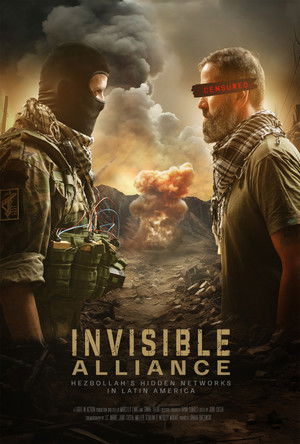
A Hezbollah suicide bomber breaks silence to reveal the inner workings of the organization and his involvement in a narcotrafficking alliance with the FARC. Discover the hidden agendas between Iran, Latin American governments and organized crime.