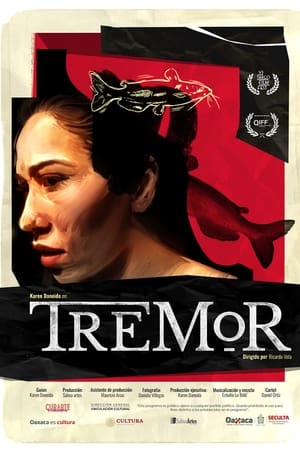
Short documentary about a transexual sex worker.
This pioneering documentary film depicts the lives of the indigenous Inuit people of Canada's northern Quebec region. Although the production contains some fictional elements, it vividly shows how its resourceful subjects survive in such a harsh climate, revealing how they construct their igloo homes and find food by hunting and fishing. The film also captures the beautiful, if unforgiving, frozen landscape of the Great White North, far removed from conventional civilization.
Working men and women leave through the main gate of the Lumière factory in Lyon, France. Filmed on 22 March 1895, it is often referred to as the first real motion picture ever made, although Louis Le Prince's 1888 Roundhay Garden Scene pre-dated it by seven years. Three separate versions of this film exist, which differ from one another in numerous ways. The first version features a carriage drawn by one horse, while in the second version the carriage is drawn by two horses, and there is no carriage at all in the third version. The clothing style is also different between the three versions, demonstrating the different seasons in which each was filmed. This film was made in the 35 mm format with an aspect ratio of 1.33:1, and at a speed of 16 frames per second. At that rate, the 17 meters of film length provided a duration of 46 seconds, holding a total of 800 frames.
Filmmaker Alain Resnais documents the atrocities behind the walls of Hitler's concentration camps.
Immersion in Mustapha's mind during the lockdown period.
Short film documenting the San Francisco Youth for Service program.
This short cautionary training film examines dangers associated with earthmoving equipment operation, showing many simulated accidents on construction sites.
V útvare
Vnuci Antoina de Saint-Exupéryho
Three generations of women represent the past, present and future of hairstyling. Lisa Bruno, Jessica Fera and Keyra Bruno navigate a journey of growth in their careers and family; leading and learning from one another within their satisfyingly creative world of colours and cuts.
"All sounds travel in waves much the same as ripples in water." Educational film produced by Bray Studios New York, which was the dominant animation studio based in the United States in the years surrounding World War I.
3 guys, 44 days, 11 countries, 18 flights, 38 thousand miles, an exploding volcano, 2 cameras and almost a terabyte of footage - a short devoted to the food of the world.
Dos Islas is a poetic story about old age, family and the bond between a granddaughter and a grandmother. The woman, who just turned 102, tells stories about her past and childhood. In a literary and visual way she describes the most minute details. The film dazzles the viewer with love and optimism, the time passes slowly between the two islands, which might be real people, real places or the products of the main character’s imagination.
In the decade they were operated, Union Pacific's 8500-series Gas Turbine Electric Locomotives earned two nicknames: UP dubbed them the "Super Fleet" for obvious reasons as they were the largest, most powerful locomotives ever employed by the railroad. More often the Turbines were referred to as "Big Blows" due to the deafening roar of their engines. Thirty of these GE-built giants were delivered to the UP between 1958 and 1961. Used primarily between Ogden, Utah and Green River, Wyoming, where the tough grades of the Wasatch Mountains required UP's sturdiest power, these monsters could log up to 10,000 miles a month hauling heavy mixed freight and coal trains. The 8500 series were permanently coupled six-axle units running on C-C trucks, and their prime mover was the most powerful ever used in a locomotive. The operating weight for the A and B units combined was close to 850,000 pounds, yet they could attain speeds of up to 70 mph!
Have you ever passed a track gang and wondered what all those machines actually do? Here's your answer and more. You'll visit a tie replacement and surfacing gang to witness the amazing parade of equipment as it progresses down the track. Closeup shots explain what each machine does. Then you'll tour a major shop to see in detail how coal hoppers are built. Next you're off to view undercutting machines cleaning ballast on BNSF. Did you ever wonder what it's like to work as a dispatcher? You'll visit a Norfolk Southern facility where the chief dispatcher explains the operation. Returning to BNSF, you'll see one of the most awesome pieces of railroad equipment: the P-811 concrete tie layer.
R31
A filmmaker follows her grandparents’ daily life after her chain-smoker and alcoholic grandmother is forced to stop drinking beer for a month.
Havoc is the original motorsport disaster series - often emulated but never equalled in its ability to amuse, entertain and even shock! Now in Best of Havoc 1 we present the very best crashes from many thousands of hours of original motorsport archive in one entertaining and often hilarious DVD. There's metal curling madness in all its forms, trucks doing the monster mash, Formula Fordsters taking up aeronautics, mud-wrestling quads, the Formula 2 'take-off' at the Nurburgring, Bike GP rodeo riders, Paris-Dakar dune-busters, manic motocrossers and the 10 out of 10 performances of the nutty Norwegian rally brigade - these are just a few of over 200 megaprangs that have crashed their way into the Havoc hall of fame!
TV movie about dance rites in the Philippines
Based on Eimear Ryan’s essay ‘The Fear of Winning’, three successful female athletes explore how being physically courageous, unapologetically competitive and deeply passionate in team sport can unlock a freedom to really occupy your own skin.