This is not a film about gun control. It is a film about the fearful heart and soul of the United States, and the 280 million Americans lucky enough to have the right to a constitutionally protected Uzi. From a look at the Columbine High School security camera tapes to the home of Oscar-winning NRA President Charlton Heston, from a young man who makes homemade napalm with The Anarchist's Cookbook to the murder of a six-year-old girl by another six-year-old. Bowling for Columbine is a journey through the US, through our past, hoping to discover why our pursuit of happiness is so riddled with violence.
Raise Her Up follows the historian, advocate, and artist creating a statue of Armine Gosling, marking 100 years of womens suffrage in Newfoundland.
A Hong Kong Newt once resided in a narrow irrigation channel, believing it would be confined there forever. However, an unexpected flood swept it away, carrying it through a dark passage until it arrived in a serene, azure pond. The newt found companionship among its kind and thrived in the aquatic haven. But as it ventured back onto land after the breeding season, it encountered unforeseen threats.
What is it like to be HIV-positive in Russia? The authors of the film spent several days with the HIV-infected characters Alexandra and Olesem and made a film about how they live. This is a kind of chronicle - the characters in the frame live their lives. Moments of sadness, moments of joy. They live as they know how and as they really live.
Menhaden: The Most Important Fish in the Bay examines the role of a little-known, oily, little fish in the Chesapeake Bay. From its original concept as a classic man-versus-environment story, the film evolved to reflect the complexity of sustaining a menhaden fishery that many diverse interests depend on. The outcome: a story that seamlessly weaves together different perspectives on the menhaden fishing industry and its culture utilizing engaging personal vignettes, scientific data and creative visual storytelling techniques. Techniques include archival footage blended with cinematic live-action footage, musical performances and original, handmade animations.
I'm afraid of planes and even living next to an airport, I couldn't film almost any flying around here. I have to fly in a few months and the film is a kind of tool to pretend that I have control over whatever happens. I'm already talking about myself, I'm sorry.
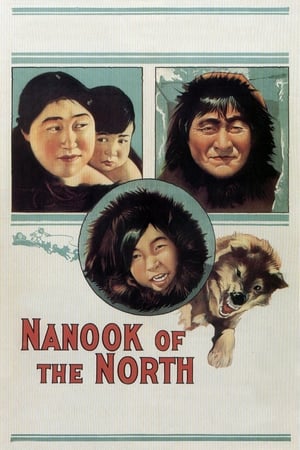
This pioneering documentary film depicts the lives of the indigenous Inuit people of Canada's northern Quebec region. Although the production contains some fictional elements, it vividly shows how its resourceful subjects survive in such a harsh climate, revealing how they construct their igloo homes and find food by hunting and fishing. The film also captures the beautiful, if unforgiving, frozen landscape of the Great White North, far removed from conventional civilization.
A promotional video produced by the Alberta government in 1975, "The time of the tar sands", featuring Gordon Pinsent. credit: Archives of Alberta.
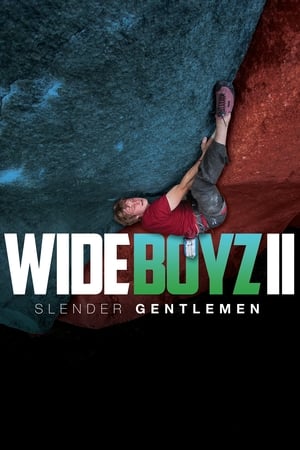
After their success climbing the world’s hardest offwidth, the Wide Boyz, Pete Whittaker and Tom Randall, embark on their next crack climbing mission. This time their sights are set on the thinner end of the crack climbing spectrum. Their goal is the mighty Cobra Crack in Squamish BC, considered to be the hardest finger crack in the world. First climbed by Canadian ‘rock star’ Sonnie Trotter after battling it out with Didier Berthod, the route hit the media spotlight in the film First Ascent. With no local hard cracks to train on, the Wide Boyz refit their underground training dungeon and commit to a year of torturous finger training. With only a short trip to Canada planned, the Boyz face their biggest challenge yet against the sharp granite bite of the mighty Cobra Crack!
Georg is an Austrian retiree whose mother witnessed the crash of an Allied B-17 near their home during World War II. When he takes up metal detecting to find the wreckage, a growing fascination leads him to embark on a heartfelt mission, not only to research the backgrounds of the American crewmembers who parachuted off the plane into enemy territory, but to locate their descendants, to bring them to his Austrian town on the 75th anniversary of the crash, to introduce them to the townspeople who helped their fathers, and to unite his town in remembrance. It’s a story of empathy, resilience, and the enduring power of human connection.
Mohammed Alsaleh, a young Syrian refugee, is rebuilding his life after being granted asylum in Canada. In Vancouver, he counsels and helps resettle newly-arrived Syrian refugee families so that they may find new homes and begin again.
Narrated by Bill Slater, this short black & white educational film is about sporting and outdoor activities on the majestic Hudson River in New York State.
Gil Cardinal searches for his natural family and an understanding of the circumstances that led to his becoming a foster child. An important figure in the history of Canadian Indigenous filmmaking, Gil Cardinal was born to a Métis mother but raised by a non-Indigenous foster family, and with this auto-biographical documentary he charts his efforts to find his biological mother and to understand why he was removed from her. Considered a milestone in documentary cinema, it addressed the country’s internal colonialism in a profoundly personal manner, winning a Special Jury Prize at Banff and multiple international awards.
A short documentary illustrating how art can influence public perception towards environmental issues. Green Patriot Posters is a highly acclaimed multimedia design campaign that challenges artists to deepen public understanding and ignite collective action in the fight against climate change. So far, it has reached five million people through print media, public space and digital culture. The film features interviews with key Green Patriot Posters contributors (Shepard Fairey, Michael Bierut, DJ Spooky, Mathilde Fallot) and its founders (The Canary Project, Dmitri Siegel).
This short film from the Perspective series highlights social and economic development in Haiti circa 1957. It depicts customs and traditions used to pass along the history of a people, and offers a look into their daily lives — lives that looks very different from their experiences today.
This film was originally made for the International Conference on Human Settlements (HABITAT) which was held in Vancouver, Canada. Taking as an example the production and marketing of bananas and the prevailing conditions in the world market - dominated by the virtual monopoly of three multinational companies -, it is shown how as a result of this monopolistic domination, the Costa Rican State has stopped receiving equitable taxes for what that, in the end, the housing and public services offered by the country are characterized as those of an underdeveloped society. The attempt made since 1974 by a group of banana-producing countries, aimed at improving sales prices to multinationals and raising taxes; The resulting “banana war” are examples of the enormous efforts that small banana countries have to make to achieve greater justice in the prevailing market conditions.
In this short documentary, a Musqueam elder rediscovers his Native language and traditions in the city of Vancouver, in the vicinity of which the Musqueam people have lived for thousands of years. Writing the Land captures the ever-changing nature of a modern city - the glass and steel towers cut against the sky, grass, trees and a sudden flash of birds in flight and the enduring power of language to shape perception and create memory.
A look at nudist resorts in the predominantly English-speaking parts of Canada.
A comic, biting and revelatory documentary following a small group of prankster activists as they gain worldwide notoriety for impersonating the World Trade Organization (WTO) on television and at business conferences around the world.
Documentary on the Mayan culture.