For a long time, it was believed that genes were the decisive factor in a person's development. However, the latest scientific findings in the field of epipgenetics have shown that the respective expression of genes is influenced by external circumstances and can even be specifically controlled.
Inside the dramatic search for a cure to ME/CFS (Myalgic Encephalomyelitis/Chronic Fatigue Syndrome). 17 million people around the world suffer from what ME/CFS has been known as a mystery illness, delegated to the psychological realm, until now. A scientist in the only neuro immune institute in the world may have come up with the answer. An important human drama, plays out on the quest for the truth.
Sous-marins nucléaires : Les Armes de l'ombre
Since the invention of the wheel we have striven to make great machines that would make our lives more productive and efficient, however we will almost certainly never invent a machine as efficient as the human body. Each component of the machine is given in depth attention with the same clarity and insightful touch you have come to expect from the Eyewitness books. There are over 206 bones, half of which are in the hands and feet. A total of 640 muscles contract and exert pressure, working together with our skeleton to turn power and strength into movement and precision. Our bodies are incredibly resilient machines, and conversely life is very fragile. After all, unlike any other, this machine can reproduce itself.
A documentary that explores the natural world of the sea, from the single-celled organism to more complex forms of life, OCEAN ORIGINS was originally filmed in the IMAX large format, which adds a crispness and clarity to the images. This documentary film seeks to examine the process of evolution by looking at the many creatures of the sea that can illustrate the way multi-cellular life emerged over the course of four billion years. OCEAN ORIGINS is a creative film that uses fascinating documentary footage to look at scientific theories and principles in an interesting manner
15 Ph.D. scientists expose devastating weaknesses in modern evolutionary theory. Subject areas covered include the fields of genetics, radiometric dating, natural selection, the geologic column, the fossil record, the origin of life, cosmology, and ethics. 3D animations and dramatic footage help to show how the theory's supposed strengths are, in fact, its fatal flaws-Evolution's Achilles' Heels. - Written by Carter, Robert (XXII)
Free Will? A Documentary is an in-depth investigation featuring world renowned philosophers and scientists into the most profound philosophical debate of all time: Do we have free will?
Ces microbes qui nous gouvernent
David Attenborough takes us on a guided tour through the secret world of plants, to see things no unaided eye could witness. Each episode in this six-part series focuses on one of the critical stages through which every plant must pass if it is to survive:- travelling, growing, and flowering; struggling with one another; creating alliances with other organisms both plant and animal; and evolving complex ways of surviving in the earth's most ferociously hostile environments.
Based on the jaw-dropping contact accounts of individuals from around the world, AMONG US explores the suspicious phenomenon of non-human presence on Earth, from angels to ETs, and unveils the many ways they may be interacting, communicating and transferring subliminal information into our consciousness and potentially our DNA. The film ultimately shows that the interconnectedness of all species may be beneficial and most likely inevitable for the evolution of an intelligent universe. This film has been released in some territories under the title: "ET Contact: They are here".
The film tells a very personal story from two perspectives: our protagonist is both doctor and patient. As a patient, he has struggled with recurring depression for years, and as a doctor he wants to find out why. The search for the origins of his illness leads him into the realm of his own genes and casts light on the fundamental changes facing modern society as a result of the tremendous progress being made in the field of genetic sequencing. Along the way, he meets a host of people – researchers, artists, visionaries – who have developed their own very individual approach to genetic coding and are drawing attention to the social significance of genetic technology. The film does not restrict itself to a scientific view of the subject but also makes use of artistic visions and more playful approaches to genetic blueprints.
Six days. Three frontiers. One amazing lab. From 2010 to 2012, a film crew followed a group of scientists at the Department of Energy's Fermilab and filmed them at work and at home. This 40-minute documentary shows the diversity of the people, research and work at Fermilab. Viewers catch a true behind-the-scenes look of the United States' premier particle physics laboratory while scientists explain why their research is important to them and the world. Scientists included: Brendan Casey, Herman White, Craig Hogan, Denton Morris, Mary Convery, Bonnie Fleming, Deborah Harris, Dave Schmitz, Brenna Flaugher and Aron Soha.
Since 2003, human DNA has been completely decoded. Scientists are currently working on decoding all of the body's own proteins, the so-called Proteom code - this process is almost complete. From the results, medicine hopes new findings in the search for drugs against cancer, infections, and disease.
In a search for clues about size, the documentary shows why the sun and planets are so large, why insects have shrunk in the course of evolution and how tall trees can actually grow. Fantastic thought experiments are visualized: animals grow many times their normal size and a man is shrunk to the size of an insect. The results of the unnatural reversal of size ratios have incredible consequences. What are the advantages and disadvantages? "Size matters" is a scientific documentary narrated with fictional scenes. Parallel worlds are created in which size appears in a completely new light, often in a different way than previously known. Modern, astonishing CGI sequences support internationally recognized scientists on a journey to both ends of the size scale and help to understand the world in its dimensions.
On October 3rd of 2007 in Birmingham, Alabama, Professor Richard Dawkins and his Oxford University colleague Professor John Lennox engaged in a lively debate over what is arguably the most critical question of our time: the existence of God. The debate centered on Dawkins's views as expressed in his best-seller, The God Delusion, and their validity over and against the Christian faith. Both presenters agreed to the format and topics of discussion. It was one of the great debates of the last 100 years and is well worth watching and studying.
Lyon-Turin : Le Dernier Tunnel XXL
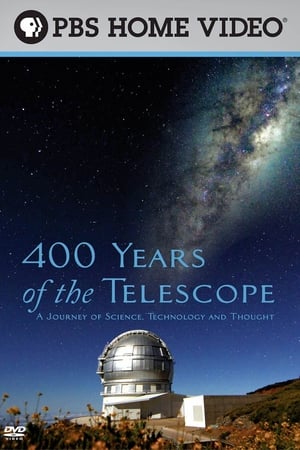
A documentary chronicling the history of the telescope from the time of Galileo. Featuring interviews with leading scientists discussing Galileo's first use of the telescope to the latest discoveries in cosmology.
Take a fascinating journey inside the bizarre world of a living human being with this compelling documentary from National Geographic, where microscopic cameras and other state-of-the-art technologies reveal perspectives that will blow your mind. Tracking the body of a female from infancy to old age, viewers will observe the digestion of a meal, the development of the cardiac system and other mesmerizing aspects of the body's inner workings.
Unlocking the Mystery of Life represents a unique programming opportunity for local stations. Its broadcast release coincides with the 50th anniversary of one of the greatest scientific breakthroughs in history-James Watson and Francis Crick's discovery that the DNA molecule carries hereditary information in the form of a code that many scientists have likened to computer software or a written language. This discovery (announced on April 25,1953) sparked a scientific revolution. But it also left a fundamental question unanswered. Where did the information in DNA come from? How did the software in the cell arise? Unlocking the Mystery of Life explores these questions through the stories of a growing number of scientists who no longer believe that natural selection or chemistry, alone, can explain life's origin. Instead, they think that the microscopic world of the cell provides evidence of purpose and design in nature.
In the first BBC documentary to be filmed entirely on smartphones, Mark Miodownik reveals the weird materials that have built our high-tech world.