The film approaches the work of the Greek artist Nikos Koniaris. The particular way in which the painter depicts human suffering is presented through a film - a hybrid of real recording and directed material. The grief, the sick body, is reflected in self portraits, portraits of dying strangers and paintings of dead models. The paintings, apart from his work, also express a different version of himself. All together contribute to the depiction of man as a "garment of pain".
Martin Benka a hudba
The story of an exceptional painter talent, the Belgian-Hungarian Kim Corbisier who left a brilliantly powerful oeuvre behind after her tragically short and intense life. And a camera at her filmmaker friend. The mesmerising and often shocking footage of the camera bear witness to Kim's struggles with methadone addiction and, above all, her identity crisis caused by a series of unfortunate and criminal accidents in her family. After the unfinished attempts, with this film, the filmmaker is realising a project they had planned together 10 years ago.
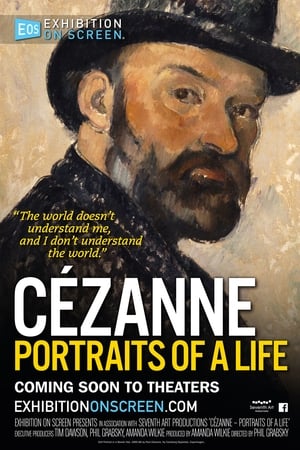
Dedicated to the portrait work of Paul Cézanne, the exhibition opens in Paris before traveling to London and Washington. One cannot appreciate 20th century art without understanding the significance and genius of Paul Cézanne. Filmed at the National Portrait Gallery in London, with additional interviews from experts and curators from MoMA in New York, National Gallery of Art in Washington DC, and Musée d’Orsay in Paris, and correspondence from the artist himself, the film takes audiences to the places Cézanne lived and worked and sheds light on an artist who is perhaps one of the least known and yet most important of all the Impressionists.
Caspar David Friedrich – Der Gedankenmaler der Romantik
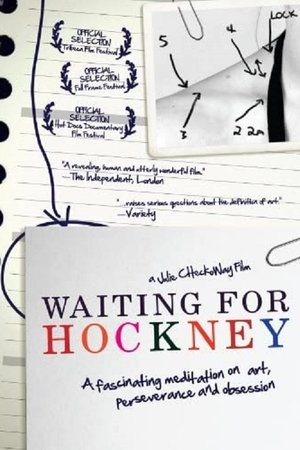
A young working class Baltimore man spends 10 years on a single portrait, believing it is his means to fame and fortune. But he also believes that only one man can lead him there---the famous artist David Hockney. What happens when you finally meet the god of your own making?
Giovanni Segantini rose from humble origins to become the most important of Italian pointillists, and one of the most important symbolist painters in the 19th century. This film focuses on his way of feeling nature as a source of artistic and spiritual inspiration.
Ladovi furianti
Directed by Margot Benacerraf, Reverón is a poetic and visually striking documentary that delves into the life and artistic vision of Venezuelan painter Armando Reverón. Set in the sun-drenched coastal landscape of Macuto, where the artist lived in near isolation, the film captures his eccentric lifestyle and unique creative process. Through evocative imagery and a contemplative narrative, Reverón explores his deep connection to nature, his experiments with light and texture, and his profound artistic genius. This seminal work stands as a tribute to one of Venezuela’s most influential painters and a landmark in Latin American documentary filmmaking.
Tjipto Setiyono, 85, is a rickshaw painter. Despite being past his prime, he lives alone in a 3-by-3 meter square boarding room, in which Tjipto’s brush strokes give birth to his paintings.
In 2014 a large painting representing Judith Beheading Holofernes was discovered in an attic in Toulouse, France. A controversy ensued immediately about the attribution of the painting's authorship to Caravaggio. The documentary follows a famed art expert in charge of organizing the sale of the painting on behalf of the owners, while specialists debate on its authenticity.
A Local Reno Artist and DJ discusses the many inspirations behind her work and how it impacts herself and others.
Documentary about the life and work of Mário Eloy, one of the greatest painters of the second generation of modernism in Portugal.
The film offers exclusive and intimate insights into how and why the classically trained artist risked rejection to revolutionize the traditional Chinese ink art form in Singapore.
Celebrating Billy Connolly's 75th birthday and 50 years in the business, three Scottish artists - John Byrne, Jack Vettriano and Rachel MacLean - each create a new portrait of the Big Yin. As he sits with each artist, Billy talks about his remarkable life and career which has taken him from musician and pioneering stand-up to Hollywood star and national treasure.
A documentary that explores the dangerous and sometimes deadly world of fake products. An industry that once dealt in imitation designer handbags and shoes has exploded into a global epidemic of counterfeit pharmaceuticals, foods, toys, electronic goods, car parts and microchips. COUNTERFEIT CULTURE challenges consumers to take a deeper look at what appears to be harmless knock-offs at bargain prices.
Chuck Close, an astounding portrait of one of the world's leading contemporary painters, was one of two parting gifts (her second is a film on Louise Bourgeois) from Marion Cajori, a filmmaker who died recently, and before her time. With editing completed by filmmaker Ken Kobland, Chuck Close lives the life and work of a man who has reinvented portraiture. Close photographs his subjects, blows up the image to gigantic proportions, divides it into a detailed grid and then uses a complex set of colors and patterning to reconstruct each face.
Departing from peripheral details of some paintings of the Bilbao Fine Arts Museum, a female narrator unravels several stories related to the economic, social and psychological conditions of past and current artists.
"The prevailing stigmatization of the 'villero' universe is fed back by the images. In order to dismantle this stigmatization, other images must be presented or we need to reveal what the existing ones seek to cover up. The slum is usually represented from a limited and deceitful visual panorama. This representation has an intention. Cinema and television are two image-producing devices that strengthen the stereotypes that we have about the people who inhabit these spaces. And what happens in the field of painting? Do clichés reign there too? This visual essay seeks to confront various works by national painters and sculptors, belonging to the Palais collection, with the kinetic images of current cinema and television, to reflect on both the differences and the similarities in the meanings and discourses that both regimes of images can produce." César González
The Victorian era is often cited for its lack of sexuality, but as this documentary reveals, the period's artists created a strong tradition surrounding the classical nude figure, which spread from the fine arts to more common forms of expression. The film explains how 19th-century artists were inspired by ancient Greek and Roman works to highlight the naked form, and how that was reflected in the evolving cultural attitudes toward sex.