“Peter Kubelka…was teaching at Staatliche Hochschule für Bildende Künste – Städelschule (Städel) at the time. His classes, filmmaking and cooking, were very unique, and this film was made around the time I was studying with him at Städel… This is a single-shot film, moving along the passageway using a handmade dolly. I used an Arriflex 16ST camera, and I changed the filming speed from 48fps to 4-6 fps while shooting.” - Yo Ota
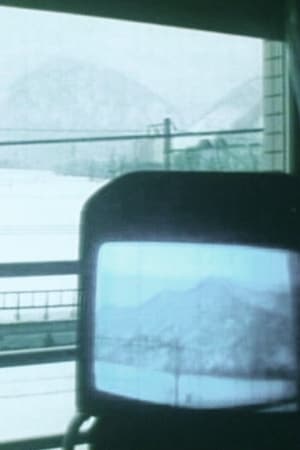
“The visual harmony of the landscape is disturbed by a screen that allows us to see into the distance (television). The film is composed of six scenes that feature a television in the landscape. The speed of the television (in NTSC) is 30 frames per second, and never changes in this film. But the landscape views pass at different speeds.” - Yo Ota
“The structure of human vision is the visual knowledge of the world. Individuals do not visually understand the world through the eyes, but through the brain. That is to say, human vision has been formed by knowledge and experience. The film can show a new vision, provided that the cinema is also a kind of visual experience and visual knowledge.” - Yo Ota
“One can not speak of time as a thing in itself. It is movements and variations that give the feeling of time. Men have always linked time and spatial movement.” - Yo Ota
“This film offers a metacinematic study of tempo and change and a figure of velocity. […] Ota recorded [three different locations in Tokyo] at the interval of hours, and sometimes even days, by using different filters and by alternating the camera speed. The result…represents an inquiry into the abstract space-time of cinema where Ota plays with the physical fact that time is a ‘function of movement in space.’” –Malin Wahlberg
“Sequences of space-time manipulation that raise the problem of continuity in the shot.” - Yo Ota
“My attempt at a filmic interpretation of Haraguchi Noriyuki’s ‘Inclined Horizon,’ a three-dimensional physical work featured in the ‘Dance Hakushu 2006’ exhibition held in the Hakushu district of Hokuto City, Yamanashi Prefecture. Haraguchi’s work was modeled out of earth that will return to its original form after about a month, and my aim was to resurrect the concept of this work on film.” - Yo Ota
Film by Paul Clipson. Music by Jefre Cantu Ledesma.
“This film was made for an event that included an exhibition of artwork by Eishi Yamatomo. Yamatomo’s metal sculpture is often finished with a chromium plating, which reflects its surroundings. For this project, I tried to obtain the image of a metal sculpture as an existing entity and its reflection as an illusion on a film medium, which can hold an image as an object. It was originally shot on 8mm film, hand-processed, edited, then re-photographed on 16mm film.” - Yo Ota
“The ‘exhibition’ held by ‘artist’ Katsuhiro Fujimura in Tokyo during the very hot summer of 2013 was one that made viewers suffer. The ‘painting’ that stood leaning against the window had very faint colors and regular scratches that could not be seen very well because of the light streaming in from the outside. The light changed with the time of day, and the surface of the painting also shifted. The paint on the front of the panel can only be perceived as ‘color’ by reflecting light. The fact that if the light changes what is seen also changes is quite obvious, but because it is a ‘painting’ viewers find this hard to accept.” - Yo Ota
“There was an art event at a closed school, Kataura Junior High School, in Nebukawa, Kanagawa Prefecture. If I did not participate in this event to show my films, I would never have got off at Nebukawa Station. I saw the sea from the school building. The installation by Tetsuya Iimuro was placed in a science room at the school, where one could see the ocean through the windows.” - Yo Ota
The pantomime of two characters exchanging roles is accompanied by a three-layered phonogram, where sophisticated narrative text is interrupted by slightly accelerated excerpt from Brezhnev’s speeches, as well as by fragments of statements of the mentally ill person with the schizophasia symptom.
In this unofficial sequel to "Every Single Minute", the boy finds himself lost in his sleep state.
Isaac travels to Mount Moriah with his father to make a sacrifice to God.
Footage filmed in Spain, subjected a new visual effects process. Deslaw devoted himself to the discovery of a new machine that enabled film to be developed while using a new method called solarisation.
An experimental work that explores sound and vision as an emotional response system.
Extracorpus
Everyday Portabella
A vibrant animation by Patricia Marx. Preserved by the Academy Film Archive in 2000.
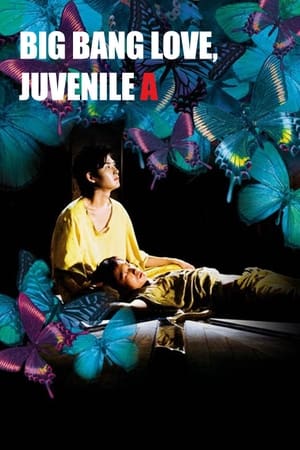
An unknown future. A boy confesses to the murder of another in an all-boy juvenile detention facility. More an exercise in style than storytelling, the story follows two detectives trying to uncover the case. Homosexual tension and explosive violence drives the story which delivers some weird and fascinating visuals.