Traja králi
"Who plays me, hears my voices”, shows a recent moment in the life of Gaston Lafourcade, a classical pianist and harpsichordist who, at the age of 83, enters a recording studio for the first time in his life to record a solo album and to join his daughter, Natalia Lafourcade, who during a recess period in her career, decides to embark on this adventure as a love letter to her father and as a way to enjoy what brings them together, beyond blood ties: their deep love for music.
A powerful cultural documentary about a Caribbean father and son who return to Grenada to reclaim ancestral stories. Blending folklore, myth, and underwater visuals, the film preserves Black heritage and reframes the feared Jab Jab as a symbol of resistance and identity.
Venerdì Santo - Bronte
For the 'Are'are people of the Solomon Islands, the most valued music is that of the four types of panpipe ensembles. With the exception of slit drums, all musical instruments are made of bamboo; therefore the general word for instruments and the music performed with them is "bamboo" ('au). This film shows the making of panpipes, from the cutting the bamboo in the forest to the making of the final bindings. The most important part of the work consists in shaping each tube to its necessary length. Most 'Are'are panpipe makers measure the length of old instruments before they shape new tubes. Master musician 'Irisipau, surprisingly, takes the measure using his body, and adjusts the final tuning by ear. For the first time we can see here how the instruments and their artificial equiheptatonic scale-seven equidistant degrees in an octave-are practically tuned.
The Matica slovenská (a mostly government-sponsored cultural, academic, and archival institution) employed Karol Plicka (1894-1987) as its ethnographer, who was able to make documentary shorts from about 1926. He obtained funding from the President’s Office in 1928 to produce an hour-long documentary about village life, Through Mountains and Valleys (Po horách, po dolách). It was awarded a Gold Medal at the International Exposition of Photographic Art in Florence and received an Honorable Mention at the International Venice Film Festival in 1932.
Karel Plicka was also cinematographer of this short movie. Editor in charge was Alexander Hackenschmied. There is an extraordinary emotional charge, every shot is working on its own, such as photographs, paintings and poetic complement intertitles in this short. From the perspective of nature and the perspective is shifting to the people and their habits, work and clothes. Peculiar documentary shots underscore Ruthenians (men, women and children) who are interested in looking into the camera and the curious "eye" showing off their habits.
Múzeum Liptovskej dediny
"Scottish Myths & Legends" explores the magic, mystery and sprinkling of mayhem that covers the dramatic landscape of Scotland. From the ancient tales of the Loch Ness Monster to the stories of shape shifting Kelpies, we go on a fascinating journey of discovery to uncover the stories behind the myths and the magnificent Scottish landscape that has inspired these truly legendary legends.
In the summer of 1961, a group of young Italian anthropologists made a clandestine journey through Spain, in order to record popular songs that supported anti-Franco resistance. As a result of their work, they were prosecuted and their recordings were censored. Sixty years later, and guided by Emilio Jona, aged 92, the last living member of that group of travellers, we recover the unpublished recordings and reconstruct the journey, today, across an emotional and political landscape, regaining historical memories through these songs, as relevant today as they were then.
A highlight of Baltic culture, the festival dedicated to Latvian song and dance celebrates its 150th anniversary in Riga.
Taneční zeměpis II. – Z Balkánu do Prahy
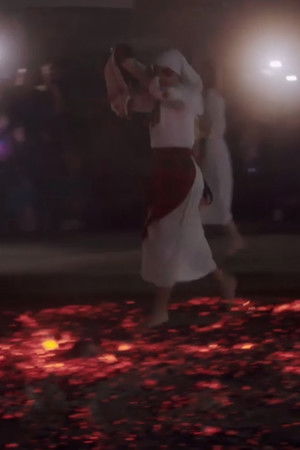
Every year in June, the small Bulgarian village of Balgari celebrates St Constantine with a special ritual. Initiated ‘nestinari’ go into a music-induced trance and dance on bonfires in a display of religious passion.
Karol Plicka was an important musician and composer. He recorded folk songs immediately after hearing them in musical notation to preserve them for future generations. Similarly, he records and interprets traditions associated with dance, folk song and local stories that vary from region to region in his film The Eternal Song. The short documentary presents merry-making in Slovak and Czech regions that are changing with the coming modernization and transformation of musical records.
A short film about traditional crafts and culture that can still be found in the Wallachian mountains today.
Stephen Fry embarks on a journey to discover the stories behind some of the world's most fantastic beasts that have inspired myths and legends in history, story-telling and film.
From the sexy, savage Cornish May Day rites of Alan Lomax's Oss Oss Wee Oss, to Jeremy Deller and Alan Kane's footage of ferociously fought traditional football; from children's games in London's bombed East End to intricate sword and step dances, this collection of poetic documentaries, long unseen television reports and rare silent film footage reveals just how powerful and enduring the folk traditions of Great Britain have always been. The silent films feature innovative fiddle and melodeon accompaniments by contemporary folk musicians.
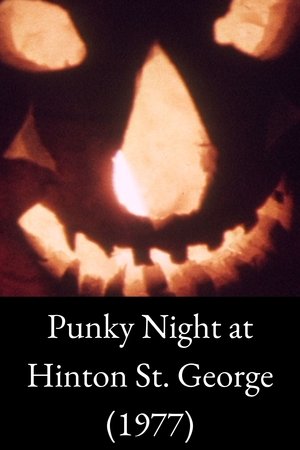
Children parade through the streets of Hinton St George in Somerset on the last Thursday of October. Children have hollowed out pumpkins or mangelwurzels, a type of animal fodder turnip to make lanterns following a tradition in this part of West Somerset that coincides with Halloween. Punky or Punkie Night is thought to date from the turn of the 20th century or perhaps medieval times chanting rhymes and following a Punkie King and Queen.
The members of the Ayrudzi troupe travel across various villages of Armenia on horseback and put on folk song and dance concerts and shadow theatre performances for the locals.
Walker takes us on a personal journey into a world of myth and imagination that he learned from his grandmother. He travels from the Moors of Devon and the Highlands of Scotland to the brooding Celtic landscapes of Ireland and the intimate hills of Cape Breton, in his search of this potent “otherworld” of the imagination.