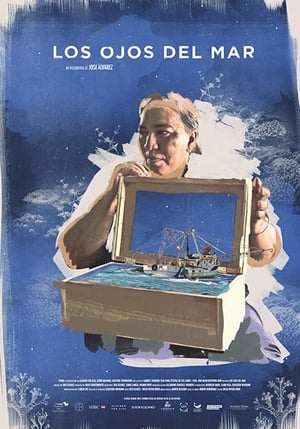
Cosme and Monica live with their children and grandchildren in Bahia de Kino, a fishing town in the northern State of Sonora, Mexico. They used to call themselves predators of the sea until one day they became unable to kill a sea turtle. Submerged in a crisis, they embark on a journey to try to save their way of life and of their fishing town through the creation of an environmental community group in charge of protecting sea turtles.
Joe Lycett investigates the mind-boggling quantities of untreated sewage discharged into our waterways every day, and takes the fight to the water companies in the most Joe Lycett way possible.
Recent studies show that insects are in decline across the globe and there may be a direct connection between the current climate crisis and these declining populations. DESYNCHRONIZED focuses on Pope Canyon Queens, a beekeeping and queen breeding company in Northern California. Pope Canyon Queens is currently trying to rebuild after the 2020 LNU Lightning Complex fires destroyed their farm, shop, and half of their hives. Their crucial work to breed honey bee queens with stronger genes fortifies beekeepers' hives across the country while they face the effects of climate change and unregulated industries. Dr. Nicholas Teets, PhD Entomology, explains how shifts in phenology are predicted to cause bigger issues. Howard Goldstein, Senior Forest Ecologist at the Prospect Park Alliance explores how community gardens and green spaces in large metropolitan areas may help insect populations recover from loss of habitat and food scarcity.
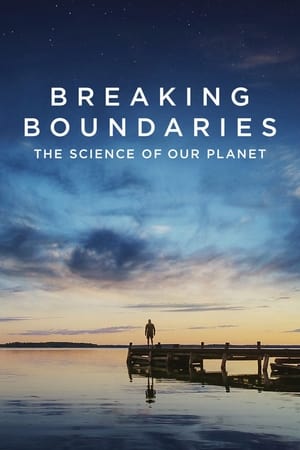
David Attenborough and scientist Johan Rockström examine Earth's biodiversity collapse and how this crisis can still be averted.
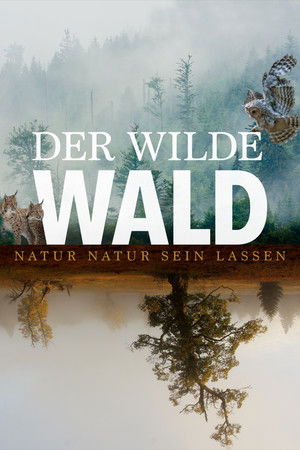
“Let nature be nature” is the philosophy of the Bavarian Forest National Park. Despite massive resistance, this vision has become a groundbreaking showcase project. Because humans do not interfere with nature, the former commercial forests grow into a primeval forest, a unique ecosystem and a refuge for biodiversity. People from all over the world come here. They are looking for answers to the question of why we need more wild nature and what we can learn from it to preserve forests for future generations in times of climate change.
Malaika Vaz follows the illegal manta ray trade pipeline from fishing vessels in the Indian Ocean, to the Indo-Myanmar border and finally undercover in the wildlife trafficking hubs of Hong Kong and Guangzhou.
Bacteria, viruses, but also fungi, algae, pollen, and even insects: micro-organisms thrive and circulate constantly in our sky. How can so many living beings find their way into the air and circulate? How do they survive? And what influence do they have on our lives and the living world? Biodiversity, health, climate: it is only recently that scientists have begun to understand how this discreet aerial "plankton" affects our lives and our ecosystem. But despite their many virtues, some of these micro-organisms are now threatened by human activities. With the help of experts and 3D models, this scientific investigation plunges us into the heart of a still mysterious world, and reveals the diversity and fragility of the air we breathe.
Offshore wind farms are a major player in the move away from fossil fuels, especially in the North Sea, and they are increasing in number. But their impact on the environment is not yet clear: We take a look at ongoing research in Europe that is measuring the impact of wind turbines and their harm, or benefit, to biodiversity in our seas.
Food, health, and nutrition divide two sides of town in Gainesville, Florida - how the movement to bring Black culture, history, and knowledge back to the table is healing the community.
When a devastating famine descended on Soviet Russia in 1921, it was the worst natural disaster in Europe since the Black Plague in the Middle Ages. Examine Herbert Hoover’s American Relief Administration—an operation hailed for its efficiency, grit and generosity. By the summer of 1922, American kitchens were feeding nearly 11 million Soviet citizens a day.
A group of young architects, confined to a forest in Barcelona during the COVID crisis, explore the problems generated by the ambition of wanting to be completely self-sufficient.
In 2001, satellite imagery captured a mysterious “thermal anomaly” on an unexplored volcano at the ends of the Earth. What lies inside could provide new clues to help predict volcanic eruptions around the globe. But the island is so remote with conditions that are so extreme. No one has ever been able to reach the top to investigate what lies inside.. until now.
Never-before-seen footage shows how our living in lockdown opened the door for nature to bounce back and thrive. Across the seas, skies, and lands, Earth found its rhythm when we came to a stop.
A passionate hotel manager is obsessed with a clairvoyant's claim that he is to blame for the unexplained fire at his legendary grand hotel. To free himself from this burden, he teams up with an astute detective inspector to expose a former employee as the arsonist. This unexpectedly puts him at the centre of the investigation – and he must face the truth.
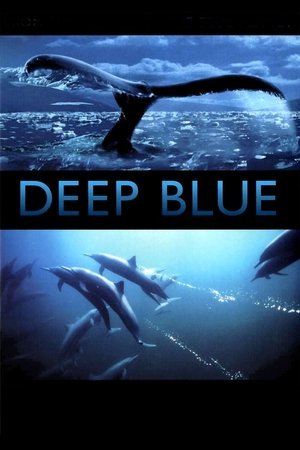
Deep Blue is a major documentary feature film shot by the BBC Natural History Unit. An epic cinematic rollercoaster ride for all ages, Deep Blue uses amazing footage to tell us the story of our oceans and the life they support.
A teaching film for social studies, which was developed as a new educational subject in 1947. At an elementary school in Hokkaido, children have started a fly extermination campaign to improve school hygiene. In order to eliminate the causes of flies, the entire town is working to improve the sanitary environment. The short was filmed with the cooperation of Mizukaido Elementary School in Joso City and is the first film in the "Social Studies Teaching Film System" by Iwanami Film Productions.
In the cobalt mining areas of Katanga in the Democratic Republic of the Congo (DRC), babies are being born with horrific birth defects. Scientists and doctors are finding increasing evidence of environmental pollution from industrial mining which, they believe, may be the cause of a range of malformations from cleft palate to some so serious the baby is stillborn. More than 60% of the world’s reserves of cobalt are in the DRC and this mineral is essential for the production of electric car batteries, which may be the key to reducing carbon emissions and to slowing climate change. In The Cost of Cobalt we meet the doctors treating the children affected and the scientists who are measuring the pollution. Cobalt may be part of the global solution to climate change, but is it right that Congo’s next generation pay the price with their health? Many are hoping that the more the world understands their plight, the more pressure will be put on the industry here to clean up its act.
The Guelph Outdoor School challenges modern education by providing children the freedom to connect with the natural world and themselves.
Marie-Thérèse and Christian have turned their town into a ZUT—a Urgent Zones to Transform. They want pesticides gone. Completely. Immediately. And forever. The radical stance of these 'zutists' echoes a growing thirst for change across Belgium. From tiny garden plots to European institutions, from farm to farm, from laboratories to grassroots struggles, ZUT keep popping up—each one revealing just how dependent we’ve become on chemical inputs, and how deeply we long to break free.
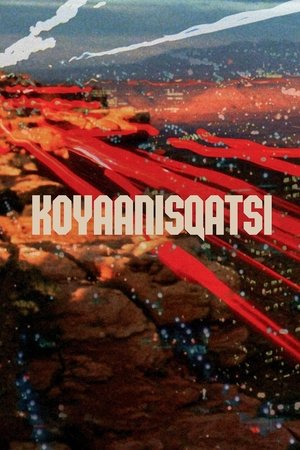
Takes us to locations all around the US and shows us the heavy toll that modern technology is having on humans and the earth. The visual tone poem contains neither dialogue nor a vocalized narration: its tone is set by the juxtaposition of images and the exceptional music by Philip Glass.