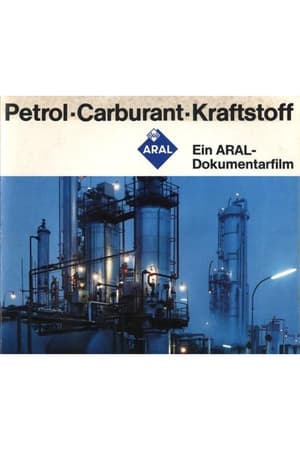
An audiovisual experiment that shows how oil is refined into gasoline and ultimately powers cars and other vehicles, accompanied by classical music and experimental synthesizer sounds. Filmed in the Libyan desert, the film traces the path and development of the gasoline, from the extraction of oil as it is drilled in the Libyan desert to the pump at the gas station, making road construction machines dance and convertibles roar through the Spessart forests. This film also drew Herbert von Karajan and Leo Kirch's attention to Hugo Niebeling, in which the director has road bulldozers "dance" to the music of Vivaldi.
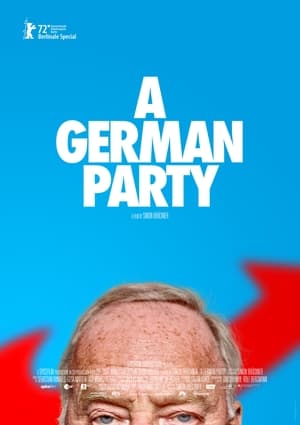
A focus on the inner workings of a political party making headlines at district, state and national level as an “alternative for Germany”. Thanks to the film’s striking objectivity, it becomes clear where argument ends and contradictions begin.
Planet der Spatzen
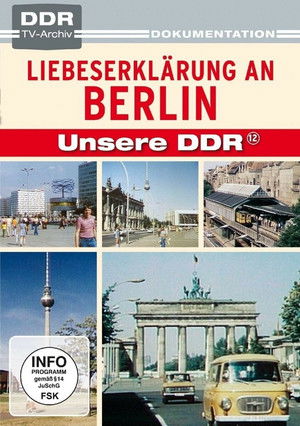
A stroll through East Berlin in 1977 - unique original recordings of the GDR capital by day and night, summer and winter, accompanied by music, offer a comprehensive insight into the diversity of urban life at that time. Numerous sights, famous buildings and squares, such as the television tower, the Red City Hall, the Palace of the Republic, Alexanderplatz and Unter den Linden, are shown. Popular places for leisure and recreation are also filmed, including the zoo, Volkspark Friedrichshain, the Christmas market on Alex and the Pankow outdoor pool. The film team also interviews a wide variety of Berliners, giving an impression of the lifestyle and everyday life of the capital's inhabitants at the time. The cityscape is rounded off with insights into new housing developments, renovated streets, businesses, restaurants and stores as well as official political events, military parades and memorial ceremonies.
Was wurde aus der Stasi?
Ménopositive
Bruce Lee - Le Parcours d'un Guerrier
Morro do Cemitério
Public light rips through the night of a modern city. Sleeplessness is lit up by a computer monitor in an urban space, where day and night are no longer distinguished. Starting from videos of thermal cameras found online, a reflection goes through the changes in the contemporary city, the extension of social control mechanisms and the evolution of digital technologies to face the frontiers of a progressive expansion of the field of visible - and controllable - in the surveillance society.
A modest and loving portrait of a small enclave of old-fashioned beach huts by the North Sea. The sound track is fragments of conversations with the inhabitants, who themselves are not seen on screen; the protagonists on screen are the huts, the beach and the sea. And, only a stone’s throw away, the heavy industry of the Hoogovens furnaces.
The film is about Alexey Popogrebsky's film "How I spent this summer". In the film, there are no tedious reflections of the actors and the director about their film against the background of posters of the same film. But there is life itself, real, unmasked, and, despite the sea of comicality, it makes you horrified at how the Russian film process can take place…
The film, based on Robert Schumann's Pictures from the East, shows in an unusual perspective the work of Nizar Ali Badr, a Syrian sculptor whose unique language of stone sculptures radiates happiness and love in the face of war, destruction, migration, poverty and injustice. The animated sculptures made of pebbles present us with short stories. The soundtrack of the animation - original arrangements of melodies from Karlheinz Stockhausen's "Music Boxes" - is performed by Gidon Kremer and the musicians of his orchestra Kremerata Baltika.
This film is about Lyudmila (Lyala) Stanukinas, a documentary filmmaker, widow of director Pavel Kogan. The film was shot for 4 years as a chronicle, in the style of a"home handheld camera". But this is not a story about a director, but about a woman struggling with loneliness, who keeps love in her heart with all her might. The heroine exists in the episodes of the film without any author's comments. Also, the plot consists of fragments, "scraps" of old films, chronicles.
In the north of Russia, far beyond the Arctic Circle, on the shore of the White Sea, on the Kanin Peninsula, there is an amazing settlement. The houses in it, almost to the roofs, are covered with sand, and the streets are somewhere deep under the sand dunes. From a distance, this village can be mistaken for an abandoned one. But people live there. The film tells the story of the dramatic transformation of Shoina-a thriving fishing village-into a dying village, almost completely buried in the sand.
When the night falls, the sky comes alive. A flutter of wings that, for some, is the stuff of nightmares. One in every four mammals on the planet is a bat. But fear for these creatures is often misplaced, not all bats are blood-sucking beasts. The world of bats is incredibly diverse with some beautifully bizarre adaptations.
November 8, 2016 marked the 55th anniversary of the airing of the very first KVN program. The "Fun and Resourceful Club" has known good and bad times: for censorship reasons, it was closed in 1972, and revived only in 1986. But even without the broadcast, KVN existed on the student and amateur stages, lived, developed, and changed along with the time and the country. There is no such TV centenarian in the world. So who are they, the inventors of this "perpetual motion machine": Muratov, Yakovlev and Axelrod?
He is an influential bishop, a future patriarch, a possible confessor of Putin, a member of the Athos and Izborsk clubs. He is friends with Sechin and Mikhalkov, and lobbies for Vasilyeva's candidacy. The Minister of Culture, Medinsky, waits for him in the corridor for several hours. He is an ideologist of extreme church fundamentalism and a master of hardware games. He is Tikhon Shevkunov, the main character of the documentary film "The Confessor"by Sergey Yerzhenkov and Vladislav Pushkarev.
The protest events that took place in Moscow in 2011-2012 affected the fate of many people. After 5 years, the participants of these events share their stories.
Torgny Anderberg goes back to the Peruvian rain forest after 17 years, to meet again with the Ashaninka people. They tell of their current situation, and the struggles they face.
Director Torgny Anderberg goes back to visit the island of Raroia in French Polynesia, where thirty years earlier he made a film.