Za práva ľudu
In September 1847, the people gathered at the “Salmen” inn in Offenburg and put forward 13 demands: freedom of the press, trial by jury, fair taxation and a parliament representing the people. What began as a protest became the revolution in Baden. In April 1848, Friedrich Hecker set out from Konstanz with a volunteer militia, in September Gustav Struve proclaimed the republic in Lörrach, and in May 1849 the Baden army went over to the people. Grand Duke Leopold fled and a provisional government took control of the country. Only Prussian troops brought the Baden Revolution to an end: on 23 July 1849, the fortress of Rastatt surrendered.
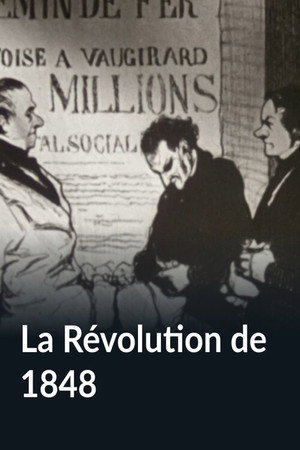
Using contemporary engravings and cartoons by artists such as Honoré Daumier, this short documentary recounts the events of the French Revolution of 1848, from the fall of the July Monarchy to the unrest that followed, narrated by Bernard Blier.
Třetí revoluce
Spoločník pána veľkomožného
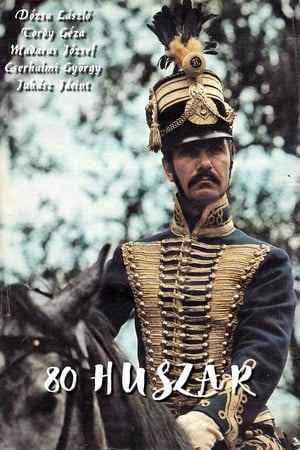
The film tells the story of a regiment of Hungarian hussars stationed in Poland. The hussars, mostly ordinary men, have heard news of the uprising and wish to return to the homeland to defend the newly independent country. The Empire, on the other hand, is firmly resolved that all Hungarian troops in the imperial army should be kept as far away from the trouble spot as possible, knowing that most soldiers would be loyal to Budapest rather than Vienna.
The Czech revival movement is divided at the end of the first half of the 19th century. While the older generation, such as František Palacký, urges restraint, students lean towards radical positions. A report on the revolutionary events in Paris prompts Czech Prague residents to write down the demands of the Czech nation for self-determination and the proclamation of a constitution. Tensions peak during the All-Slavic Congress in Prague's Žofín. Vienna rejects the Czech demands and the congress is brutally dispersed by the Austrian police. Prague begins to build barricades...
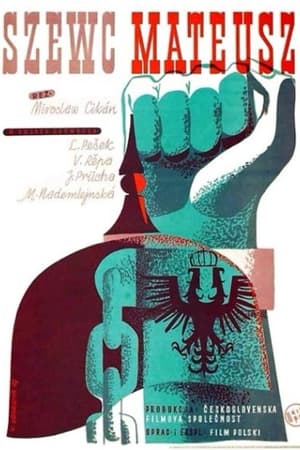
The revolutionary year of 1848 brought great hopes among the hitherto silent classes, awakening social and national hopes. The response also penetrated the remote countryside, even as far as the Podkrkonoše Mountains. The young shoemaker there began to take an interest in social and political events, and he also experienced disappointment in later developments.
Dos Antigos aos Filhos do Amanhã
73 years after the birth of Israel and the “Nakba” (‘catastrophe’), Rothschild 16, where Israel’s declaration of independence took place, is still a popular location for different tour guides who highlight diverse narratives of the event.
Mishka is a boy of many faces – a petty criminal and a promising alpine skier who enjoys life to its fullest despite his physical disability and difficult living conditions. He is captured at a key moment when he enters adulthood and receives the last opportunity to take part in the Paralympics.
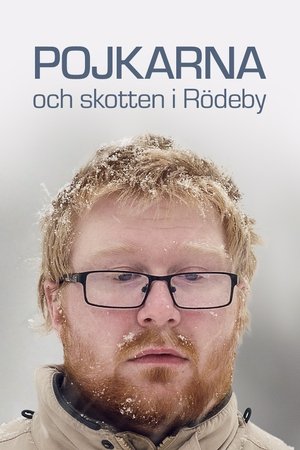
Mattis is different and was the target of bullies while growing up, while society looked the other way. His entire family was subjected to severe harassment by a gang of youths, and late one night in October 2007, his father took out his rifle and tragedy struck. One young boy was shot dead and another was seriously injured. Everyone was a loser, and Mattis and his best friend Stoffe were at the center of the drama. How could life go on?
Forty years after the bloodiest one-day encounter between Americans since the Civil War, the dead remain buried along with the truth. Until now. Based on interviews with eyewitnesses who just now are telling their stories, as well as access to newly discovered documents, the film sheds new light on exactly what happened at Attica between September 9-13, 1971. Criminal Injustice raises compelling new questions about the 39 deaths at Attica, White House involvement, and the corrupting influence of Nelson Rockefeller’s political aspirations before, during, and long after the deadly retaking of the prison. Former hostage Michael Smith said that “the cover up started as soon as the shooting stopped.” This film reveals that the truth actually may have been concealed long before that.
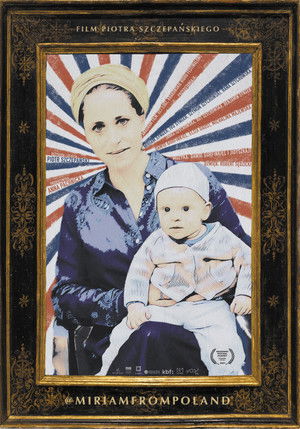
What does it mean to be a Jew in Poland now? Piotr Szczepański reveals another surprising piece of the cultural mosaic of Łódź in his documentary. The protagonists' lives prove that close ties with their religion and history do not exclude their relationship with counterculture and propensity for creative provocation. Thanks to people like them – open-minded and unconventional – the Jewish culture has a chance to last and thrive in our country. Besides, ‘@miriamfrompoland’ is a story, which presents a traditional, yet not quite typical, family with impressive observational virtuosity.
A beautifully illustrated story of a contemporary village and its unconventional dwellers who are of different age but have one thing in common – their strong attachment to folk culture. In this film, music is as important as images, since it accompanies the protagonists during key events in their lives.
The first Swedish film by photographer Ernest Florman. Kung Oscar II welcomes King Chulalonkorn of Siam, now Thailand, at Logårdstrappan. King Chulalonkorn visited Sweden in connection with Stockholmsutställningen 1897.
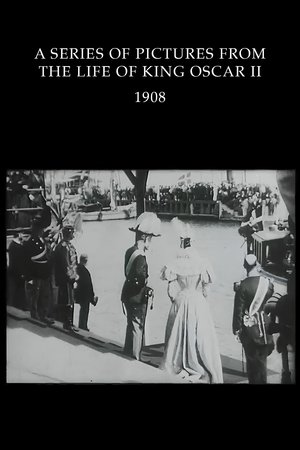
Compilation of actuality footage and short films capturing public and royal scenes from the life of King Oscar II of Sweden — including arrival at Expositions, jubilees, parades, naval activities, and official receptions. Serves as a visual tribute following his death.
A young filmmaker takes us on a walk through a rather peculiar neighborhood in the city of Maceió, where he meditates on his memories and the urban space from a sociological perspective.
A continually pendulating perspective of a tree on a sunny day.
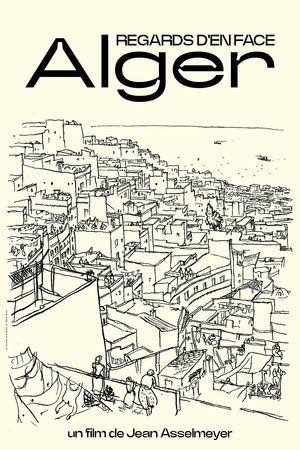
It is with the architect Jean-Jacques Deluz, that we visit Algiers, "his city" since 1960 and that he left only two years during the worst moments of terrorism. From the Casbah, in the 19th century center, including the cities of Fernand Pouillon and Bab El Oued to arrive at the new city of Maelma which he built today. Tender look, but without concessions at the same time architectural promenade and meetings with actors of art and culture: Djamel Allam, the singer Kabyle, Djamel Amrani, the poet, friend of Jean Sennac, Mohamed Ben Gettaf, Dramaturge and director of the theater of Algiers, Souad Delmi-Bourras, young designer Boudjemàa Kareche, director of the Algerian cinema, Amine Kouider, conductor, who relaunches the opera in Algeria, the painter Malek Salah, and others. A look at Algeria and the Algerians, far from the clichés of certain media, the bias being to seek signs of hope rather than "blood and tears".