A look behind the scenes with ‘TOMORROW x TOGETHER’ & ‘ENHYPEN’, two HYBE artists, as they prepare for their first joint performance.
Still Dreaming is TXT's first Japanese studio album. It was released on January 20, 2021. It was released with an accompanying DVD with the music video for the Japanese version of 'Blue Hour' and the making of the music video with interviews.
Five magical boys, known as the Starseekers, must fight against an unknown power that seems to be on the hunt for them.
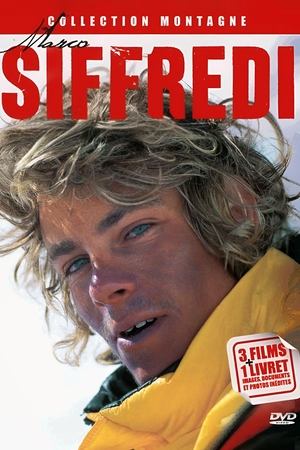
Avid for steep slopes, Marco Siffredi (1979-2002) obeys only one rule: not to fall. This gifted kid with hair sometimes blond peroxidized, green or blue clashed in his valley: Chamonix, mecca of mountaineering. His thing was to go up and down on a snowboard. . 90 minutes September 8, 2002, altitude 8848 meters, rare oxygen, his head already brushing the sky and his snowboard running, Marco Siffredi, 23, rushes from the summit of Everest in the Horbein corridor and its slopes at 50 degrees . A year earlier, he had already made the first descent of the mountain on a snowboard. But there remains another corridor… more direct. It's not a challenge, just a reason to be... However, that day, at the top of the roof of the world, his trace is lost...
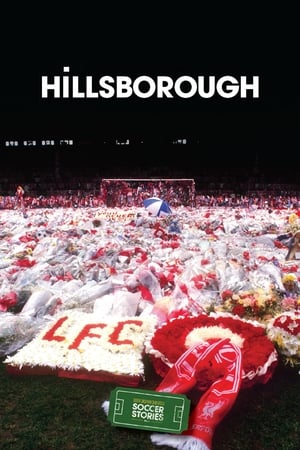
A look at the April 15, 1989 tragedy at Hillsborough Stadium in Sheffield, England, where a stampede in the stadium's standing-room-only areas killed 96 people and injured 766. The film also examines the ongoing efforts of victims' families to seek truth and justice, as well as tangible effects on English football, including stadium upgrades and the emergence of the English Premier League.
In the 1970s, Devil's, a legendary band, participates in a Korean band contest. The band mesmerizes the audience with its style and dance. However, the night is put at risk when an unexpected situations arises.
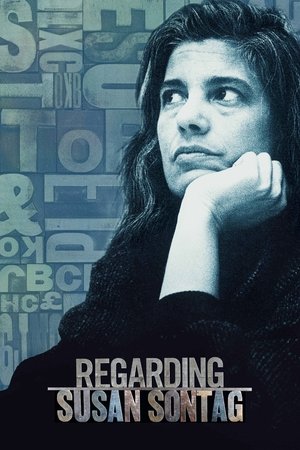
An intimate study of one of the most influential and provocative thinkers of the 20th century tracking feminist icon Susan Sontag’s seminal, life-changing moments through archival materials, accounts from friends, family, colleagues, and lovers, as well as her own words, as read by Patricia Clarkson.
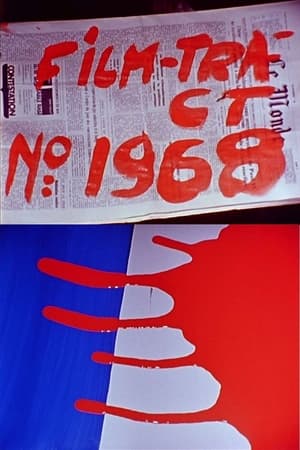
In the 1968 movement in Paris, Jean-Luc Godard made a 16mm, 3-minute long film, Film-tract No.1968, Le Rouge, in collaboration with French artist Gérard Fromanger. Starting with the shot identifying its title written in red paint on the Le Monde for 31 July 1968, the film shows the process of making Fromanger’s poster image, which is thick red paint flows over a tri-color French flag. —Hye Young Min
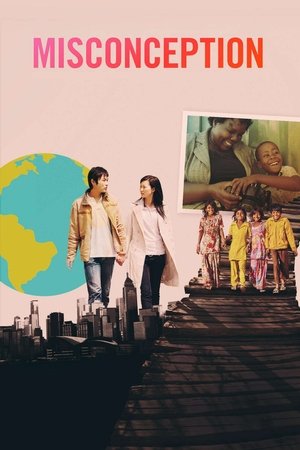
For almost 50 years, the world's population has grown at an alarming rate, raising fears about strains on the Earth's resources. But how true are these claims? Taking cues from statistics guru Hans Rosling, Misconception offers a provocative glimpse at how the world—and women in particular— are tackling a subject at once personal and global. Following three individuals, director Jessica Yu focuses on the human implications of this highly charged political issue, inspiring a fresh look at the consequences of population growth. In English, Hindi, Mandarin, and Russian with subtitles.
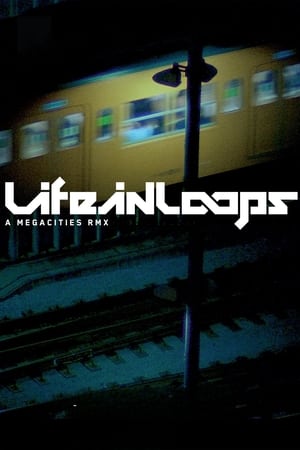
Timo Novotny labels his new project an experimental music documentary film, in a remix of the celebrated film Megacities (1997), a visually refined essay on the hidden faces of several world "megacities" by leading Austrian documentarist Michael Glawogger. Novotny complements 30 % of material taken straight from the film (and re-edited) with 70 % as yet unseen footage in which he blends original shots unused by Glawogger with his own sequences (shot by Megacities cameraman Wolfgang Thaler) from Tokyo. Alongside the Japanese metropolis, Life in Loops takes us right into the atmosphere of Mexico City, New York, Moscow and Bombay. This electrifying combination of fascinating film images and an equally compelling soundtrack from Sofa Surfers sets us off on a stunning audiovisual adventure across the continents. The film also makes an original contribution to the discussion on new trends in documentary filmmaking.
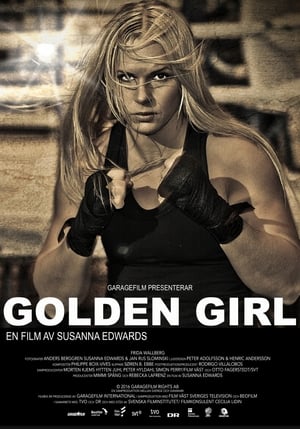
Golden Girl is a film about the forces at play around Frida Wallberg, WBC world champion. It's about putting it all on the line in a deadly sport. About rosy dreams that crash into a nothing less than brutal reality.
Recruiting for Jihad is an investigative documentary film about Norwegian ISIS recruiter Ubaydullah Hussain.
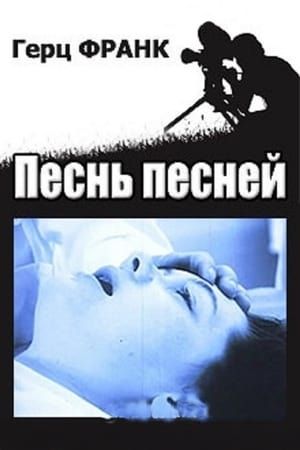
Filmed largely in close-up, this documentary records a woman giving birth while her husband remains at her side. The camera concentrates on her face throughout labor, briefly revealing the moment of the child’s arrival before the newborn is placed in her arms.
Following the military intervention of 1980 the number of people who died during interrogation or in prison increased. As a result of the unsanitary conditions and torture in prisons, 299 people died while incarcerated.
Panman: Rhythm of the Palms tells the story of the rise and fall of the steel drum pan player Harry Daniel. Harry is an icon of the Caribbean whose personal life suffers when he places his music above his family. For he is desperate to pass the pan culture to a younger generation. During this crusade to keep the music alive on his beloved island of St Martin he meets the exceptionally talented Jacko who becomes his star apprentice and hope for the future. Harry treats him like the son he never had. However when Harry's fame begins to diminish, Jacko turns against him and embraces instead the world of rock music. But when Harry dies unexpectedly Jacko returns to his island culture to become pan music's brilliant new icon.
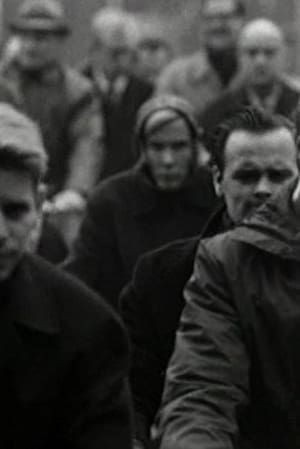
Rhythmic composition of moving photographs of cyclists in Amsterdam, ‘set’ to Vivaldi’s The Four Seasons.
Michel Foucault: Beyond Good and Evil explores the philosopher and his complex and controversial life through interviews with colleagues and biographers and re-enactments of Foucault’s storied exploits in the American counterculture.
The life and work of the Austrian philosopher Ludwig Wittgenstein.
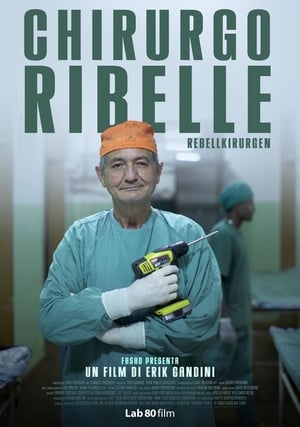
Portrayal of a surgeon who feels stifled by Swedish bureaucracy and relocates to Ethiopia to practice medicine. In a small field hospital, with limited resources, he uses anything at hand to help the patients.
Most of the time, Roland Barthes is classified in the category of the 1970s intellectuals, where all his fascinating singularity fades. Our movie holds exactly to the desire of making perceptible his singularity. In this purpose, the movie is constituted by an editing of archives, articulated around Barthes presence and the progress of his career. It is thus a kind of a Roland Barthes’s cinematic version by Roland Barthes, a self–portrait that could be resumed by a point of view as accurate as possible.