He was one of the most notorious Nazi war criminals, infamous for his assassination attempts on twins. But at the end of World War II, he simply disappeared...
Das radikal Böse is a German-Austrian documentary that attempted to explore psychological processes and individual decision latitude "normal young men" in the German Einsatzgruppen of the Security Police and SD, which in 1941 during the Second World War as part of the Holocaust two million Jewish civilians shot dead in Eastern Europe.
One day, in Savigny, an 18-year-old boy left his house in the middle of the war, saying: "I'm leaving, I'm going to kill Hitler." His name was Joseph, he was Jewish, he was my great-uncle. He disappeared during the night of the Occupation, and his existence became a family secret. He disappeared from history, the small as well as the big: he is not on any deportation list, and the only archive where he appears is a family photo of him as a child. It disappeared like a stone at the bottom of the water, instead of going up in smoke in the sky of Poland. What did he become? And why didn't anyone mention his name anymore?
The account of keepers of the Warsaw Zoo, Jan and Antonina Zabinski, who helped save hundreds of people and animals during the Nazi invasion.
The film portrays MacArthur's life from 1942, before the Battle of Bataan, to 1952, when he was removed from his Korean War command by President Truman for insubordination, and is recounted in flashback as he visits West Point.
Shipyard is a landmark documentary covering the creation and life of Bellingham, Washington's wooden boat shipyard, which was built in response to the Axis threat of WWII, it's continued growth through the '50's and '60's, as well as it's innovative role in the development and production of fiberglass boats, including patrol riverboats for the Vietnam war.
The story of the senior-level preparations for the D-Day invasion on June 6, 1944 from the time of Dwight D. Eisenhower's appointment as the Supreme Allied Commander in Europe, to the establishment of the beachhead in Normandy.
The youngest protagonist of the documentary is Wartburg, an automobile over 50 years of age. The car is still on the road, driven by Bogdan, a 70-year-old who is taking his mother to visit the German factory where she was forced to work during WWII. In this road movie which takes place between Majdanpek and Germany, the trip becomes a journey into the past, retracing memories from the war and revealing a unique relationship between an old son and his elderly mother.
19 year old Irena Gut is promoted to housekeeper in the home of a highly respected Nazi officer in Poland when she finds out that the Jewish ghetto is about to be liquidated. Determined to help twelve Jewish workers, she decides to shelter them in the safest place she can think of – the basement of the German Major's house. Over the next eight months, Irena uses her wit, humour and immense courage to hide her friends as long as possible.
City of Warsaw, Poland, August 1st, 1944. Citizens have experienced inhuman acts of terror and violence during five long years of Nazi occupation. As the Soviet Army relentlessly approaches, the youngest and bravest among them rise up as one and face tyranny fighting street by street, but the price to pay will be high and hard the way to freedom…
The comparison of two rural families to demonstrate the need for proper hygiene and the consequences of its neglect.
A true story shot in a German Impressionistic style. In France during the Nazi occupation, Dr. Petiot (Michel Serrault) offered to help Jews escape the Nazis. They would come to his house, and he would kindly give them lethal "vaccinations" for their anticipated travel to Argentina. Then he would steal everything the brought with them (in addition to their up-front payment to him) and burn their bodies in his home-made crematorium.
Documentary following six Americans of Japanese ancestry who were held in U.S. internment camps during World War II.
The film tells the story of two Highlander brothers – Maciek and Andrzej. After the death of their father, which Andrzej contributed to, and the loss of his beloved Bronka, Andrzej leaves the family home. On his way, he meets the mysterious Wolfram, an anthropologist and climber. He shares with him his mountaineering technique and knowledge about the Prague origins of the highlanders. Andrzej returns to Zakopane, war breaks out. To protect the Highlanders from wartime destruction, he wants to persuade them to cooperate with the Germans. Andrzej and Maciek are standing on opposite sides of the barricade. The brothers' confrontation is bloody and painful.
In the aftermath of the Second World War, Josef Mengele, the Nazi doctor at Auschwitz, escapes to South America to rebuild his life in hiding. Through the eyes of his son who finds him again, Mengele is confronted with a past he can no longer ignore. From Buenos Aires to Paraguay via Brazil, the man who became known as “The Angel of Death” will organize his methodical disappearance to avoid any form of trial.
A historical drama focusing on Manuel L. Quezon years after the Philippine Revolution during the American occupation. When his fight for independence from the United States is put to the test, Quezon finds himself playing the brutal game of politics to outmaneuver his rivals — including Leonard Wood, Sergio Osmeña, and Joven Hernando. In Quezon’s relentless quest for power, he ultimately faces off with Emilio Aguinaldo in the 1935 presidential elections, using charm and favoritism as both weapons and currency, in a campaign that ultimately changes the face of Philippine politics and history.
This documentary examines how Adolf Hitler and the Nazi regime made use of ancient mysticism, occultism, and mind-control techniques in their efforts to win the war.
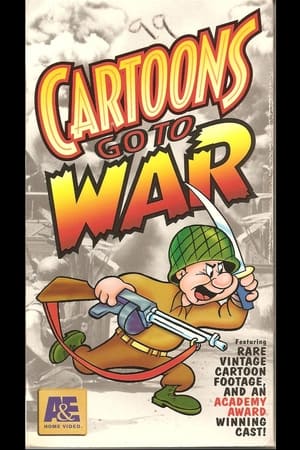
This remarkable documentary dedicates itself to an extraordinary chapter of the second World War – the psychological warfare of the USA. America’s trusted cartoon darlings from the studios of Warner Bros., Paramount, and the “big animals” of the Disney family were supposed to give courage to the people at the homefront, to educate them, but also to simultaneously entertain them. Out of this mixture grew a genre of its own kind – political cartoons. Insightful Interviews with the animators and producers from back then elucidate in an amusing and astonishing way under which bizarre circumstances these films partially came into existence.
The biggest trial of Nazi war crimes ever: 360 witnesses in 183 days of trial - a stunning and gripping portrayal of the most terrible massacre in history.
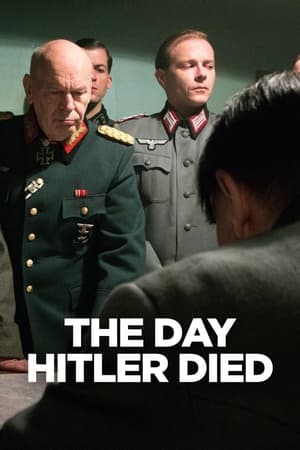
The story of Hitler’s final hours told by people who were there. This special features exclusive forgotten interviews, believed lost for 65 years, with members of Hitler’s inner circle who were trapped with him in his bunker as the Russians fought to take Berlin. These unique interviews from figures such as the leader of the Hitler Youth Artur Axmann and Hitler’s secretary Traudl Junge, have never before been seen outside Germany. Using rarely seen archive footage and dramatic reconstruction, this special tells the story of Adolf Hitler’s final days in his Berlin bunker.