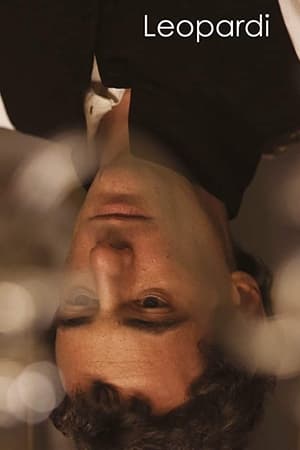
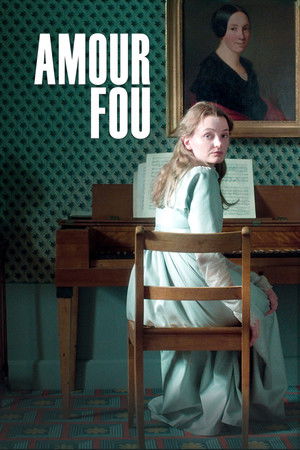
A famous poet who hasn't written a word in two years unconsciously plagiarizes the work of Stefan George, while dealing with several mistresses, his dimwitted brother, and a murder investigation.
The creative chemistry of four brilliant artists —drummer John Densmore, guitarist Robby Kreiger, keyboardist Ray Manzarek and singer Jim Morrison— made The Doors one of America's most iconic and influential rock bands. Using footage shot between their formation in 1965 and Morrison's death in 1971, it follows the band from the corridors of UCLA's film school, where Manzarek and Morrison met, to the stages of sold-out arenas.
A monumental traffic jam serves as the backdrop for the lives of the inhabitants of a Swedish city.
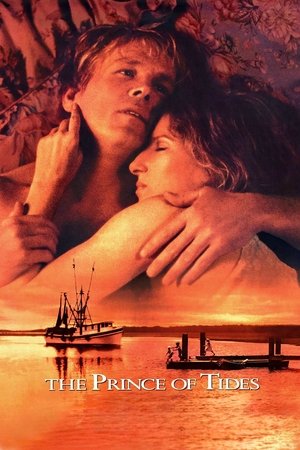
Eugene Devlin, a once famous, now reclusive poet, searches through his past, looking for redemption and peace.
A revolutionary militant, a thug, an underground writer, a butler to a millionaire in Manhattan. But also a switchblade-waving poet, a lover of beautiful women, a warmonger, a political agitator, and a novelist who wrote of his greatness. Eduard Limonov’s life story is a journey through Russia, America, and Europe during the second half of the 20th century.
A chronicle of legendary Native American poet/activist John Trudell's travels, spoken word performances, and politics.
This film is dedicated to Mas-Félipe Delavouët, the poet discovered by Lawrence Durrell, who wrote 14,000 verses in Provençal over a period of thirty years, and who died on November 18, 1990. "The sky, history and Mediterranean and Provençal myths are the inexhaustable wellspring of this man rooted down there, near Salon-de-Provence" (J.-D. Pollet). "Mas-Félipe Delavouët wrote five books in Provençal, 14,000 verses. A sort of "Odyssey". Of myths. What is stunning in him is that he always talks of disappearances. Cities, works, men, writings, television, etc., everything has to disappear. In order to be reborn. No pain. A sort of hand-to-hand of man and nature. During the filming, I would simply throw out some words... For example, one time I said "creation" and he said: "creation doesn't exist..., creation is before me..., I can only read creation"; this sentence describes Delavouët perfectly (J.-D. Pollet, 1989 and 1993).
He is considered the greatest European poet of the Middle Ages and his work unfolds the whole panopticon of occidental education – theology, philosophy, sciences, politics and literature. But who has really read it, the “Divine Comedy”? Who knows more of its creator Dante Alighieri than that he had an eagle-like profile and was in love with a woman named Beatrice? 700 years after Dante’s death, the filmmaker Adolfo Conti travels through Italy with Dante’s words in mind and eyes to see the world as Dante did. As the film encounters the beauty of arts and the Tuscan landscape, the forces of nature, a dramatic life story is unfolded.
When Eve, an interior designer, is deserted by her husband of many years, Arthur, the emotionally glacial relationships of the three grown-up daughters are laid bare. Twisted by jealousy, insecurity and resentment, Renata, a successful writer; Joey, a woman crippled by indecision; and Flyn, a budding actress; struggle to communicate for the sake of their shattered mother. But when their father unexpectedly falls for another woman, his decision to remarry sets in motion a terrible twist of fate…
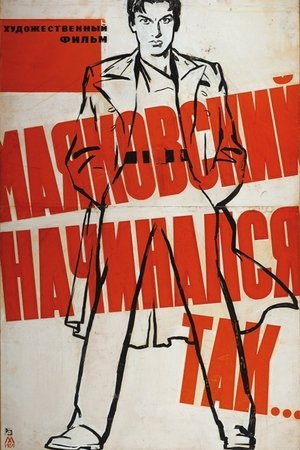
An influential Serbian poet decides to leave Nazi-occupied Belgrade and join partisans in the country. A young resistance activist, however, is not so thrilled with the idea because the old and womanizing intellectual doesn't fit in with his strict moralistic standards.
Narcisus and Psyche is based on a novel by Sandor Weores which was adapted by Vilmos Csaplar and director Gabor Body for a feature-length film. Borrowing the character of Psyche from mythology and placing her in Europe in the 19th century, the authors give her a "modern" life. She is an attractive young woman - and remains so throughout the film, in spite of one hardship after another. Psyche is libidinous, and her prurient interests shock her staid contemporaries.
No one expects much from Christy Brown, a boy with cerebral palsy born into a working-class Irish family. Though Christy is a spastic quadriplegic and essentially paralyzed, a miraculous event occurs when, at the age of 5, he demonstrates control of his left foot by using chalk to scrawl a word on the floor. With the help of his steely mother — and no shortage of grit and determination — Christy overcomes his infirmity to become a painter, poet and author.
Lucien de Rubempré, a young, lower-class poet, leaves his family's printing house for Paris. Soon, he learns the dark side of the arts business as he tries to stay true to his dreams.
Trapped in routine, a Jeju poet finds himself drawn to a boy—and to emotions he’s never dared name.
A defrocked Episcopal clergyman leads a bus-load of middle-aged Baptist women on a tour of the Mexican coast and comes to terms with the failure haunting his life.
Drawing on a wealth of unseen archival material and unpublished notebooks, the film weaves a complex and personal portrait of Margaret’s life, from the perspective of a fellow artist sensitive to the potential Margaret envisaged for film as a poetic medium.
Examines the career and literary output of Pablo Neruda, who makes his home at Isla Negra on the coast of Chile. Includes views of Mr. Neruda reading many of his poems in the locales which inspired them.
The life of the revered 18th-century Armenian poet and musician Sayat-Nova. Portraying events in the life of the artist from childhood up to his death, the movie addresses in particular his relationships with women, including his muse. The production tells Sayat-Nova's dramatic story by using both his poems and largely still camerawork, creating a work hailed as revolutionary by Mikhail Vartanov.
Victor Hugo, un siècle en révolutions
The earliest 'rockumentary' of John Mayall and his musicians filmed in their homes, dressing rooms, motorways, airports, clubs, concert halls and at festivals.