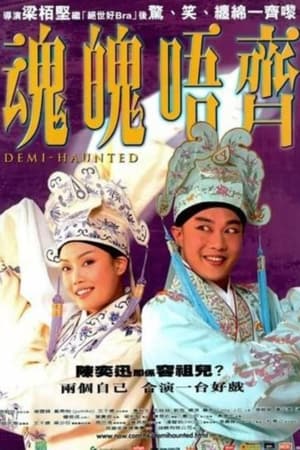
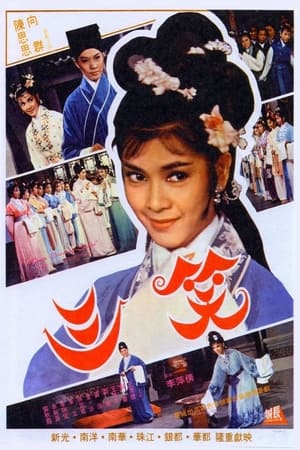
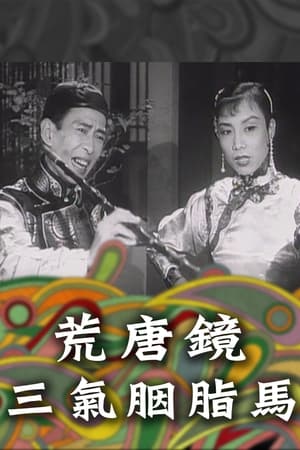
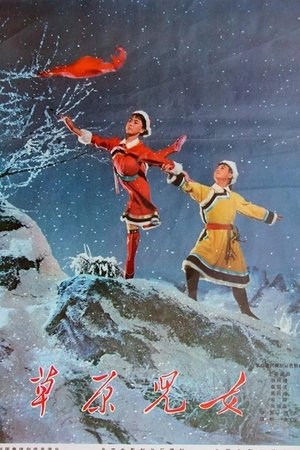
Wan Fei (Joey Yung) is a promising Chinese Opera singer who is secretly in love with Ho Fung (Nicholas Tse). She plans to sing for him from the stage, but, in a tragic accident, dies mid-song. Years later, Wan Fei's ghost returns, and finds that part of her spirit has been reincarnated in the form of Chor-bat (Eason Chan). Wan Fei still longs to sing her song for her lover, and, after much humorous confusion, her dream is fulfilled.
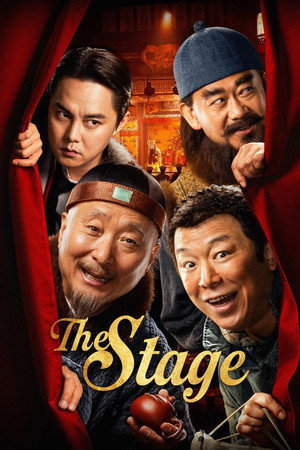
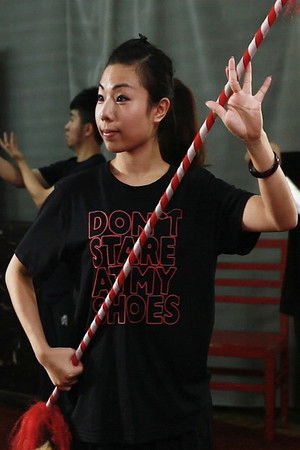
Zeng Hongqi, a rap-loving senior, is forced to lead the opera club for credits. Despite recruitment struggles and opposition from the student union president, an unexpected opportunity leads the club to a crucial competition.
With China under control of a weak Emperor, two officials compete to steer the future destiny of the land. Chiu believes the people are the future of China, while the diabolical Tu wishes to grind the people beneath an iron heel. Tu decides to take out Chiu's family, but one lone infant escapes.
MY NEXT STEP follows a young Kunqu Opera artist YANG Yang(28 year-old) over the course of several years. It offers its audience a glimpse into the world of Kunqu, and a magnifying look into the ambivalence of a young man struggling to find a way out for a fading art.
Disillusioned by years of futile bloodshed, General Chang Ta initially refuses the emperor’s call to defend the collapsing dynasty. It is his wife, Chen Pi-niang, a woman of exceptional intelligence and resolve, who urges him to answer his duty. At Tzu Lang Chow, she bids him farewell with a lock of her hair, a symbol of devotion and sacrifice, as he marches toward a seemingly hopeless battle. While Chang Ta fights at the front, Chen Pi-niang organizes local militias and leads a daring volunteer fleet of fishing boats to deliver supplies and strike the enemy. As defeat closes in and betrayal looms, husband and wife each face their fate with unyielding loyalty to their country.
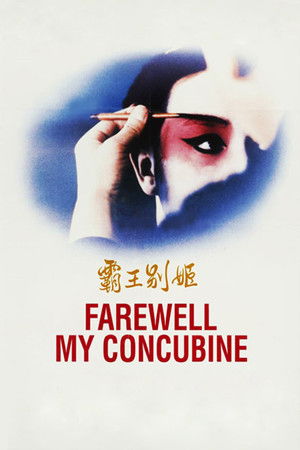
In an epic tale of theater, gender, love and class, two Beijing opera actors navigate political turmoil as their friendship evolves over decades.
Adapted from one of China's most well-known fairy tales, the Goddess of Mount Hua falls in love with a young mortal scholar Liu Yanchang and gives birth to a baby son, Chenxiang. When Chenxiang grows up, he seeks to unravel the mystery surrounding his mother whom he has never met.
Brilliantly played by LAW Ka-ying, the revered Skyblade hails from a prestigious family of Cantonese opera singers. Pressured into performing opposite the sponsor’s child at the celebrated Red Banquet in return for financial support, the reluctant Skyblade is further taken aback when he realises that Jade is a girl slated to play a male lead role in a predominantly masculine cast. However, as Jade’s talent becomes apparent to Skyblade, a bond is formed between the two during rehearsals, and a mutual understanding that both have been sacrificing their dreams and passions out of duty towards the family. When Jade reveals a shocking resolution to take control of her life, it is up to Skyblade to decide their fate on stage.
Yang Female Warriors
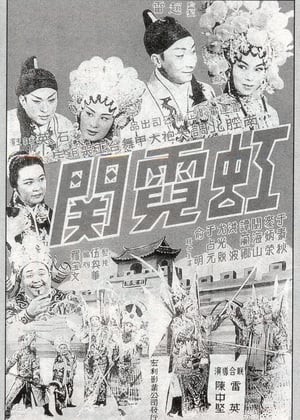
The Rainbow Pass is a Chinese Opera starring Sammo Hung in a child role
When facing a path with no future or precedent success, will we ever choose to stay? Cheuk Cheung’s My Way explores the Cantonese Opera tradition of male Dan performers, men who play female roles, against the backdrop of a Hong Kong society increasingly putting less value on art. Although female performers have long been part of the mainstream of Cantonese Opera, the film follows the stories of two young men who are still fascinated by the art of the male Dan, striving to find their own way to carry on the practice. A moving and searching look at the struggle for identity, My Way is a colourful, musical and moving film which offers a unique and highly personal look at perseverance in the face of a changing society.
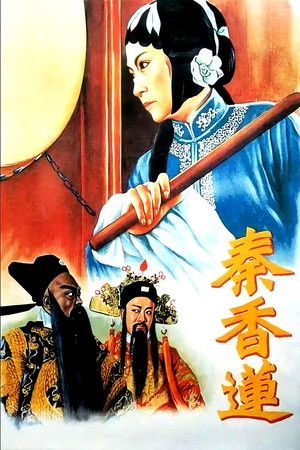
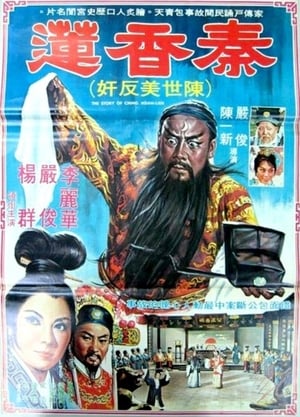
Qing (i.e. Qin) Xianglian was the wife of a man named Chen Shimei, who won the first title of national examination and awarded as husband of the emperor's daughter. Then Qing (i.e. Qin) sues Chen as a murderer who plans to kill his wife and son. In spite of the royal power, gownsman Bao Zhen settles the lawsuit and sentences Chen to serve his head.
The Story of Qin Xiang-Lian is a Hong Kong Chinese Opera musical starring Jackie Chan in a child role.
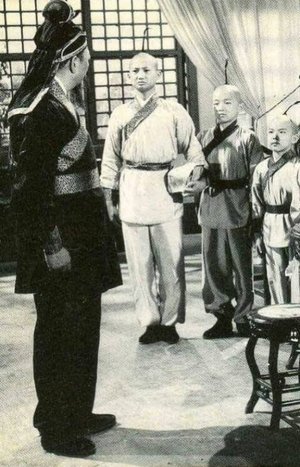
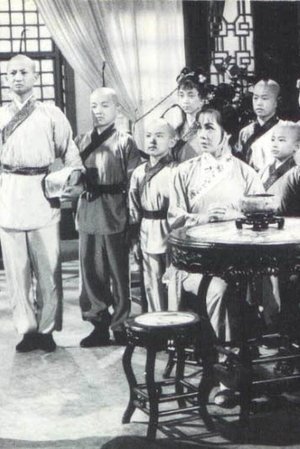
The Eighteen Darts (Part 1) is a Chinese Opera Musical starring Jackie Chan, Sammo Hung and Yuen Biao in child roles.
The Eighteen Darts (Part 2) is a Chinese Opera Musical starring Jackie Chan, Sammo Hung and Yuen Biao in child roles.
"Madam Xian", following the success of "White Snake," is another innovative masterpiece in the realm of opera films from the collaboration between Pearl River Film Group and Guangdong Yueju Opera Theater. The film portrays the legendary life of Madam Xian, hailed as "the first heroine of China," using the distinctive expression of opera film. It won the Best Opera Film award at the 36th China Golden Rooster Awards.
A child learns martial arts in order to become a Kung Fu warrior. Features the Seven Little Fortunes, and is the debut film of Jackie Chan.
This is the first 16mm Cantonese film in full colour, shot on 1940s state-of-the-art Technicolor film stock. Opera star Man-ha (Leung Bik-yuk) enjoys tremendous popularity during her performances in San Francisco, but drowns herself in the vices and temptations of the big city. Increasingly, she fails to show up for performances, almost causing the theatre to go bankrupt. When she sees her lover for the scoundrel that he is, she also sees the errors of her own ways and saves the theatre, restoring it to glory. Joseph Sunn Jue established the Grandview Film Company in Hong Kong during the 1930s and continued making films in the USA during wartime by collaborating with Chinese opera performers in exile there. Wong Hok-sing, an opera actor himself, directed, wrote and starred in this film. He staged a spectacular play-within-a-play at the end, not only to promote the art of Cantonese opera but also to boost solidarity among overseas Chinese through difficult times.
This film is a portrait of unique cultural space for Spirits, Gods and People. While permanent theatres are commonly built in most cosmopolitan modern cities, Hong Kong preserves a unique theatrical architecture, a Chinese tradition that has lasted more than a century - Bamboo Theatre.
A wealthy man's son, who has a sinecure as a hotel owner, poses as a bellhop to win the affections of a woman guest with whom he has fallen madly in love, but who seeks a common man who is earning his own way. This first Cantonese-language talkie was based on a successful 1930 stage musical written by and starring Xue JueXian (Sit KokSin), the plot of which was in turn inspired by a 1929 silent Hollywood romance called "The Grand Duchess And The Waiter" which Xue admired. The film was produced not in Shanghai, by the Tianyi studio, headed by the eldest of the Shaw Brothers, Shao Zuiweng (RunJe Shaw), and was so successful in the Cantonese-speaking parts of China that Shaw moved the Tianyi company to British-administered, Cantonese-speaking Hong Kong to make more Cantonese films in the face of the right-wing Chinese Nationalist government's ban on Cantonese language in favor of Mandarin. A sequel to Baijin Long was made in 1937, and the film itself was remade in 1947.