This tribute program takes you back into the world of Thierry Ardisson, a particularly creative, provocative, and erudite host and producer. From "Tout le monde en parle" to "Salut les Terriens !", via "Lunettes noires pour nuits blanches", the program retraces his more than 40-year career and his extraordinary journey, featuring cult interviews, testimonials, and archive footage. Numerous guests will pay tribute to him and share their memories and anecdotes on set. Thierry Ardisson, "the man in black," shook up the French audiovisual landscape and left his mark on his era. The program is broadcast on all TV5 Monde channels and on TV5 Québec/Canada.
You've seen him interview Mikhail Gorbachev, Angelina Jolie, Robbie Williams, Mariah Carey, Brad Pitt, Jane Fonda, Robert De Niro... You know him, but you don't really know him. Everyone has talked about Ardisson without ever getting close to the truth about him. My ambition: to reveal the man behind the costume of "The Man in Black." I thought to myself: if anyone can figure him out, it's me, a journalist and portraitist who has lived with him for 15 years. Who is the private Thierry behind the spectacular Ardisson? What we discover is how much Ardisson's personal history reflects the eras he has lived through, their contradictions, their utopias, their excesses, their violence. Like so many facets of a man and of society at the turn of the century.
The Balkans cradles Europe's last wild rivers and supports abundant wildlife and healthy, intact ecosystems. These rivers are "The Undamaged" – clean, pristine, and undammed. With over 2,700 small and large hydro power plants planned or under construction in the Balkans, corruption and greed are destroying the last free-flowing rivers of Europe. Follow the Balkan Rivers Tour, a rowdy crew of whitewater kayakers, filmers, photographers and friends who decided to stand up for the rivers, travelling from Slovenia to Albania for 36 days, kayaking 23 rivers in 6 countries to protest the dams and show the world the secret wild rivers of the Balkans. The film honours everyday people and local activists who are fighting to defend rivers and aims to spread the word of the plight of these rivers, showing a new style of nature conservation that is fun, energetic and effective.
In 1983, fifteen Cape Breton, Nova Scotia, landowners went to court to stop the spraying of herbicides by the local subsidiary of a Swedish multinational on forests adjacent to their properties. They found that the testimony of scientists and the support of public opinion, both here and abroad, were not enough to win their case. The film shows their ordeal and the landmark Sydney trial. Concerns raised included potential conflict-of-interest situations where a government must protect citizens' health while supporting certain kinds of industry; the relative value of the political and judicial processes in mediating social problems; and the need for a public forum for debating environmental issues. The film contains outstanding footage from chemical-industry films of the 1950s and recent material about Vietnam veterans affected by Agent Orange.
Narrated by Dan Aykroyd, Defend, Conserve, Protect, pits the marine conservation group, Sea Shepherd, against the Japanese whaling fleet, in an epic battle to defend the majestic Minke whales.
1990 TV adaptation of a 1979 biographical play by Ned Sherrin & Caryl Brahms, based on the life of conductor and impresario Sir Thomas Beecham. With Timothy West as Beecham.
Exploring the concept of the Ecology of Emotions, this musical film portrays an inner journey through the secret garden of creativity put into frame by the nature of Iceland. Hidden Eden is a metaphor for our inner secret garden of creativity. This project bloomed during an art residency in Iceland, sparked by conversations around our shared philosophies on voice and emotional connection. The nature of Iceland inspired us to make the connection on how the landscape reflects the emotional states of creativity and how it helps manage the homeostasis of our inner emotional landscapes. This exchange between emotion and the landscape opens a space for healing. Creativity provides us with the tools to access a garden of our authentic being, nourishing and balancing us. Allowing ourselves to explore the spectrum of our emotions through the lens of our relationship with the Earth invites others to do the same. The creative process can affect our well being and is a key to human evolution.
An examination of the life of great Russian author Leo Tolstoy, who penned the 1877 novel Anna Karenina.
Following the success of her debut novel, All This Could Be Different, author Sarah Thankam Mathews embarks on her second novel, drawing from her adolescence between India and Oman. As Sarah excavates lost place and time, she must contend with the weight of truthful representation and the contradictions within her childhood memories.
Armando Iannucci presents a personal argument in praise of the genius of Charles Dickens. Through the prism of the author's most autobiographical novel, David Copperfield, Armando looks beyond Dickens - the national institution - and instead explores the qualities of Dickens's work that still make him one of the best British writers. While Dickens is often celebrated for his powerful depictions of Victorian England and his role as a social reformer, this programme foregrounds the elements of his writing which make him worth reading, as much for what he tells us about ourselves in the twenty-first century as our ancestors in the nineteenth. Armando argues that Dickens's remarkable use of language and his extraordinary gift for creating characters make him a startlingly experimental and psychologically penetrating writer who demands not just to be adapted for television but to be read and read again.
A visual journey into the life and legacy of one of Australia's most celebrated artists, Brett Whiteley.
Takes audiences behind the scenes of the new golden age of children’s picture books —a time when all children can see characters who look like them on the page; a time when creators come from diverse communities and backgrounds; and a time when instead of keeping the hard stuff out of stories for children, we put it in and provide context and counternarrative.
Legendary short story writer Lucia Berlin (1936-2004) captured moments of grace in the cafeterias and laundromats of the American Southwest, in the homes of the Bay Area upper class, among switchboard operators and struggling mothers, hitchhikers and bad Christians.
60 years ago, almost nothing was known of elephants in the wild. But then one young Scottish biologist changed that forever. In 1965 Iain Douglas-Hamilton arrived in Tanzania to live alongside African elephants. Later joined by his wife Oria and daughters Saba and Dudu, elephants became central to their lives with matriarch Boadicea and gentle young mother Virgo cherished like human relatives. But this garden Eden was short-lived as an ivory poaching epidemic swept across Africa forcing Iain to switch from pioneering scientist to maverick conservationist. He became a lone crusader against the international Ivory trade which was finally banned in 1989. Now back in the field and revealing even more about the fascinating world of elephants, Iain’s work continues alongside a new generation of Kenyan conservationists. This inspiring documentary combines stunning wildlife imagery with the story of a remarkable life showing how sometimes you have to stand alone to protect what you love.
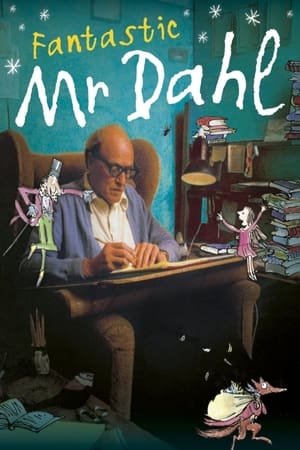
In celebration of the 100th anniversary of Roald Dahl’s birth, film and television personalities take turns championing their favourite of Dahl's 10 best-selling children’s books, culminating in a nationwide vote. Rik Mayall reads from George’s Marvellous Medicine.
For six years, Melati, 18, has been fighting the plastic pollution that is ravaging her country, Indonesia. Like her, a generation is rising up to fix the world. Everywhere, teenagers and young adults are fighting for human rights, the climate, freedom of expression, social justice, access to education or food. Dignity. Alone against all odds, sometimes risking their lives and safety, they protect, denounce and care for others. The earth. And they change everything. Melati goes to meet them across the globe. At a time when everything seems to be or has been falling apart, these young people show us how to live. And what it means to be in the world today.
A ritual of grids, reflections and chasms; a complete state of entropy; a space that devours itself; a vertigo that destroys the gravity of the Earth; a trap that captures us inside the voids of the screen of light: «That blank arena wherein converge at once the hundred spaces» (Hollis Frampton).
A poetic look at the life and legacy of legendary author Philip K. Dick (1928-1982), who wrote over a hundred short stories and 44 novels of mind-bending sci-fi, exploring themes of authority, drugs, theology, mental illness and much more.
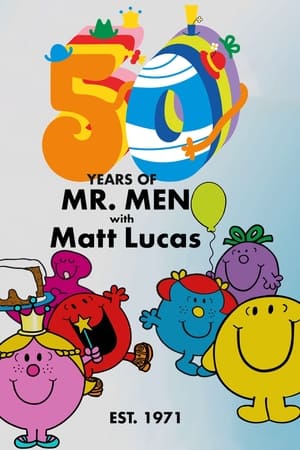
Matt Lucas celebrates 50 years of The Mr Men and Little Misses, telling the amazing story of the colourful little characters who changed global publishing forever.
On an overcast morning in 1999, William Gibson, father of cyberpunk and author of the cult-classic novel Neuromancer, stepped into a limousine and set off on a road trip around North America. The limo was rigged with digital cameras, a computer, a television, a stereo, and a cell phone. Generated entirely by this four-wheeled media machine, No Maps for These Territories is both an account of Gibson’s life and work and a commentary on the world outside the car windows. Here, the man who coined the word "cyberspace" offers a unique perspective on Western culture at the edge of the new millennium, and in the throes of convulsive, tech-driven change.