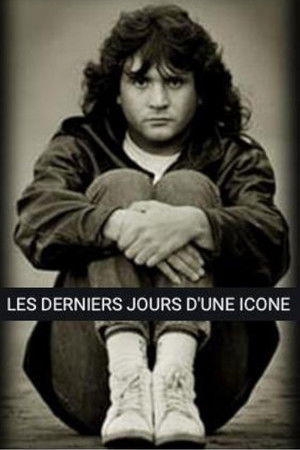
With his soaring falsetto and magnetic yet understated stage presence, Jimmy Somerville burst onto the 1980s new wave scene, making the world dance to songs rooted in struggle and resilience. From the harsh realities of Glasgow’s working-class neighborhoods to the challenges of growing up gay in a hostile world, and the devastating impact of the AIDS crisis, Somerville transformed pain into anthems of freedom. First with Bronski Beat, then The Communards, and later as a solo artist, he became both rebel and diva—the unmistakable voice of a generation fighting for equality. Through intimate stories from those who have stood by him for four decades, this portrait reveals a rare artist who has never wavered in his convictions.
In the vastness of the Iranian desert, young artists strive for freedom, community, and the preservation of their cultural heritage in the ancient caravanserai of Deyr-e Gachin, while facing the harsh conditions of their surroundings.
With her short red hair, expressive face, vitality, and playful acting style, Shirley MacLaine stands out in the Hollywood pantheon. Driven by a volcanic personality and iron discipline inherited from classical dance, she has constantly reinvented herself, from the girl next door to the eccentric old lady she plays on screen today, proving at 91 that there is a place for actresses of all ages. A refreshing portrait featuring film clips and archival footage, particularly those in which this talk show regular exercises her sharp wit.
Bandits, Bandits, Brazil, Munchausen, Twelve Monkeys, not to mention the crazy Monty Python saga... With their visual extravagance and ever-fresh originality, amplifying his vision of a humanity that is as disturbing as it is comical, his films have made history. In the same baroque, zany, but also tragic vein, Terry Gilliam's work and life merge into an adventure that borders on the epic.
An investigation of Edward Brezinski, an ambitious, charismatic Lower East Side painter hell-bent on sucess, who thwarted his own career with antics that roiled NYC’s art elite. Brezinski’s quest for fame gives an intimate portrait of the art world’s attitude towards success and failure, fame and fortune, notoriety and erasure.
Under pressure from activist groups, art is increasingly being cancelled for ideological reasons, because of 'cultural appropriation' or because of the desire for a 'safe space'. The colour and gender of the artist seem to be all-determining in this. How do you relate to this as an artist? Is this a disturbing development or a sign of emancipation? And what does it mean for freedom of expression? Director Karin Junger investigates this with Anne-Fay Kops, Ted van Lieshout, Angel-Rose Oedit Doebé, Raymi Sambo, Boris van Berkum, Marian Markelo, Stephan Sanders and Thomas Chatterton Williams.
Charismatic and resourceful, seducer and daredevil, Jean-Paul Belmondo has always played his roles as he lived, at a thousand miles an hour. He had only one passion: to entertain the public with his smile, his naturalness, his energy, his stunts. But contrary to appearances, his destiny was full of pitfalls. This film lifts the veil on a founding childhood that allowed him to overcome many obstacles throughout his life thanks to the tutelary figures of his father and mother. Told from the inside with the help of his autobiography, interviews and unpublished archives, this epic story traces the career of this turbulent young actor who launched the New Wave in Breathless before becoming the popular Bebel, an indestructible and provocative vigilante. From film to film, this documentary paints an intimate portrait of a man who built himself up to reach the top: his triumphs but also his trials, his doubts, his secrets, his angers, his clowning, his disappointments or his personal dramas.
The film begins with a sun materializing out of the emptiness of space. In the first of three sequences we see various images from nature against music: the sky, trees, leaves, a bird, water, sand, a beach. A little boy wanders along the beach observing the natural world around him. He walks and presently comes to a house and peers inside. The second sequence has no music. The narrator speaks of sculptor Alexander Calder and his work, as we see Calder in his workshop, cutting and creating unusual shapes, and seeing the resultant artworks. The last sequence has music as we view images of Calder's work. However, now they are intercut with images from nature so that we understand that Calder's inspiration is the natural world around him. The film ends as it began, with an image of the sun, now fading into the sky.
When you look at a river, what do you see? Remembering Holland by Jan Wouter van Reijen carries the viewer through the basin of the River Waal, past painters, sculptors and poets. Van Reijen follows the entire course of the river, from the German border to the North Sea, and creates portraits of various artists who have taken the riverine landscape as their theme. Each and every one of them sings the river’s praises in his or her own way, from extremely realistic to abstract. At every spot along the way, and each day anew, the river landscape changes: we see the water dark and colorful, glistening in late and early light, in morning dew and by moonlight, in clouds of mist and the snows of winter. Yet the water brings more than beauty alone. The flooding of the forelands and the reinforcement of the dykes in 1995 remind us of the eternal struggle of the Dutch against the rising water. See it and be borne along on a voyage of the imagination.
Seeing is to painting what listening is to politics. Survival as an artist demands both. Paint Until Dawn is a documentary on art in the life of James Gahagan (1927-1999), who painted all night to push the limits of vision. His life and thought reveal a correlation between art and activism through an interesting angle: the creative process itself.
British surrealist Leonora Carrington was a key part of the surrealist movement during its heyday in Paris and yet, until recently, remained a virtual unknown in the country of her birth. This film explores her dramatic evolution from British debutante to artist in exile, living out her days in Mexico City, and takes us on a journey into her darkly strange and cinematic world.
Filmmaker Jon Alpert turns the camera on his own family in this intimate portrait of his aging father. As illness and declining vitality reshape his life, the film captures a deeply personal struggle with dignity, humor, and the bonds that hold a family together.
Director Francois Levy-Kuentz's film uses previously unreleased archival material, such as Klein's personal films, to capture the artist's astonishing career, from its beginning in 1954 to his death in 1962. In those eight short years, Klein turned the modern art world upside down.
Bob Ross brought joy to millions as the world's most famous art instructor. But a battle for his business empire cast a shadow over his happy trees.
An examination of the art of pottery through the works of two world renowned potters –Bernard Leach and Shoji Hamada. The film traces the entire process of pottery making, beginning with the digging of clay and its preparation, and on through the long sequences of pods being thrown on the wheel.
Dick Perez, official Baseball Hall of Fame artist for over 20 years, painted the game's history and every inductee - a project he continues in his 80s. This childhood immigrant's portraits changed commemoration of America's iconic pastime.
‘Who Named the Lily?’ celebrates and laments the complicated history of the Crystal Palace. Monster Chetwynd plays the ‘Fact Hungry Witch’, who explores the story of the Amazonian waterlily, and reveals its links to engineering. The artwork brings to light the politics of Paxton’s developments in industry and architecture, however, the protagonist of this story is the waterlily – a catalyst for ground-breaking technological advancement.
The documentary accompanies Irish-born artist Sean Scully as he works on his piece “Grey Wolf”.
A 12-minute documentary about the house of RHCP guitarist John Frusciante. The film's main purpose was to depict the chaos & instability in his life.
Model, film star, muse, socialite, icon. Edie Sedgwick was the very first "it" girl of the Andy Warhol Factory scene. The arc of her life traced the rise and fall of the 1960s recklessness. After being the toasted by the whole of New York City, Edie died alone of a drug overdose in California at the age of 28. She was both the harbinger of celebrity culture and someone who stood entirely outside of it, an artist who painted life, bravely and spontaneously, with her own hand.