Did you know that behind a soccer ball, glasses or a spoon lie treasures of inventiveness and thousands of years of history? Each episode of this new series looks at an object. Through its creation and its developments, through the ages and civilizations, we approach all sciences, from physics to philosophy, including history. Each object of our daily life is the result of a long process and conceals a rich history of knowledge and human adventures. Never again will you look at your stairs, your pants or a computer the same way...
Dr Alice Roberts follows a year of British archaeology, joining up the results of digs and investigations the length of the country.
A current affairs program that began airing on EBS in August 2021. Co-produced by the Ministry of Education, the National Institute for Lifelong Learning, and EBS, the program is part of the Korean MOOC (Korean Massive Open Online Course) program, which aims to disseminate world-class knowledge to the public amid the prolonged COVID-19 pandemic, which has widened the knowledge gap between classes and spread fake information on social media. Hear great thoughts from some of the world's leading minds right now, including Nobel Prize-winning economist Paul Krugman, Michael Sandel of What is Justice, and world-renowned conductor and pianist Daniel Barenboim.
Documentary series dealing with every aspect of special effects in movies, from low-budget make-up to multi-million-dollar computer-generated graphics. The clear presentation includes descriptions of the creation and technical problems of the effects, and interviews with effects technicians, directors, stars and other crew. Each episode deals with one topic, effect or technician (eg theme park rides, CGI, Stan Winston), concentrating on one or more current or recent films.
"The Illegal Trip" is an educational documental series about narcotics and people. The series explore narcotic policies, different substances, and the damage done by them without judgement. Viewers have a chance to see the behind-the-scenes of both the legal and illegal drug world, hear stories from users and dealers, as well as educate themselves on different countries' policies for lessening the damage.
An educational and entertaining travel series that uncovers the unique history, vibrant culture, and fascinating stories behind iconic landmarks and tourist attractions.
It's "Mr. Wizard" for a different decade. Bill Nye is the Science Guy, a host who's hooked on experimenting and explaining. Picking one topic per show (like the human heart or electricity), Nye gets creative with teaching kids and adults alike the nuances of science.
Attention please! Are you ready for an adventurous tour through the human body? With a lot of humour, our physical appearance is being introduced from head to toe along cells and organs in an educational way. The heart, blood, nerves and kidneys, each single one is a miracle which renders life possible.
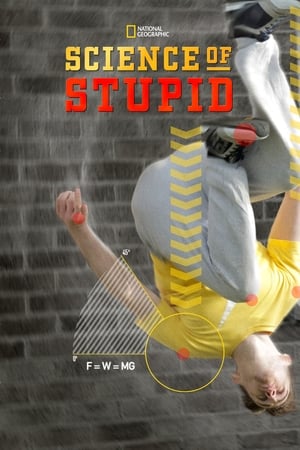
This show combines cold hard science with some of the craziest, most spectacular and painful user generated clips ever recorded. Richard Hammond introduces all manner of mishaps featuring brave, if misguided individuals from around the world and then explains the science behind their failure and humiliation with the use of bespoke animations and super slo-mo cinematography. Every episode features between 50 and 60 clips of misadventure – ordinary folk making extraordinary mistakes. Each week watch stunts involving weightlifting, shooting guns or jumping over cars, that have gone wrong, paused, re-wound, and re-played and analysed to determine exactly what went wrong and why. Richard explains the physics, chemistry and biology at play, then presents forensic details to explain the stupidity that resulted in failure. He’ll look at everything including weight, volume, momentum, combustion and even how the brain operates. This is misadventure explained. This is the Science of Stupid.
Antiques Roadshow is a British television show in which antiques appraisers travel to various regions of the United Kingdom to appraise antiques brought in by local people. It has been running since 1979. There are also international versions of the programme.
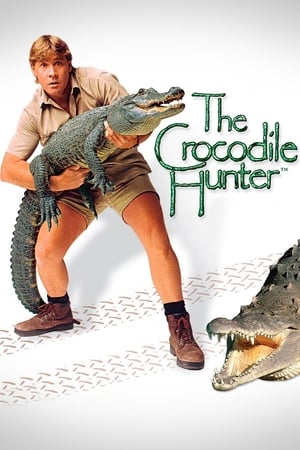
Australian host Steve Irwin and his wife Terri run a wildlife refuge. Their shared passion is educating the world about wildlife, including the much feared crocodile and numerous venomous snakes. Steve's specialty is the capture and relocation of crocodiles. No animal appears too threatening to Steve, his true respect for animals is the foundation for everything he does.
Nat Geo Lab Brasil
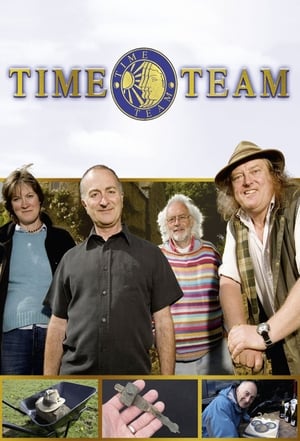
Time Team is a British television series which has been aired on British Channel 4 from 1994. Created by television producer Tim Taylor and presented by actor Tony Robinson, each episode featured a team of specialists carrying out an archaeological dig over a period of three days, with Robinson explaining the process in layman's terms. This team of specialists changed throughout the series' run, although has consistently included professional archaeologists such as Mick Aston, Carenza Lewis, Francis Pryor and Phil Harding. The sites excavated over the show's run have ranged in date from the Palaeolithic right through to the Second World War.
Tu mourras moins bête
A series of very short films inspired by the amazing and often bizarre sexual practices of insects and other creatures.
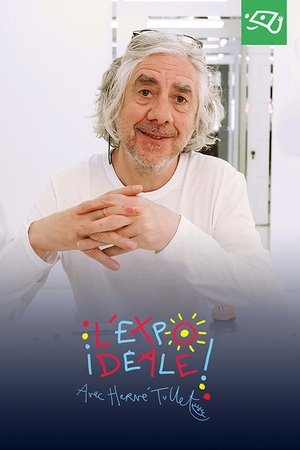
Hervé Tullet, an artist of playful and uninhibited creations, invites young and old to unleash their creativity. He offers a series of creation, recreation and inspiration workshops, so that anyone can put together their own Ideal Exhibition.
Vetenskapens värld is a popular science TV documentary program broadcast on Swedish Television (SVT).
In total, 100 participants will take part in the tests at the same time, with the aim of not finishing in last place. The tests consist of games that require concentration and manual effort and are timed. The winner will take home R$300,000.
The Johns Hopkins Science Review is a US television series about science that was produced at Johns Hopkins University from 1948-1955. Starting in 1950, the series aired on the DuMont Television Network until the network's demise in 1955. The series' creator was Lynn Poole, who wrote or co-wrote most of its episodes and acted as the on-camera host. In 2002, Patrick Lucanio and Gary Coville wrote that, "In retrospect, Lynn Poole created one of those unique series that allowed television to fulfill its idealized mission as both an educational and an entertainment medium." The original series was followed by three related series produced by Poole at Johns Hopkins University: Tomorrow, Tomorrow's Careers, and Johns Hopkins File 7. Johns Hopkins University ended its production of television series in 1960.
Host Felipe Castanhari explores science, history, mysteries and marvels, uncovering mind-blowing facts with help from his lab buddies.