The second version of the American television game show.
What do you get when you combine American Idol with the type of singing talent you usually only hear in the shower? This dress-up sing-along show from Fox, in which average folks make themselves over as their favorite celebrity and give a performance.
In a Temple filled with lost treasures and protected by mysterious Mayan temple guards, six teams of two children compete to retrieve one of the historical artifacts in the Temple by performing physical stunts and answering questions based on history, mythology, and geography. After three elimination rounds, only one team remains, who then earns the right to go through the Temple to retrieve the artifact within three minutes and win a grand prize.
The show creates a unique blend of darts, action, and entertainment in a futuristic arena – hosted by the dynamic duo Elmar Paulke and Negah Amiri.
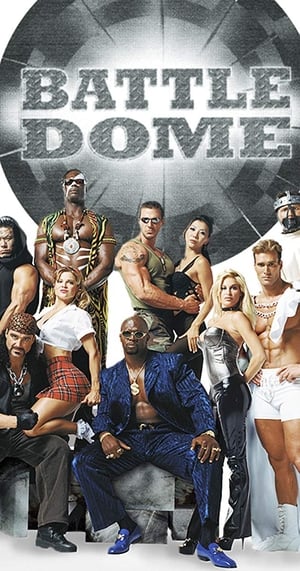
Battle Dome was a syndicated American television series that aired from September 1999 to April 2001. It combined elements of American Gladiators - inspired athletic competition with scripted antics more reminiscent of professional wrestling. Recurring character-athletes known as "Warriors" competed against weekly contestants in a variety of physically demanding events. The series was filmed at the Los Angeles Sports Arena and produced by Columbia TriStar Television. The entire first and second season of Battle Dome is available for purchase on iTunes and Amazon Instant Video.
«Secret for a Million» is a game show for celebrities. Guest stars win money for disclosing personal secrets. Guest has to answer 10 hardball questions from the host. The last question is the hardest one and a truthful answer will be awarded by 1 million rubles. Only the most honest and brave of the guests dare to answer it telling the ugly truth they hid from their fans for years.
In a society that puts the spotlight on the smart guys only, there are people who do not have a grain of common sense. In this knowledge-talk show, these problematic people get locked up in a rooftop house and are allowed to go home only if they get 10 questions right.
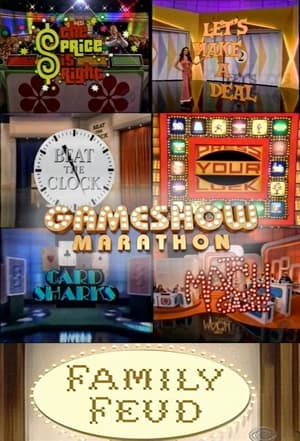
Game$how Marathon is an American television program which aired on CBS from May 31, 2006 to June 29, 2006. It is based on the UK series Ant & Dec's Gameshow Marathon which aired on ITV in 2005. The show features contestants competing in some of television's most historically popular game shows, in a single-elimination format until an ultimate winner is found. Both the UK and US versions featured celebrity contestants. The US version was produced by FremantleMedia North America and Granada America and was hosted by Ricki Lake and announced by Rich Fields. In the US, the series only aired for a single season, while in the UK a second season aired in 2007, this time entitled Gameshow Marathon and hosted by Vernon Kay. This program was recorded at Stage 46, CBS Television City in Los Angeles, CA, USA.
Maestro
Card Sharks is an American television game show created by Chester Feldman for Mark Goodson-Bill Todman Productions. Two contestants compete for control of a row of oversized playing cards by answering questions posed by the host and then guessing if the next card is higher or lower in value than the previous one. The concept has been made into a series four separate times since its debut in 1978, and also appeared as part of CBS's Gameshow Marathon. The primary announcer for the first three series was Gene Wood.
This unique and hilarious series sees presenter Matt Richardson and co-host Ken Cheng spring a surprise on hungover Brits across the country, challenging them to compete in an outrageous set of challenges, based on their antics from the night before, all for the chance of winning a cash prize. Under the assumption they are taking part in a documentary about British night life, a group of mates will be followed by the cameras on a night out. What they won't find out until the next morning is that they are really taking part in a brand new game show. Groggily woken up to a knock on the door from Matt early the next morning, they will learn that they have the chance to win a cash prize if they can make it out of bed and take part in The Hangover Games. Each game will test their memories of the night before and they'll have to rely on one another's stamina, clear thinking, emotional stability and iron stomachs if they want to be crowned winners. Let the games begin.
Concentration is an American television game show based on the children's memory game of the same name. Matching cards represented prizes that contestants could win. As matching pairs of cards were gradually removed from the board, it would slowly reveal elements of a rebus puzzle that contestants had to solve to win a match. The show was broadcast on and off from 1958 to 1991, presented by various hosts, and has been made in several different versions. The original network daytime series, Concentration, appeared on NBC for 14 years, 7 months, and 3,770 telecasts, the longest run of any game show on that network. This series was hosted by Hugh Downs and later by Bob Clayton, but for a six-month period in 1969, Ed McMahon hosted the series. The series began at 11:30 AM Eastern, then moved to 11:00 and finally to 10:30. Nearly all episodes of the NBC daytime version were produced at 30 Rockefeller Plaza, New York City. A weekly nighttime version appeared in two separate broadcast runs: the first aired from October 30 to November 20, 1958 with Jack Barry as host, while the second ran from April 24 to September 18, 1961 with Downs as host.
Ken Bruce brings the formidable quiz to our tellies, as he challenges music fans to recall chart-topping facts and stats in a battle to become PopMaster TV champion
Battle of the Generations asks not only how well you know your own generation, but how well you know your rivals’ generations – ultimately resolving the question of which generation has what it takes to win it all.
De Verraders
30 Seconds
Two teams compete against each other to figure out which person knows which hidden special talent.
Catchphrase is a British game show based on the short-lived U.S. game show of the same name. It originally aired on ITV in the United Kingdom between 12 January 1986 and 19 December 2002. It was presented by Northern Irish comedian Roy Walker from 1986–1999; followed by Nick Weir from 2000–2002, and Mark Curry in 2002. In the original series, two contestants, one male and one female would have to identify the familiar phrase represented by a piece of animation accompanied by background music. The show's mascot, a golden robot called "Mr. Chips", appears in many of the animations. In the revived version of the show, the same format remains, but there are three contestants. In August 2012, it was announced that Stephen Mulhern would host a revived version of the show beginning on 7 April 2013. On 21 August 2013, it was confirmed that Catchphrase has been re-commissioned for a second series, following the success of the first.
Hosted by India's biggest superstar, Amitabh Bachchan, one of the biggest shows is here to entertain millions, change lives and make dreams come true.
Hollywood Squares is an American panel game show, in which two contestants play tic-tac-toe to win cash and prizes. The "board" for the game is a 3 × 3 vertical stack of open-faced cubes, each occupied by a celebrity seated at a desk and facing the contestants. The stars are asked questions by the host, or "Square-Master", and the contestants judge the veracity of their answers in order to win the game. Although Hollywood Squares was a legitimate game show, the game largely acted as the background for the show's comedy in the form of joke answers, often given by the stars prior to their "real" answer. The show's writers usually supplied the jokes. In addition, the stars were given question subjects and plausible incorrect answers prior to the show. The show was scripted in this sense, but the gameplay was not. In any case, as host Peter Marshall, the best-known "Square-Master" and the man in whose honor the show's first announcer, Kenny Williams, actually "coined" the term, would explain at the beginning of the Secret Square game, the celebrities were briefed prior to show to help them with bluff answers, but they otherwise heard the actual questions for the first time as they were asked on air.