Brille is a humor-based quiz show where some of Norways best known comedians get to work on seemingly impossible tasks and questions. The answers are often as unexpected and funny as the panel's train of thought.
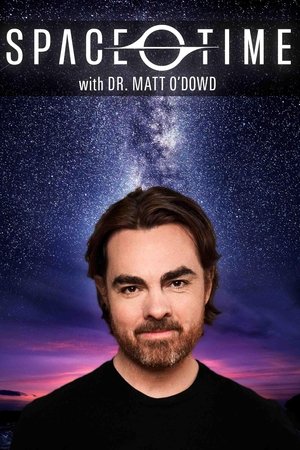
Space Time explores the outer reaches of space, the craziness of astrophysics, the possibilities of sci-fi, and anything else you can think of beyond Planet Earth.
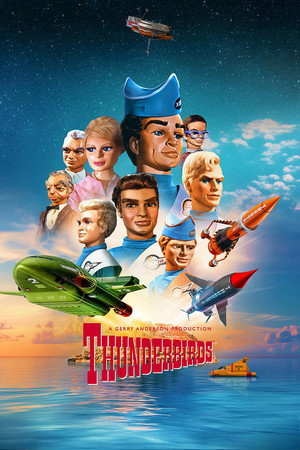
Thunderbirds is a 1960s British science-fiction television series which was produced using a mixed method of marionette puppetry and scale-model special effects termed "Supermarionation". The series is set in the 21st century and follows the exploits of International Rescue, a secret organization formed to save people in mortal danger with the help of technologically advanced land, sea, air and space vehicles and equipment, launched from a hidden base on Tracy Island in the South Pacific Ocean.
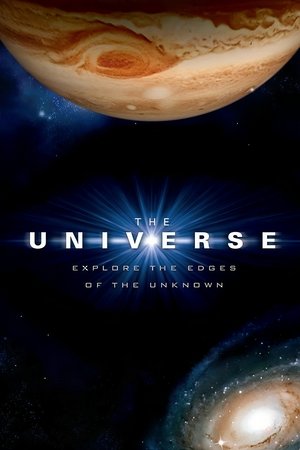
From the planets to the stars and out to the edge of the unknown, history and science collide in a wondrous yet deadly adventure through space and time.
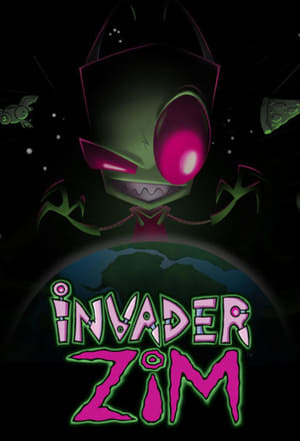
Zim dreams of greatness. Unfortunately, though, he's hopelessly inept as a space invader. Desperate to be rid of the annoying Zim, his planet's leaders send him on a mission to infiltrate Earth, providing him with leftover, cobbled-together equipment. To their consternation, Zim succeeds in setting up a base on Earth and infiltrating human culture, posing as a human child as he plots the planet's downfall. Only Zim's archnemesis, Dib, recognizes that Zim is an alien, and of course, nobody believes Dib's claims.
With the help of industry experts, this innovative docuseries examines new and emerging technological trends to imagine revolutionary possibilities.
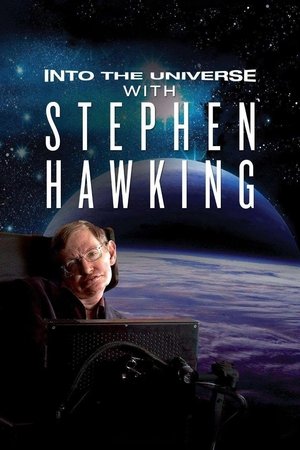
Hawking gives us the ultimate guide to the universe, a ripping yarn based on real science, spanning the whole of space and time -- from the nature of the universe itself, to the chances of alien life, and the real possibility of time travel.
"The Mars" is a documentary series that delves into various aspects of the planet Mars, from its past to present and future.
Explore the impact of A.I. and how it is transforming the way we live and work -- both now and in the future, featuring some of the brightest minds in science, philosophy, technology, engineering, medicine, futurism, entertainment and the arts to tell the dynamic story of A.I.
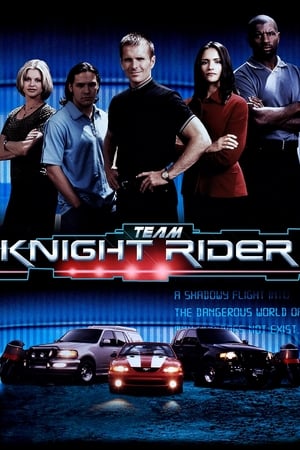
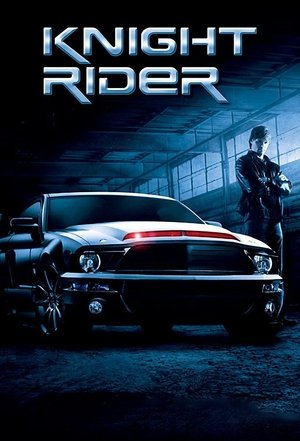
Team Knight Rider is a syndicated television series that was adapted from the Knight Rider franchise and ran between 1997 and 1998. TKR was created by writer/producers Rick Copp and David A. Goodman, based on the original series created by Glen A. Larson, who was an executive producer. TKR was produced by Gil Wadsworth and Scott McAboy and was distributed by Universal Domestic Television and ran only a single season of 22 one-hour episodes before it was canceled due to poor ratings. The story is about a new team of high-tech crime fighters assembled by the Foundation for Law and Government who follow in the tracks of the legendary Michael Knight and his supercar KITT. Instead of "one man making a difference", there are now five team members who each has a computerized talking vehicle counterpart. Like the original duo, TKR goes after notorious criminals who operate "above the law" – from spies and assassins, to terrorists and drug dealers. The final episode of the season, and series, featured the reappearance of Michael Knight, seen only from behind, at the very end.
Professor Jim Al-Khalili unravels the mysteries of arguably the most complex object in the cosmos: the human brain.
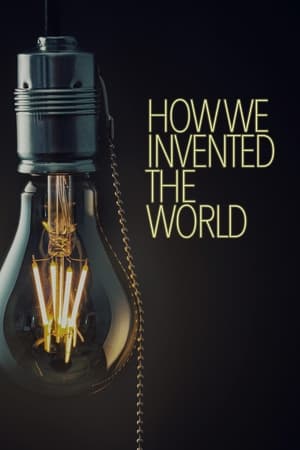
How We Invented the World is the ultimate action-packed, hi-energy, landmark series that examines the four inventions that define the modern world - mobiles, cars, planes and skyscrapers -celebrating the people and connections that made them possible. Each playing a crucial role in where we are now in the 21st Century - able to travel the globe, to talk to one another at any time at the push of a button, to live in huge cities, to commute, to capture the world we live in, making the fantasies we create come to life. This four part series lifts the lid on how these iconic inventions came to be. Showcasing the people who have shaped our lives in ways that they could have never imagined or anticipated, this series reveals stories of human ingenuity, extraordinary connections, unprecedented experimentation and jaw dropping accidents that created the world as we know it.
Engineering enthusiasts battle to create the most ingenious contraption using everyday objects. Teams are challenged to fabricate and demonstrate a new chain reaction machine before being judged on their ingenuity, design, and workmanship.
Join visionary philanthropist Bill Gates as he delves into pressing global issues and uncovers cutting-edge technologies that will transform the world.
Déclics
100 miles south of Atlanta, Dr. Hodges and Dr. Ferguson are two longtime friends who own and operate Critter Fixer Veterinary Hospital. Together with their loving staff, Drs. Hodges and Ferguson treat and care for over 20,000 patients. Between emergency visits to the office, and farm calls throughout rural Georgia - the Critter Fixers are constantly bombarded with unique cases you only see in the country.
Your user-friendly guide to the latest technology news, issues, gadgets and apps.
The Day After Tomorrow is a 1975 British science-fiction television drama produced by Gerry Anderson between the two series of Space: 1999. Written by Johnny Byrne and directed by Charles Crichton, it stars Brian Blessed, Joanna Dunham and Nick Tate, and is narrated by Ed Bishop. It first aired in the United States on NBC, as an episode of the children's science education series Special Treat, in December 1975. In the UK, BBC1 broadcast the programme as an independent special in December 1976, and again in December 1977. The plot of The Day After Tomorrow relates to the interstellar mission of Altares, a science vessel of the future that can travel at the speed of light. Departing from its original destination, Alpha Centauri, Altares moves deeper into space and her crew of three adults and two children encounter phenomena such as a meteor shower, a red giant star and, finally, a black hole, which pulls the ship into another universe. Originally commissioned to produce a child-friendly introduction to Albert Einstein's special relativity theory in the form of an action-adventure, Anderson and Byrne conceived The Day After Tomorrow as the pilot episode of a TV series. To this end, writer and producer proposed the alternative title "Into Infinity", although their limited budget precluded the production of further episodes. With a cast and crew that included veterans of earlier Anderson productions, filming on The Day After Tomorrow ran from July to September 1975 and consisted of ten days of principal photography and six weeks of special effects shooting. The visuals of Space: 1999 influenced both special effects technician Martin Bower, the designer of the scale models that appear in the programme, and production designer Reg Hill, who re-used set elements from various episodes of Space: 1999 to construct the Altares interiors. Newcomer Derek Wadsworth collaborated with Steve Coe to compose the theme and incidental music.
The Bell System Science Series consists of nine television specials made for the AT&T Corporation that were originally broadcast in color between 1956 and 1964. Marcel LaFollette has described them as "specials that combined clever story lines, sophisticated animation, veteran character actors, films of natural phenomena, interviews with scientists, and precise explanation of scientific and technical concepts — all in the pursuit of better public understanding of science.
Les sous-marins de tous les records