The untold true story behind the Cold War race to put man into space.
From the planets to the stars and out to the edge of the unknown, history and science collide in a wondrous yet deadly adventure through space and time.
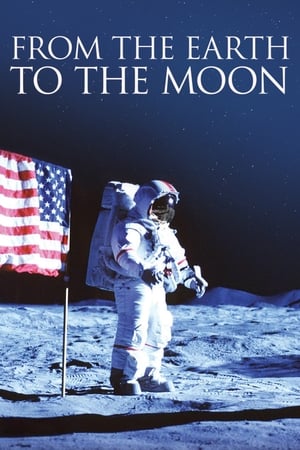
On May 25, 1961, President John F. Kennedy made a historic speech where he pledged to send astronauts to the moon before the end of the decade. Eight years later, on July 20, 1969, Apollo commander Neil Armstrong stepped out of the lunar module and made a giant leap for mankind - a step that symbolized one of the most remarkable feats in human history. From that moment on, the exploration of our universe has achieved unimaginable feats with hundreds of missions stretching light years into the distant galaxy. This exciting documentary series takes viewers into the past, present and future of NASA.
Once Upon A Time: Electricity
České zázraky
Aurora
The Space Shuttle: Triumph and Tragedy
This 4-part documentary miniseries covers the history of manned and unmanned space-flight, from the late 1800s through the mid-1980s.
The stories of the men and women who made America's mission to the Moon possible are told through archival film, oral histories taken directly from the astronauts and Apollo artifacts, such as John Glenn's camera and Apollo 11's command module.
An unprecedented look at the decade-long odyssey to land a man on the moon. This documentary pulls back the curtain on the familiar narrative of the moonshot, revealing a fascinating stew of scientific innovation, political calculation, media spectacle, visionary impulses and personal drama.
A documentary mini-series that chronicles NASA's historic journey to the moon.
Bill Nye walks viewers through various areas of science to show how far they've come through their beginnings until modern times.
Science And Islam
The story of the United States' space program, from its beginnings in 1961 to the final moon mission in 1972.
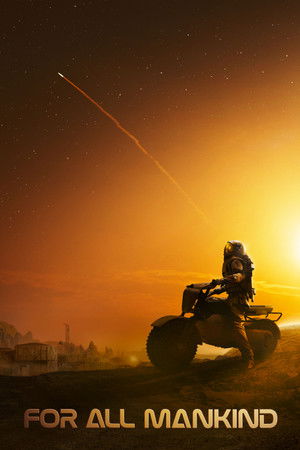
In this expansion of the For All Mankind universe, experience the "what if" take on the global space race from the Soviet Union perspective. Go behind the Iron Curtain, where it's more dangerous on the ground than in space.
A 13-hour miniseries detailing James A. Michner's fictional account of the American space program from the years after World War II to the Apollo landings on the moon in the early 1970s.
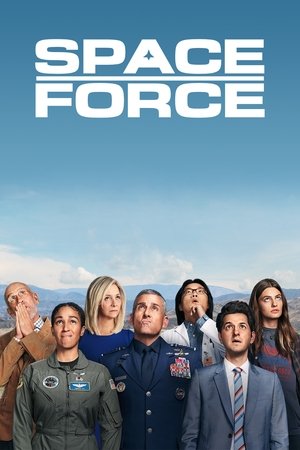
A four-star general begrudgingly teams up with an eccentric scientist to get the U.S. military's newest agency — Space Force — ready for lift-off.
Explore an aspirational world where NASA and the space program remained a priority and a focal point of our hopes and dreams as told through the lives of NASA astronauts, engineers, and their families.
At the height of the Cold War, newly formed NASA selects seven of the military’s best test pilots to become astronauts. Competing to be the first in space, these men achieve the extraordinary, inspiring the world to turn towards a new horizon of ambition and hope.
The programme focuses on the British and the worldwide deaf community and covers a broad range of topics from areas such as education, deaf people's rights, technology and language. The programme is presented entirely in BSL and is broadcast with voice-over and subtitles in English throughout the programme.