老广的味道
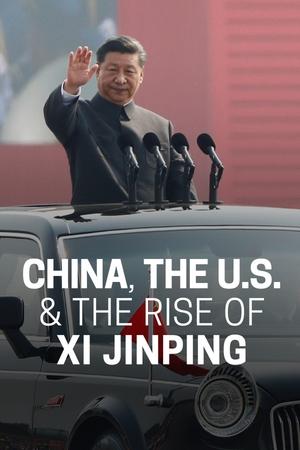
Tracing Xi Jinping's defining moments, how he's exercising his power and the impact on China and relations with the U.S.
于青山绿水间
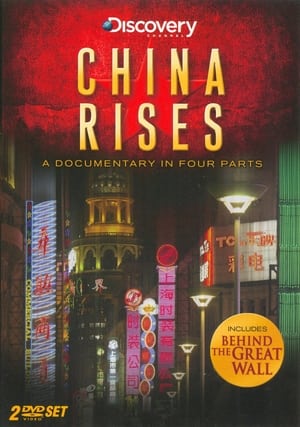
Experience one of the most fascinating phenomena of our times - the rapid evolution of the world's most populous nation from a secluded land of mystery to an economic powerhouse welcoming the modern world. In this compelling four-part series, China Rises takes you inside this dynamic country - from jeep joyriding in the Gobi Desert to a factory floor in Zhejiang Province, from walking the red carpet at the Shanghai Film Festival to staging a pop concert at the Great Wall, from police rescuing abducted women to experts training astronauts, from celebrating Chinese Central Television's new state-of-the-art headquarters to transforming controversial Tiananmen Square into an Olympic beach volleyball court. The seismic changes happening in China today reflect a potent mixture of dreams and despair, with consequences that will shape the future of the entire planet.
Communism spread to all of the continents of the word, lasting through four generations and over seven decades. Hundreds of millions of men and women were affected by this political system, one of the most unjust and bloodiest in history. Using newly discovered propaganda films and archival photos, these four episodes explore the mysteries of this totalitarian political machine that lured its share of important followers into the fold. Known as the red church, communism seduced its ardent followers like some earthly religion.
The adventures of Irish-American writer and comedian Des Bishop as he moves to China for a year in order to learn Mandarin and eventually attempt to perform a one-man stand up comedy show for a Chinese audience.
ВТОРОЕ РОЖДЕНИЕ ПОДНЕБЕСНОЙ
Andrew Graham-Dixon undertakes an epic journey to uncover the art of China.
In a unique experiment, five teachers from China take over the education of fifty teenagers in a Hampshire school to see whether the high-ranking Chinese education system can teach us a lesson.
Reggie discovers contemporary China, diving deep into four megacities in search of the new generations transforming their future.
了不起的匠人
Billie JD Porter finds out what it’s really like to grow up in China, the country with the highest population on the planet.
Ruben langs de Zuid-Chinese Zee
Examining the controversial presidency of Xi Jinping and how he is reshaping the world order.
#Propaganda
How did an Indian Buddhist shrine influence a Japanese pagoda? How are Italian pigs and cowry shells related to porcelain? Why did the ferocious warriors of Mongolia wear silk underwear? And how did wood block printing bring about a revolution in Japan and in European culture? These intriguing questions are investigated in Artifacts, a series that explores the origins and hidden connections among the art and artifacts of the great cultures and belief systems across Asia - on a journey through time and across continents from India to Thailand, China and Japan - to understand the impact of calligraphy, porcelain, architecture, metallurgy, wood block printing and silk on Asian history and on the history of the world in general.
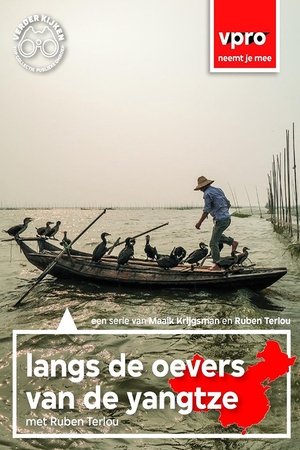
A six-part series in which photographer Ruben Terlou travels from Shanghai, the most westernized part of China, to the much more traditional Tibetan city of Shangri-La. Through the stories of people he meets along the 6,300-kilometre river, Ruben discovers the real China, forty years after Mao’s death.
In the heart of Beijing lies the largest palace in the world, The Forbidden City. For five hundred years, it served as the home of the almighty Emperors of China along with their wives, concubines, and entourages of tens of thousands of eunuchs and civil servants. But the Forbidden City is more than an imperial residence; it is the center of the universe, a unique complex of structures revealing a hierarchy of power both imperial and divine.
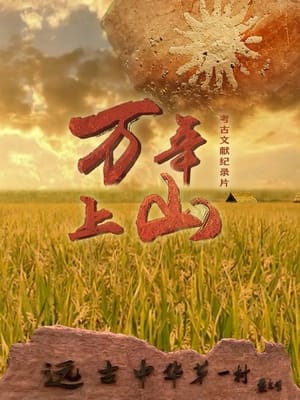
万年上山
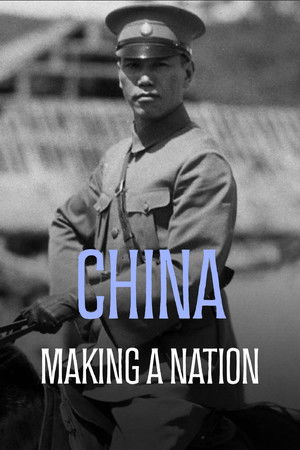
China: The Making of a Nation is the story of the painful transformation of the vast Qing Empire into the Chinese nation after the 1911 revolution. Spanning more than a century up to the Xi Jinping era, the story pits the two pivotal leaders of this transformation against each other: Chiang Kai-shek, leader of the Republic of China for 47 years, and Mao Zedong, who rose from ‘red bandit’ to master of the mainland in 1949. Sworn enemies, they fought a merciless battle: first military, then diplomatic, and finally, beyond their deaths, in the conflicting memories of the Taiwanese and the Chinese of the People's Republic. Beyond their fierce hatred, the two tyrants also had much in common: a certain vision of Chinese territory and the greatness of China, the desire to regain the country's sovereignty and the quest for a Chinese identity in a nation that also includes Tibetans, Uighurs, Mongols... and a certain ability to rewrite history.