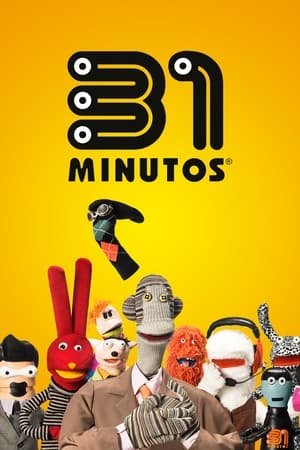
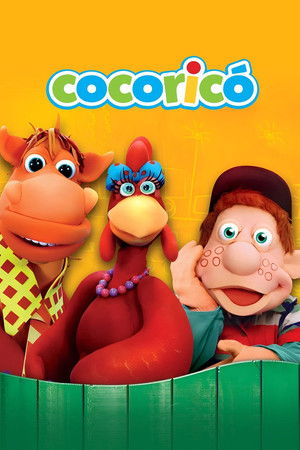
The program focuses on the adventures of the team of a low-prestige newscast, where something unexpected always happens. Their notes, while some are quite ridiculous, others are educational and leave a message both explicitly and implicitly. The news program is hosted by Tulio Triviño.
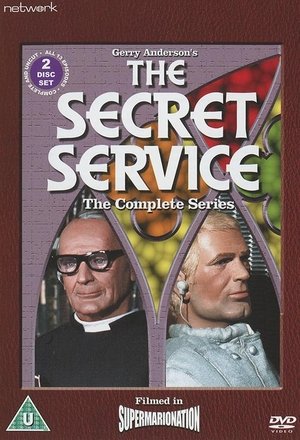
The Secret Service is a 1969 British children's espionage television series, produced by Century 21 / ITC Entertainment for Associated Television, Granada Television, and Southern Television. Created by Gerry and Sylvia Anderson, and produced by David Lane and Reg Hill, it was the eighth and final Century 21 production to feature Supermarionation. Under the direction of Gerry Anderson, who wanted to compensate for the inadequacies of Supermarionation and increase the realism of the format, The Secret Service incorporates footage of live actors for long-distance shots. Father Stanley Unwin, voiced by and resembling the real-life comedian of the same name, is the parish priest of a rural English village. But Unwin is in fact a secret agent for BISHOP, a covert British Intelligence branch that battles international criminal and terrorist threats. Aided by junior operative Matthew Harding, Unwin answers to his London-based superior 'The Bishop', as he would in his public profession.
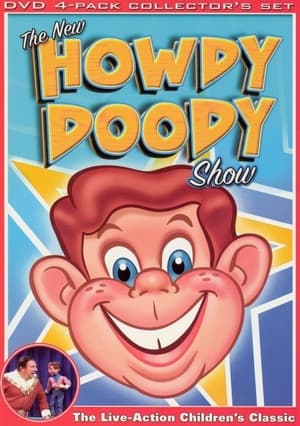
Say kids! What time is it? Well, in 1976 it was time for The New Howdy Doody Show! A new generation met Howdy and his friends that year, and now you can enjoy them again! Featuring songs, gags, and the peanut gallery, it's as good as you remember! This is a remake of the original Howdy Doody Show.In the 1970s, "Buffalo Bob" Smith revived the character he'd help create and turn into a true American icon during the 50s, the freckle-faced marionette known as Howdy Doody. Bill LeCornec (who played Chief Thunderbird and the voice of Dilly Dally on the original Puppet Playhouse) joins them as Nicholson Muir, with Marilyn Patch as Happy Harmony.
The story begins on a tiny island called Morrowland, which has just enough space for a small palace, a train station and rails all around the island, a grocery store, a small house, a king, two subjects, a locomotive named Emma, and a locomotive engineer by the name of Luke.
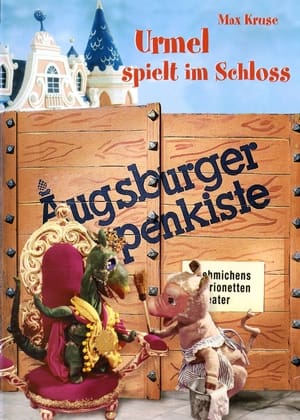
Urmel plays in the castle - There is still a rumor in King Pumponell's kingdom that talking animals and Urmel live on a lonely, remote island. Museum and zoo director Dr. Zwengelmann will not rest until he has seen with his own eyes what he considers to be pure "fantasy". His niece Naftaline, who is keen to write a big report for her newspaper, also wants to know more about this mysterious island, the talking pig Wutz and the sensational Urmel. But if people found out about the talking animals from the newspaper, the island would soon be visited by many curious people. This must be prevented. Meanwhile, Urmel and Wutz hide out in King Pumponell's castle.
Cocoricó
In an Eastern-styled fantasy setting, a brother and sister team of sacred guardians is beset by the Xuan Gui Zong, minions of Miè Tian Hai, who seeks the Tian Xing Jiàn sword that they possess. Hai showing up himself leads to the defeat of the brother, but his sister, Dan Fei, jumps off a cliff to temporary safety. Later, a wandering swordsman comes across a ruined temple where a statue of Buddha is protected by an umbrella against the rain. When he takes the umbrella for himself, a man resting under a tree nearby informs him the he must be compassionate to the next traveler he meets as trade-off for taking the umbrella. But the next traveler is Dan Fei, who is still being pursued by the Xuan Gui Zong minions, and between that and the sorcery of the other man he finds himself unable to avoid getting involved.
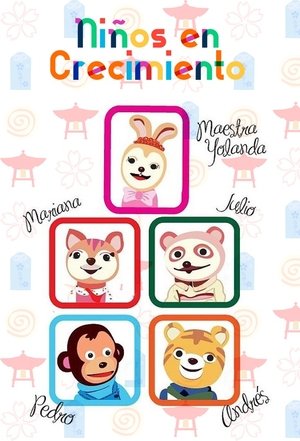
Ōkiku naru Ko (大きくなる子 Children growing up) was an educational Japanese show, produced by Studio Nova, that aired on NHK through April 7th, 1959, to March 18th, 1988. It was created for 1st and 2nd-year primary school students in Japan, teaching them lessons like morals and how to act at school. The show is more notable for the Monkey Puppet meme portrayed by the main protagonist Pedro.[1] In the 1980s and 1990s, the series was also aired in Latin America under the name "Niños en crecimiento". This was the penultimate season of the show, airing from April 13th, 1984, to April 4th, 1986, in Japan.[2]
Catchphrase is a British game show based on the short-lived U.S. game show of the same name. It originally aired on ITV in the United Kingdom between 12 January 1986 and 19 December 2002. It was presented by Northern Irish comedian Roy Walker from 1986–1999; followed by Nick Weir from 2000–2002, and Mark Curry in 2002. In the original series, two contestants, one male and one female would have to identify the familiar phrase represented by a piece of animation accompanied by background music. The show's mascot, a golden robot called "Mr. Chips", appears in many of the animations. In the revived version of the show, the same format remains, but there are three contestants. In August 2012, it was announced that Stephen Mulhern would host a revived version of the show beginning on 7 April 2013. On 21 August 2013, it was confirmed that Catchphrase has been re-commissioned for a second series, following the success of the first.
Maid Marian and her Merry Men is a British children's sitcom created and written by Tony Robinson and directed by David Bell. It began in 1989 on BBC One and ran for four series, with the last episode shown in 1994. The show was a partially musical comic retelling of the legend of Robin Hood, placing Maid Marian in the role of leader of the Merry Men, and reducing Robin to an incompetent ex-tailor. The programme was much appreciated by children and adults alike, and has been likened to Blackadder, not only for its historical setting and the presence of Tony Robinson, but also for its comic style. It is more surreal than Blackadder, however, and drops even more anachronisms. Many of the show's cast such as Howard Lew Lewis, Forbes Collins, Ramsay Gilderdale and Patsy Byrne had previously appeared in various episodes of Blackadder alongside Robinson. Like many British children's programmes, there is a lot of social commentary sneakily inserted, as well as witty asides about the Royal family, buses running on time, etc. Many of the plots spoofed or referenced film and television shows including other incarnations of Robin Hood in those mediums.
Adapted from Forrest Wilson's books, the children's programme revolves around a grandmother with super powers and her arch nemesis, The Scunner Campbell.
The Adventures of Ozzie and Harriet is an American sitcom, airing on ABC from October 3, 1952 through March 26, 1966, starring the real life Nelson family. After a long run on radio, the show was brought to television where it continued its success, running on both radio and television for a few years. The series stars Ozzie Nelson and his wife, singer Harriet Nelson, and their young sons, David and Eric "Ricky" Nelson. Don DeFore had a recurring role as the Nelsons' friendly neighbor "Thorny".
Thunderbirds is a 1960s British science-fiction television series which was produced using a mixed method of marionette puppetry and scale-model special effects termed "Supermarionation". The series is set in the 21st century and follows the exploits of International Rescue, a secret organization formed to save people in mortal danger with the help of technologically advanced land, sea, air and space vehicles and equipment, launched from a hidden base on Tracy Island in the South Pacific Ocean.
Just Jordan is an American television sitcom that aired on Nickelodeon as a part of the network's TEENick lineup. The series debuted on January 7, 2007 and was cancelled on April 5, 2008 with 29 episodes produced.
Eddie Sutton is a dedicated police officer, his wife Jenn, a devoted nurse, but their most important job is as parents to their three teenage children Cassie, Tay and Lizzie. They're your everyday American family living in the suburbs of Southern California, but the Suttons are thrown for a loop when Eddie decides to move his wife and three kids to the inner-city neighborhood where he grew up.
Kate & Allie is an American television situation comedy which ran from March 19, 1984, to May 22, 1989. Kate & Allie first aired on CBS as a midseason replacement series and only six episodes were initially commissioned, but the favorable response from critics and viewers alike easily convinced CBS to commit to a full season in the fall of 1984. The series was created by Sherry Coben.
Fred, Daphne, Velma, Shaggy, and the talking dog, Scooby-Doo, travel on the Mystery Machine van, in search of weird mysteries to solve.
Hollywood Squares is an American panel game show, in which two contestants play tic-tac-toe to win cash and prizes. The "board" for the game is a 3 × 3 vertical stack of open-faced cubes, each occupied by a celebrity seated at a desk and facing the contestants. The stars are asked questions by the host, or "Square-Master", and the contestants judge the veracity of their answers in order to win the game. Although Hollywood Squares was a legitimate game show, the game largely acted as the background for the show's comedy in the form of joke answers, often given by the stars prior to their "real" answer. The show's writers usually supplied the jokes. In addition, the stars were given question subjects and plausible incorrect answers prior to the show. The show was scripted in this sense, but the gameplay was not. In any case, as host Peter Marshall, the best-known "Square-Master" and the man in whose honor the show's first announcer, Kenny Williams, actually "coined" the term, would explain at the beginning of the Secret Square game, the celebrities were briefed prior to show to help them with bluff answers, but they otherwise heard the actual questions for the first time as they were asked on air.
Anna auf der Alm
Nan Li, worried about her daughter Huanhuan's grades, pushes her into intense tuition classes, putting pressure on the family, and learns the hard way that she needs to give her child a happier, more balanced childhood.