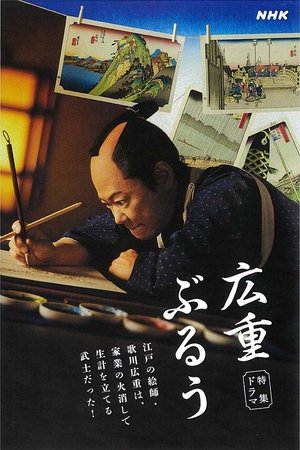
In 18th-century Edo, Tsutaya Juzaburo rises from a poor background to become a leading publisher. Despite political changes threatening his career, he works to shape Edo’s cultural scene through innovative books and collaborations with artists.
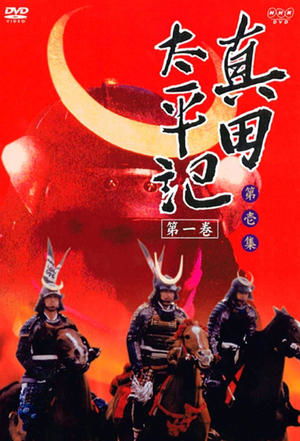
The drama tells the story of the Sanada family. Originally serving the Takeda Clan they ruled the northern district of Shinano. The story begins right after the death of Takeda Shingen, continues through the rise of Tokugawa Ieyasu who founded the Tokugawa shogunate and covers roughly the period 1580-1610.
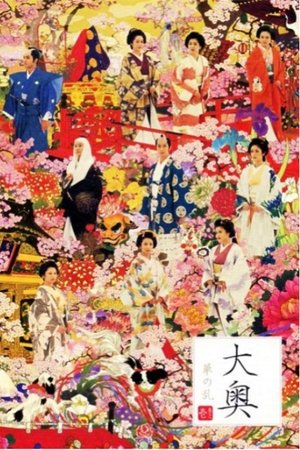
Tells the story of the women surrounding Tokugawa Tsunayoshi, the fifth shogun.
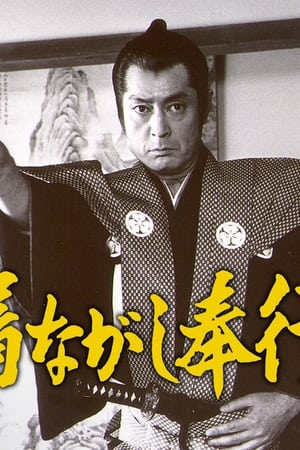
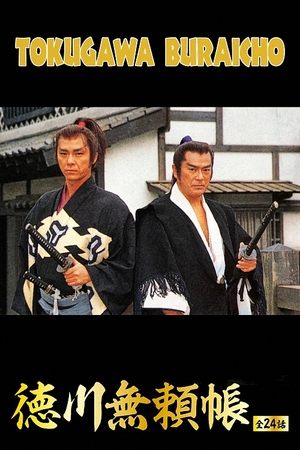
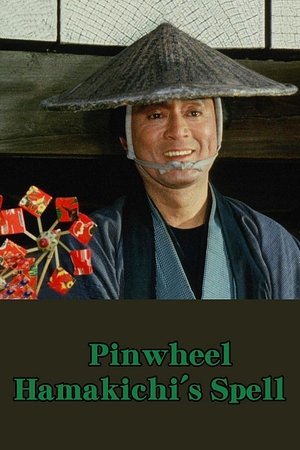
Saotome Mondonosuke, "Hatamoto" (direct servant of the shogun), a handsome man with a scar on his forehead in the form of a crescent moon, a favorite of the shogun. He is a master of martial arts, who owns the style of Moroha-ryu seigan-kuzushi (fencing), Yoshin-ryu tai-jutsu (the art of fighting without weapons) and even military science, but in the era of Genroku (1688-1704) all these skills are not in demand, and this brings boredom to Mondonosuke. To dispel boredom, this so-called "bored gentleman" walks around the city, and when he hears about some incident, he rushes to the place and defeats evil with his invincible swordsmanship. Mondonosuke has a 17-year-old sister, Kikuji (Yukiko Kashiwagi), and Kikuji's lover, Kirishima Kyoya (Takao Kataoka), becomes his right hand.
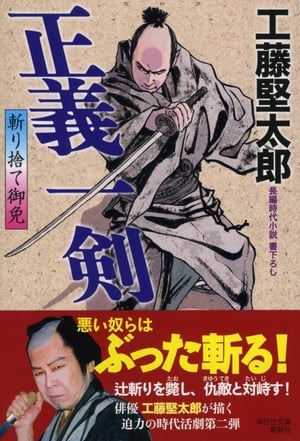
The protagonist, Naito Samon, was secretly ordered by Tokugawa Ieyoshi, the 12th Shogun of the Tokugawa Shogunate, to begin a new era of reform by fighting evil in various disguises with his minions.
Story takes place three years before the movie Ooku.
During the 16th Century Japan was involved in the Sengoku Period, an era of Civil Wars and the powerful Warlords who fought them. One of the earliest and strongest of these men was the Great Lord TAKEDA Shingen. A tremendous military genius, his battles are the stuff of legend.
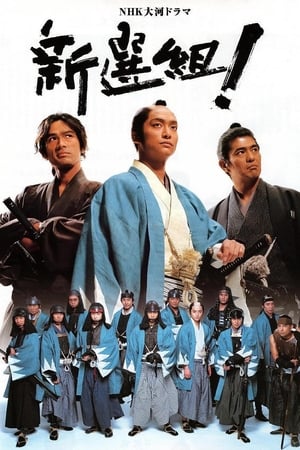
Shinsengumi! is a Taiga drama television series produced by Japanese broadcaster NHK. It was a popular drama about the Shinsengumi, a Japanese special police force from the Bakumatsu period.
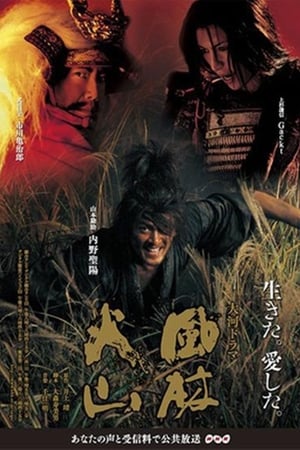
Fūrin Kazan was the 46th NHK Taiga drama beginning on January 7, 2007. It was aired throughout 2007. The four characters from left to right are wind, woods, fire, and mountain. The title is a reference to the war banner used by Takeda Shingen, which in turn was taken from Sun Tzu's The Art of War. It means "Swift as the Wind, Silent as a Forest, Fierce as Fire and Immovable as a Mountain."
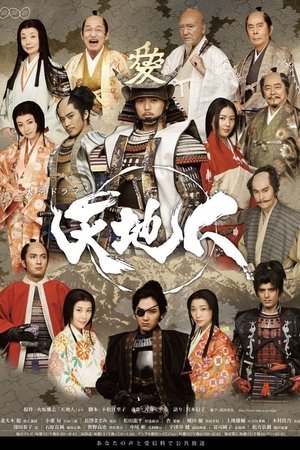
Tenchijin is the 48th NHK Taiga drama. It airs on NHK from January 4, 2009 every Sunday from 20:00 to 20:44 JST to November 22, 2009 spanning 47 episodes. The story centers on the life of the 16th century samurai Naoe Kanetsugu. Production began on April 27, 2007. The story is based on the novel Tenchijin by Masashi Hisaka and was adapted for screen by scriptwriter Eriko Komatsu. The series' music composer was Michiru Oshima. The protagonist of the drama, Naoe Kanetsugu, was taught by Uesugi Kenshin in his youth that to conquer the world is a trifling matter, but what matters is to live one's life with righteousness. After Uesugi's death, Naoe supports Uesugi Kagekatsu, who holds the destiny of Echigo province.
Takahara is a legendary figure in the Warring States Period of Japan. He was born in Kagoshima, the sacred place of sword. He learned the art of Taidao in Kagoshima from childhood. He had faced many life-and-death battles in his life, but he had never been injured at one time. In this new play, the story will be unfolded centering on the youth period of Sakahara, which has never been shown on the big screen before.
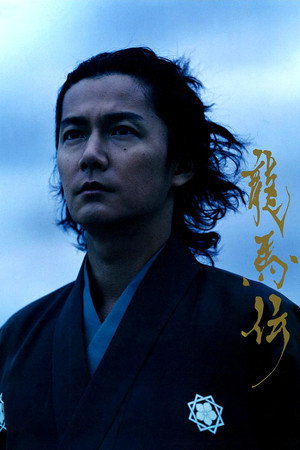
Ryōmaden is the 49th NHK Taiga drama. It was shown on NHK from January 3 to November 28, 2010 spanning 48 episodes. The story centers on the life of 19th-century Japanese historical figures Iwasaki Yatarō and Sakamoto Ryōma. It has been announced that the series will be aired in several other countries, for example Hong Kong, South Korea, Taiwan and Thailand.
Kazutoyo lived during the end of the Sengoku period (1546-1605). He was the first feudal lord of the fief of Tosa on the island of Shikoku. He served Nobunaga Oda, Hideyoshi Toyotomi and Tokugawa Ieyasu. Chiyo (1557-1617) was his wife, and was known in history for her dedication and devotion to her husband (like Matsu was to Toshiie in Toshiie to Matsu). She is the daughter of a samurai who served the feudal lord Asai.
The 41st NHK Taiga Drama is Toshiie to Matsu. During the turbulent Warring States Era, one man's life and career intertwined with the three great generals of Japanese history-Nobunaga, Hideyoshi, and Ieyasu. With political savvy and the support of his fiercely loyal wife, Maeda Toshiie rose to second in power in the shogunate and built up a fiefdom that encompassed Echizen, Noto and Kaga.
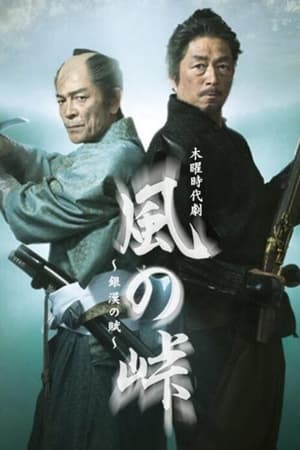
In the Kyoho era, Hayato, a shogun vassal commissioned as a traveling inspector by Tokugawa Yoshimune, adopts the guise of a ronin. Accompanied by the enigmatic Kihachi the kappa, he journeys discreetly through different provinces, administering justice to the malevolent forces...
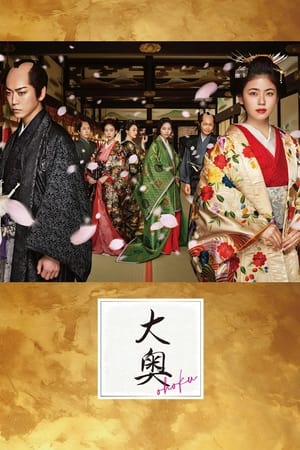
During the reign of the shogun, Iemitsu, an epidemic causes the population of men to greatly drop, leading to an ooku where the role of men and women are reversed. Thus, “the women become the shogun, served by 3000 handsome men”
A wandering samurai, ronin, and ninja; meet by chance repeatedly and reluctantly team up to solve the problems of innocent villagers along the way.
A romance of a man who risked his life at sea on a Kitamae ship during the Edo period. Based on the famous book "Offshore of Rape Blossoms" by Ryotaro Shiba, the movie tells the story of Kahei Takadaya, a great merchant who lived a turbulent life and single-handedly conducted diplomacy with the great Russian power.
Set at the end of the 12th century when several wars for control of Japan disrupted a long era of peace, this tale of "Heike" (another name for the Taira clan) focuses on Taira Kiyomori who fights alongside other members of his clan to at first successfully overcome the Minamoto clan and their bid for power. Battles and intrigue abound, as the puppet Emperor and Buddhist monks take sides in the power struggle. At issue is Kiyomori's parentage, not an unusual problem for the nobility in that era where clandestine liaisons among courtiers and the upper classes were common.
The story chronicles the life of Yagyū Munenori.