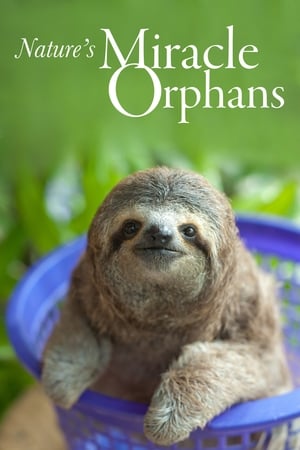
The adventures of lion cubs, elephants, penguins, pangolins and more as they learn to cope with the ups and downs of life in the wild and try their best to reach adulthood in an unforgiving world.
Akvariet
An intimate and powerful experience, looking at some of the planet’s most fearsome animals in their own unique neighborhoods.
Dramatic life saving surgery.
From the golden beaches of Australia and the deep jungles of Panama to the foothills of Kilimanjaro and the Serengeti Plains, this series takes you into the amazing world of animal communities. You will see the hidden dramas of the animal world: the alliances that are formed, the changes that take place and the passions that ignite. Nothing is static, everything evolves.
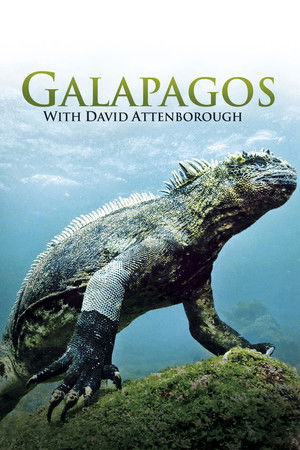
David Attenborough uses pioneering 3D-techniques and technology to explore the unique environments and species of the Galapagos.
Geologist Iain Stewart explain in three stages of natural history the crucial interaction of our very planet's physiology and its unique wildlife. Biological evolution is largely driven bu adaptation to conditions such as climate, soil and irrigation, but biotopes were also shaped by wildlife changing earth's surface and climate significantly, even disregarding human activity.
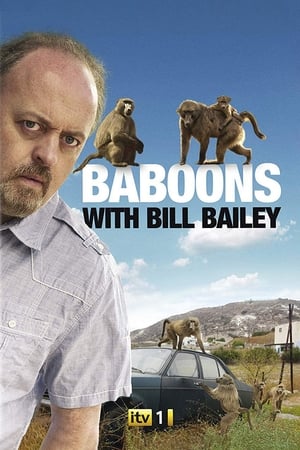
Baboons with Bill Bailey is a wildlife documentary series presented by Bill Bailey. The series follows Bill as he attempts to find out more about the lives of baboons who are living in several colonies in Cape Town, South Africa.
See It Now is an American newsmagazine and documentary series broadcast by CBS from 1951 to 1958. It was created by Edward R. Murrow and Fred W. Friendly, Murrow being the host of the show. From 1952 to 1957, See It Now won four Emmy Awards and was nominated three other times. It also won a 1952 Peabody Award, which cited its
This revealing series follows environmental activist Greta Thunberg as she seeks to raise awareness of the accelerating climate change and spread her message, that we must act to drastically reduce our carbon emissions.
David Attenborough embarks on a remarkable 500 million-year journey revealing the extraordinary group of animals that dominate our world, and how their evolution defines our human bodies.
The law of the wild is kill or be killed; learning how animals kill.
Australian host Steve Irwin and his wife Terri run a wildlife refuge. Their shared passion is educating the world about wildlife, including the much feared crocodile and numerous venomous snakes. Steve's specialty is the capture and relocation of crocodiles. No animal appears too threatening to Steve, his true respect for animals is the foundation for everything he does.
Wildlife cameraman Hamza Yassin captures beautiful footage of incredible animal behaviour on one of the most spectacular locations on the planet - Scotland's Ardnamurchan peninsula
Pollination, predation, parasitism, symbiosis, biological interactions between species are incessant and essential to nature. They are even at the origin of the incredible biodiversity of our planet. To take advantage of others and often do what they cannot do themselves, living beings have had to evolve, innovate and invent. Imagination in this field knows no limits. For example, insects are the ones who gather flowers. They feed themselves and ensure the multiplication of flowers by dispersing pollen. Butterflies that lay their eggs only on certain species of plants. Trees that allow mushrooms to flourish in the shade of their branches. Each species is dependent on another, and to touch one of them is to endanger all the others.
From the jungles of Singapore to the coral reefs of Indonesia, from the ornaments of Australian budgies to the deceptive traps of carnivorous plants, this film explores a world where light becomes language. Seduction, camouflage, overexploitation, reproduction: fluorescence directs behavior, often without us noticing. A light phenomenon that science is just beginning to decipher.
The dedicated team at the Houston Society for the Prevention of Cruelty to Animals, a private charity, responds to a variety of distress calls involving an average of more than 100 animals per day. This series documents the work they do, from the initial investigation through, in some cases, the animals being adopted into loving homes.
Islands can be home to the most extreme examples of life and the some of the most dramatic landscapes. Natural selection fuels evolution in the most extraordinary way. Isolated for hundreds of thousands of years, pockets of individuals survive, thrive and adapt to fill all available niches fuelling a rapid development of new species. Wildest Islands, a stunning five-part series featuring the world’s most spectacular island locations. Dive into the crystal clear waters of the Caribbean; journey through the lush forests of Zanzibar; discover the unspoilt environs of the Hebrides; and uncover the enduring wonders of the Galapagos Islands as Wildest Islands investigates the rich history of these pristine paradises.
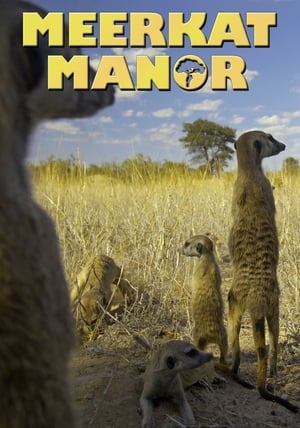
Meerkat Manor is a British television programme produced by Oxford Scientific Films for Animal Planet International that premiered in September 2005 and ran for four series until its cancellation in August 2008. Blending more traditional animal documentary style footage with dramatic narration, the series told the story of the Whiskers, one of more than a dozen families of meerkats in the Kalahari Desert being studied as part of the Kalahari Meerkat Project, a long-term field study into the ecological causes and evolutionary consequences of the cooperative nature of meerkats. The original programme was narrated by Bill Nighy, with the narration redubbed by Mike Goldman for the Australian airings and Sean Astin for the American broadcasts. The fourth series, subtitled The Next Generation, saw Stockard Channing replacing Astin as the narrator in the American dubbing.
Southeast Asia is the most diverse region on our planet. Nature’s most powerful forces have combined to create islands of fire, a water world driven by the sway of the moon and rich forests fuelled by the tropical sun. An extraordinary array of plants and animals live here; many of which are found nowhere else on Earth.