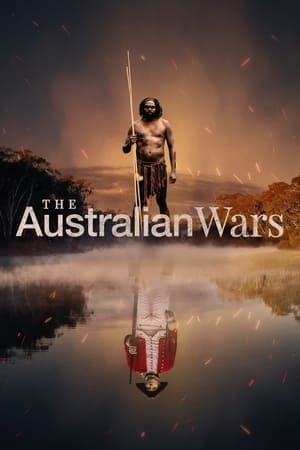
There are more than ten thousand monuments across the country that honour the war dead . But what of the bloody battles fought on our home soil, in our longest-running war that established the Australian nation?
From the Great War onwards, combining the stories of veterans and their families, with commentary from leading academics and experts. A thought-provoking exploration of one of the most important icons in Australian life.
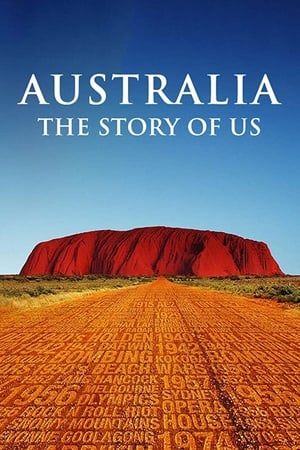
Australia: The Story of Us is an extraordinary journey through the people, places and events that have shaped Australia, from the first footprints on our continent to the present day. Astounding visual sequences, amazing CGI and dramatic re-enactments bring these stories to life and show how we came to be the country we are today.
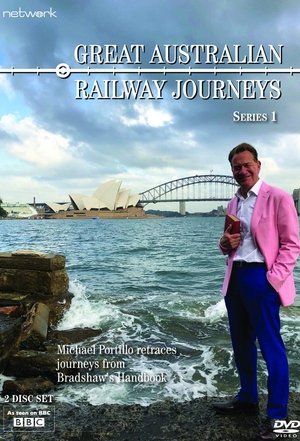
Armed with his 1913 Bradshaw's Handbook to the Chief Cities of the World, Michael embarks on six new railway journeys across spectacular Australia.
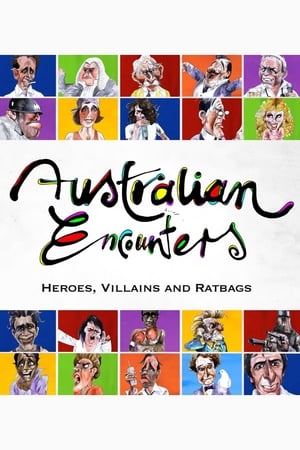
Presented with humour and verve, Australian Encounters celebrates ten historic encounters, each between a renowned Australian and an international mover and shaker.
Explores the culture, history, industry, and natural wonders of Australia. Includes experiences from wildlife rangers in Kakadu, to surfboard makers and rodeo riders.
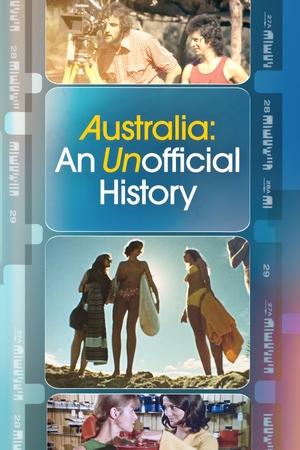
Delves into a forgotten vault of Australian government films, unearthing a kaleidoscopic vision of Australia in the 1970s, a decade of political and social change.
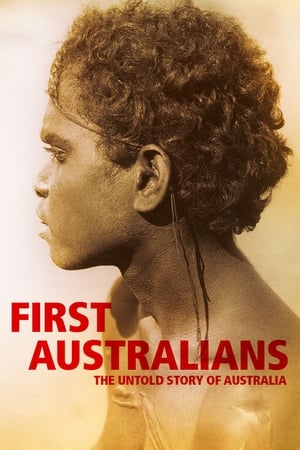
First Australians is an Australian historical documentary series produced by Blackfella Films over the course of six years, and first aired in October 2008. The documentary is part of a greater project that further consists of a hard-cover book, a community outreach program and a substantial website featuring over 200 mini-documentaries. The series chronicles the history of contemporary Australia, from the perspective of its first people, or Aborigines. The series is essentially a synthesis of well documented historical information. It relies heavily on archival documents and interpretations from historians and members of both the Indigenous and European community and leaders. The story begins in 1788 in Sydney, with the arrival of the First Fleet and ends in 1993 with Koiki Mabo's legal challenge to the foundation of Australia. The series comprises seven episodes in which it explores what unfolded when the oldest living culture in the world was confronted by the British Empire. It explores the lives of particular individuals and uses their stories as a vehicle to explain the larger situations of the time. It explains violent aspects of European settlement of Australia, such as killings, battles, wars, as well as acts of friendship and decency between the early European settlers and Indigenous Australians. Indigenous Australian history has until recently been clouded by the "great Australian silence" where ignorance of the real history of Australia can be seen as a way for non-Indigenous to hide shame for their own history. In this respect it has been controversial in that many of these stories have not been portrayed on Australian television before and the Indigenous Australian perspective of European settlement is confrontational for many.
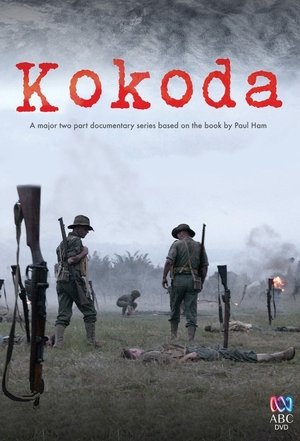
The true story of the brutal World War II military campaign fought between Australia and Japan in the green hell of the mountains of Papua New Guinea. Told from both the Japanese and Australian perspectives the documentary also explores the impact of the decisions of high command on the soldiers at the front line.
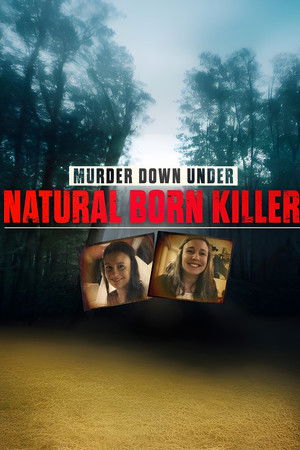
The murder of Stephanie Scott in 2015 shocked Australia: the local schoolteacher and young bride-to-be was brutally slaughtered at her workplace.
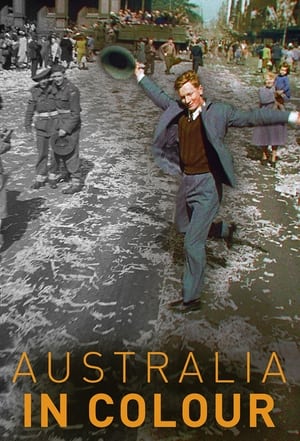
Told through a unique collection of iconic archival footage brought to life in stunning colour for the very first time, Australia in Colour tells the story of how Australia came to be what it is today. Narrated by Hugo Weaving, the series is a reflection on our nation’s character, its attitudes, its politics and its struggle to value its Indigenous and multicultural past. Australia in Colour gives us a chance to look at Australia’s history from a fresh perspective. This four-part series curates classic historical footage, as well as home movies and never-before-seen archival material to chart how Australia has developed as a nation. From the oldest surviving footage captured in Australia – in 1896 in Sydney’s Prince Alfred Park – to the beginning of colour television in the mid-1970s, each sequence has been lovingly restored and colourised with historical accuracy. The effect is remarkable, bringing to light history that is both shared and deeply personal.
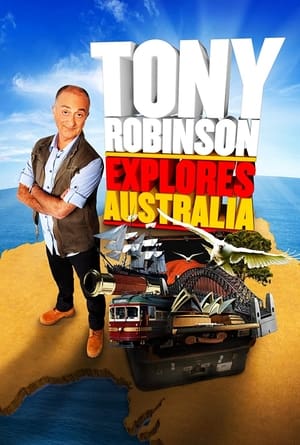
Tony Robinson of Time Team fame, takes us on a journey through time and places across Australia, offering a revealing and unique perspective on Australian society and history. In this 6 part series Tony introduces us to locations where deeds great and grotesque, heralded and hidden took place. There will be surprising stories of conflicts, hardship, notoriety and discovery as Tony brings fascinating new insights into the impact the British have had on Australian life. The series will roughly follow a chronology: from the earliest sightings of Terra Australis Incognita through to today. Each era will be defined by a theme (rather than equal blocks of time). The characters who left their fingerprints on Australia’s formative years were predominantly English and Irish.
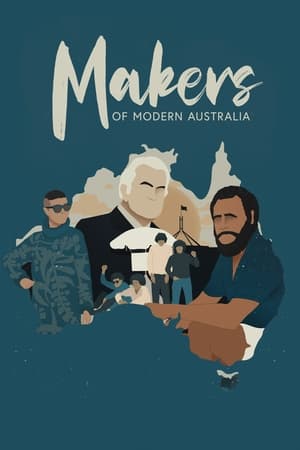
A four-part history, told through the stories of some of the country's most intriguing and influential figures: the leaders, rebels, artists and innovators who made modern Australia.
This bold and provocative four-part series asks the question – What is the idea of Australia and how might we learn from the past to make it stronger in the 21st century?
Bill Peach explains the stories of the great 18th and 19th century explorers of Australia, complete with full-cast re-enactments.
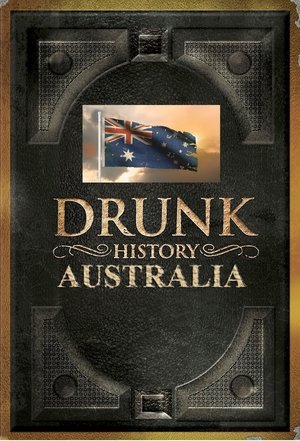
An Australian educational comedy television series based on the American series (and earlier web series) of the same name. In each episode, an inebriated celebrity struggles to recount a historical event, while actors reconstruct and enact the narrator's anecdotes while lip syncing the dialogue.
In 1806, William Thornhill is sentenced to New South Wales for life where he is drawn into a terrifying conflict that will leave a bloody and indelible stain.
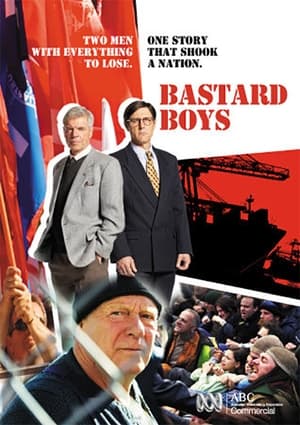
Bastard Boys is an Australian television miniseries broadcast on the ABC in 2007. It tells the story of the 1998 Australian waterfront dispute. The script, published by Currency Press, won the 2007 Queensland Premier's Literary Award for Best Television Script.
Ross Greenwood explores all facets of Australian communities and their international origins that make Australia diverse, as well as how social issues are felt around the country.
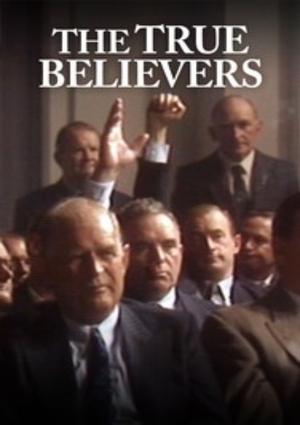
The True Believers is a 1988 Australian mini series which looks at the history of the Australian Labor Party from the end of World War Two up to the Australian Labor Party split of 1955. It was co-written by Bob Ellis who focused on three characters "Chifley, the unlettered man of great dignity; Menzies, who used to stand for something but eventually stood only for Menzies; and Evatt, the grand idealist... It's almost like Shakespeare's Henry IV, Part 1. It's a chunk of national history during Australia's great era of change after the war."