Five-part adaptation of Anne Frank's famous wartime diaries in which a young teenager and her family go into hiding from the Nazis in wartime Amsterdam.
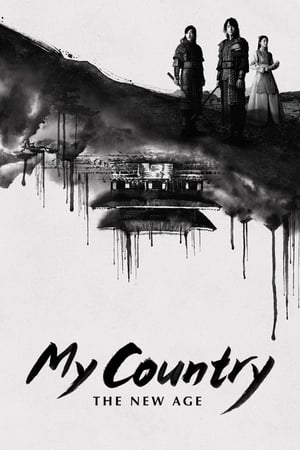
A love-story between a noblewoman and a mysterious man who shows up in her hometown set in the 1600s during the Qing invasion.
Iwakura Mai lives with her parents Kota and Megumi and older brother Haruto. Her father Kota runs a small factory in Higashi Osaka, a district that is known for its craftsmen. Mai is shy and withdrawn. But when she visits her grandmother Shoko who lives on Nagasaki’s Goto Islands which has a rich natural environment, she is entranced by the Baramon kites that catch the wind and soar high in the sky. Wanting to fly high in the sky like these kites, Mai’s longing swells into a dream to become a pilot. Even though she works hard, the path to getting there is tougher than she had imagined. As Mai deepens her ties with the people living in her two hometowns of Higashi Osaka and Goto, her dream eventually takes a new form. She gathers enthusiastic friends to build a small electric plane that can fly to and from the islands. Her dream becomes a wing that carries everyone’s dreams and takes off.
Nakane Kyoko (Ono Machiko) grew up in a wealthy family and was raised by her strict father Shigekazu (Tachi Hiroshi) who did not see learning as a necessity. At 19, Kyoko was introduced to Natsume Soseki (Hasegawa Hiroki) as a prospective marriage partner. The two of them were drawn to each other and got married. Soseki took up a post in Kumamoto as a high school teacher and this was the beginning of their new married life. Although Soseki was an extraordinary intellectual, he did not know the warmth of family because he was given up for adoption as a child. In an attempt to understand her husband, Kyoko tried to read what he read, interacted with his friends and joined difficult conversations. But she was not exactly successful. Then she miscarried their first child and her attempted suicide because of loneliness caused a commotion. How would husband and wife overcome this crisis?
The Strauss Family is a British seven-part miniseries produced by Associated Television about 19th century Vienna's Strauss family: Johann I and his sons Johann II, Eduard, and Josef.
Set in the backdrop of 18th century Maharashtra, a common girl, Ahilyabai Holkar, who with the support of her father-in-law Malhar Rao Holkar, confronts the pre-defined norms of the patriarchal society.
A dramatization of the life of Albert Speer, Hitler’s young architect and onetime confidant, and his meteoric rise into the Nazi hierarchy. Based upon Speer’s own monograph of the same title.
Mizuki is a would-be actress who has yet to attain her goal, struggles to keep the dream in her heart alive while dealing with the reality of her normal life, far away from lights, cameras, and action she longs for. Despite words of warnings from her family, which includes her birth and step mothers, intended to keep her from reaching her destiny, she actually makes it onto a set of one of the film companies in Tokyo. She experiences the peaks and valleys of a starting actress, but receives a blow when news of the company collapses and eventually closes. Mizuki returns home, but, the fire once lit, still burns.
The 61st NHK Asadora Drama is Asuka. Set in Kyoto in the home of a traditional Japanese candy-maker, Asuka is the story of one young girl's dream to one day walk in her father's shoes and become a top candy-maker in the male-dominated world of wagashi (Japanese confectionery). Asuka grows to be a healthy, adventurous young girl with a deep curiosity and, a desire to become a candy-maker like her father. This NHK drama is one of the best in years with an excellent cast, a well-developed story based on extensive research into the traditional worlds of candy making and the tea ceremony in Kyoto, and beautiful scenery and settings in Kyoto and the surrounding areas.
ウェルかめ
The 59th NHK Asadora Drama is Yanchakure. Location includes Osaka. In Osaka, "yanchakure" is a bit of an old word which is used to describe tomboyish or mischievous young girls. Mizushima Nagisa happens to be such a girl, that, no matter how well-intentioned her motives nor how hard she tries, Nagisa just seems to end up failing. In fact, she has failed at different things in her life so many times that she has come to see it as a source of personal strength, her philosophy being one of, "It's natural for a human being to fail many times in the course of their life and thanks to those failures we can become adults."
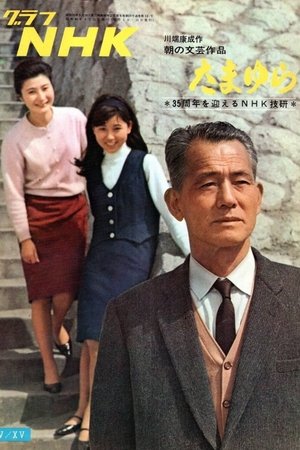
This drama is the tale of one high spirited, strong-willed young woman and her struggle to fulfill her lifelong ambition of becoming a carpenter and building homes. The story takes place from the later part of the Showa era to present day Heisei rule. The heroine of the story, Kawashima Urara, lost her father at the tender age of seven and this drama depicts her life as she grows from a young school girl, through puberty and adolescence and on into her adult years as an independent woman who owns her own carpentry business. As Urara grows into a beautiful and strong woman and a talented carpenter, her family around her goes through many difficult and trying times. This story of becoming an independent businesswoman in the male-dominated world of carpentry accurately reflects the lives and struggles of the young women in present day Japan who are trying to make a career for themselves in addition to balancing the demands of family obligations, friends, and lovers.
The 57th NHK Asadora Renzoku Drama. Story's settings include Kobe and Sasayama. It is a story about the conflicts between generations and the relationships within families. A strong mother-daughter theme and a sister-brother theme exist.
It's 1715 on the Bahamian island of New Providence, the first functioning democracy in the Americas, where the diabolical pirate Edward Teach, a.k.a. Blackbeard, reigns over a rogue nation of thieves, outlaws and miscreant sailors. Part shantytown, part marauder's paradise, this is a place like no other on earth - and a mounting threat to international commerce. To gain control of this fearsome society, Tom Lowe, a highly skilled undercover assassin, is sent to the buccaneers' haven to take down the brilliant and charismatic Blackbeard. But the closer Lowe gets, the more he finds that his quest is not so simple. Lowe can't help but admire the political ideals of Blackbeard, whose thirst for knowledge knows no bounds - and no law. But Lowe is not the only danger to Blackbeard's rule. He is a man with many villainous rivals and one great weakness - a passionately driven woman whom he cannot deny.
A heartwarming drama inspired by true stories of individuals who built new lives in 12 cities and towns across Fukushima.
William Masters and Virginia Johnson are real-life pioneers of the science of human sexuality. Their research touched off the sexual revolution and took them from a midwestern teaching hospital to the cover of Time magazine and multiple appearances on Johnny Carson's couch. He is a brilliant scientist out of touch with his own feelings, and she is a single working mother ahead of her time. The series chronicles their unusual lives, romance, and unlikely pop culture trajectory.
Set in Hakata, the series is about a young man who wants to play rock music even though his father expects him to follow him in making Hakata ningyou (a traditional Japanese clay doll). One of the few Asadora starring a male character.
A successful screenwriter looks back on her life when she learns her husband has cancer. A year-long series, starring Narumi Yasuda.
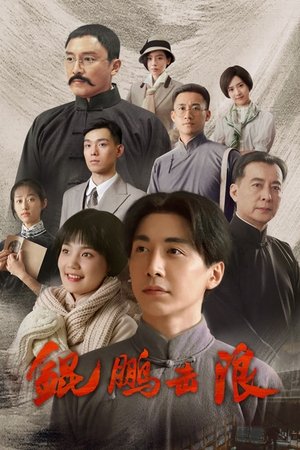
Amid the upheaval of Chiang Kai-shek’s 1927 coup, young revolutionary Xi Zhongxun defies political terror and emerges as a leader. Inspired by Liu Zhidan’s uprising, he joins forces to establish the Shaanxi-Gansu Red Army. During the Anti-Japanese War, he strengthens the revolutionary base and fosters its development, earning Mao Zedong’s praise for his loyalty to the cause. After Japan’s surrender, Xi Zhongxun fiercely defends the Northwest, helping to lay a foundation for national progress.
Noe Ito. Women's liberation activist in the Taisho era. 100 years ago, with a stroke of her hand, she challenged the institution of marriage and social morality head-on. She uses her exuberant passion as her sole source of support. Admiration for Raiteu Hiratsuka, who wrote that “in the beginning, women were the sun”, her life with her first husband, Dadaist Jun Tsuji, and Sakae Osugi, the anarchist who became the better half of her life. Meeting with... She lived a wild life in search of freedom, and when she tried to flourish as a writer, unreasonable violence took her life at the age of 28, but her life was a life that boldly confronted social contradictions that are common today, such as poverty and gender disparity. is once again shaking the present filled with a sense of stagnation.