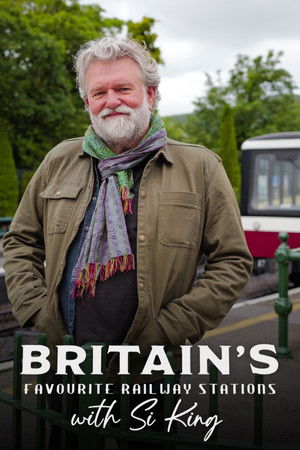
Si King, Siddy Holloway and Damion Burrows explore the extraordinary spaces that take us beyond catching a train to the hidden worlds where heritage, technology and community converge.
Iconic designer objects, Swedish designers, in the time the object was created. These are the stories behind the beloved Swedish Design Classic. Narrated by Elsa Billgren.
A century ago, the world experienced a revolution in mobility. Cities like Berlin grew rapidly, with the Graf Zeppelin soaring over the city in 1928, sparking excitement for airship travel. These majestic airships made ocean crossings faster and more luxurious, and even enabled polar expeditions. At the same time, automobiles and motorcycles became staples for many, although streets became congested. Women like Amelia Earhart and Elly Beinhorn broke barriers in aviation, inspiring new possibilities for both genders in the field of technology. While air travel grew in popularity, trains remained the main long-distance transport. The era also saw an explosion of new mobility options, with faster, cheaper ways to travel across the globe, making the world seem smaller and more connected. However, this golden age of mobility would be cut short by the outbreak of World War II.
From cafes to craft fairs, glamping to ghosts, join Dame Penelope Keith as she meets the owners of Britain’s historic country houses struggling to keep their homes intact. Featured properties include Ashby Manor in Northamptonshire, Chillingham Castle in Northumberland, and Mapperton House in Dorset. As these estates turn to innovative ventures to stay afloat, Keith offers insight into the challenges of maintaining these grand homes in 2025. Will their creative solutions be enough to save their history?
An exploration of some of the world's most famous structures and the inspirations of the architects behind them.
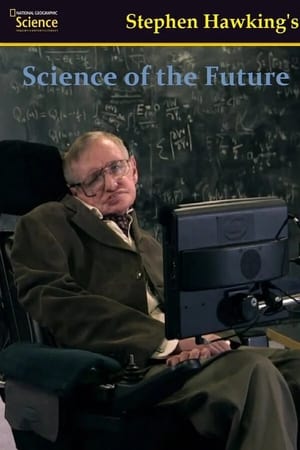
Stephen Hawking’s Science of the Future investigates the very latest game changing innovations. Each episode takes one area of progress and sends five top scientists out to actively test the inventions and breakthroughs that are driving it. The team explore human upgrades, the virtual world, bio-mimicry, high-tech emergency responses, and more. Featuring a wide range of examples, from advanced robotics and breathtaking digital actors, to cutting edge smart homes and electronic brain stimulation, the series reveals how science is delivering astonishing improvements to all our lives. Using the evidence they gather, the team reveals the year when each innovation will be rolled out for us all to benefit from, and Hawking then draws out his own uniquely insightful predictions about what our world will be like in the years to come.
Nachhaltige Architektur
Writer and journalist Ian Nairn presents a series of travels, examining architecture and culture across Europe.
A look at everything Doctor Who, with exclusive behind-the-scenes clips, interviews with the programme's stars and competitions.
Bydlet jako...
The show traces the history of architecture and urban planning in Reykjavík in the twentieth century. The series begins in 1915, in the big fire where many wooden houses in the town were destroyed. Then the time of the concrete houses began.
Exploring the conception of the reality show. Featuring commentaries from competitors, producers, media analysts and famous fans.
A journey through the 1980s sci-fi films, exploring the impact and relevance they had and still hold today, as told by the artists that made them as well as those inspired by their works.
Gladiators is a British television entertainment series, produced by LWT for ITV, and broadcast between 10 October 1992 and 1 January 2000. It is an adaptation of the American format American Gladiators. The success of the British series spawned further adaptations in Australia and Sweden. The series was revived in 2008, before again being cancelled in 2009. The series was originally presented by John Fashanu and Ulrika Jonsson, however, Fashanu was replaced by Jeremy Guscott in 1997. Guscott left the series in 1998, and subsequently, Fashanu returned for the final series in 1999. The series was refereed by John Anderson and the timekeepers over the show's run were Andrew Norgate, Derek Redmond and Eugene Gilkes. John Sachs was the show's commentator, and the series was accompanied by its own group of cheerleaders, known as G-Force. Despite being made by London Weekend Television, all episodes of Gladiators, International Gladiators, the second series of The Ashes and the first series of The Springbok Challenge were recorded at the National Indoor Arena in Birmingham. The first series of The Ashes and the second series of the The Springbok Challenge, however, were filmed on the sets of the Australian and South African versions of the shows respectively. The series also spawned a version for children, entitled Gladiators: Train 2 Win, which was broadcast on CITV between 1995 and 1998.
Glittering facades, vibrant life, and people facing the daily struggle for survival. ZDF correspondents each profile a megacity within their reporting area. How do people celebrate, laugh, and love in such a city? How are problems like housing shortages, food supply, transportation, and climate change solved – in metropolises with over ten million inhabitants?
How We Got To Now with Steven Johnson is a six part documentary series that reveals the story behind the remarkable ideas that made modern life possible; the unsung heroes that brought them into the world – and the unexpected and bizarre consequences each of these innovations has triggered.
Sarah-Jeanne Labrosse meets people who know and care about architecture, real estate and design, and finds out what guided their choices in the design and construction of their homes.
Besties Amanda Holden and Alan Carr say 'Hola España!' as they bring some much-needed TLC to a crumbling casa in southern Spain. It's scaffolding by day, and sangria by night.
The enormous popularity of recent British dramas such as Downton Abbey, Mr. Selfridge, and Sherlock, has led to vast interest in the real-life stories and history of the icons of Great Britain. Each episode of this series visits a famous British building or institution to explore its past and present, meeting a wide range of experts and historians along the way.
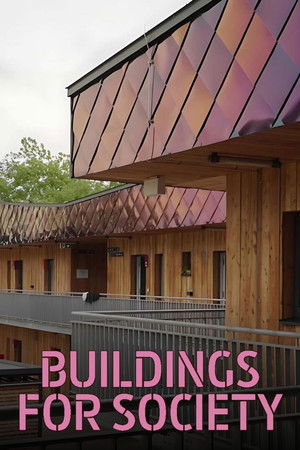
How can we build architectural environments that help children learn, provide dignity and protection to the most vulnerable, and help offenders rehabilitate? This series looks at new schools, prisons, and homeless shelters whose architects have used innovative techniques to create buildings that help society.