Terra X - Zeitreise
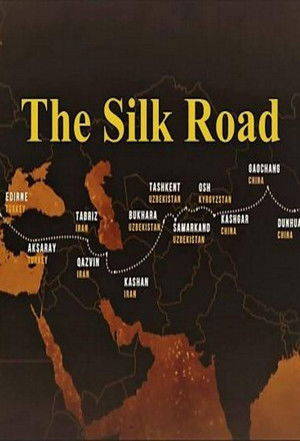
Alfred de Montesquiou, a war correspondent for the Associated Press news agency and a journalist for Paris Match – for which he has covered most of the Arab Spring revolutions – will be our knowledge broker along the Silk Road, the mythical network of trade routes that for centuries linked the Far East to the West. Follow in the footsteps of illustrious predecessors, from Alexander the Great to Marco Polo. Journey through time, encountering specialists, historians, or just everyday people with a passion who will help you grasp the past and present identities of those countries. From Bursa in Turkey to Xi’an in China, Alfred guides and accompanies you in this fresh and original way to discover History.
Travelling by rail across South Korea, Michael explores one of the world’s most successful modern nations, shaped by division, resilience and rapid change.
Michael Wood embarks on a great historical adventure, exploring the stories, people and landscapes that have helped create China's distinctive character and genius over four thousand years.
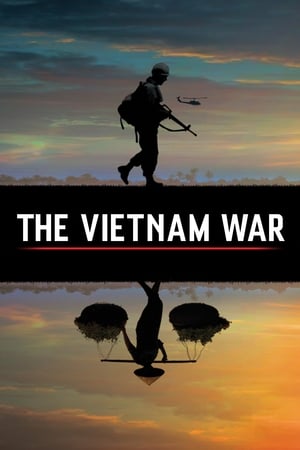
An immersive 360-degree narrative telling the epic story of the Vietnam War as it has never before been told on film. Featuring testimony from nearly 80 witnesses, including many Americans who fought in the war and others who opposed it, as well as Vietnamese combatants and civilians from both the winning and losing sides.
Discover the secrets of Japan's railways, from the newest technologies and systems in use, to travel tips and must-see places.
It all starts on 1830, when young George Stephenson manufactures the first steam engine and the first railway networks are built soon after. Railway becomes a crucial factor in the development of trade and military strength for a country, with its ability to quickly transport soldiers and munitions. Railways expand rapidly in Europe and arrive soon in Greece.
A BBC documentary series exploring steam and heritage railways worldwide. Hosted by Bob Symes and Mary‑Jean Hasler. Produced by Lineside Location Productions.
Michael Portillo celebrates the modern railway’s 200th birthday, revealing the journey that changed the world.
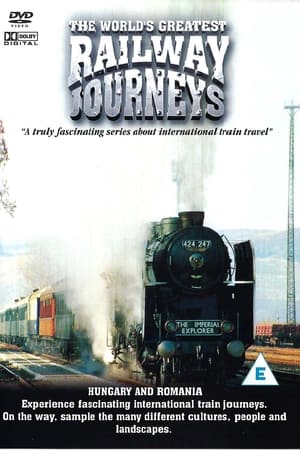
What makes a great railway journey? Distance, scenery, the train itself, the people you meet on the way? Undoubtedly, it is all those things and more. Experience the spirit of the railway in this fabulous DVD featuring breathtaking photography and high quality footage.
アーカイブス映像でよみがえる にっぽんの鉄道
Nafas
世界名画:华丽的大师
A unique travel show that combines selfie filming, POV, drone, social media interaction and more other nowadays filming approaches.
Teen Michelle Carter’s actions shocked a nation — but what really happened behind closed doors?
Follows the daily lives of caregivers and patients who live and work inside Philippe-Pinel Institute. The institute welcomes patients who committed violent acts and have been declared not criminally responsible, but who are still a threat to themselves and others.
The Imperial Garden of the Qing Dynasty, formerly known as the Qingyi Garden, was built in the Qing Emperor Qianlong period when the national power was strong. It was destroyed by the British and French coalition forces in the second Opium War in 1860. During the reign of Emperor Guangxu, it was renamed the Summer Palace and became the main place where Cixi lived and lived in his later years. The Summer Palace was looted by the Eight-Power Allied Forces in 1900 and was occupied by the Japanese during the Anti-Japanese War. In 1928, the Summer Palace officially became a national park by the Royal Garden. The preservation of the archives and cultural relics in the park today records the history of China's feudal society from its glory to its decline, and it has also witnessed the vicissitudes of several vicissitudes of gardens in New China. The Summer Palace is a collection of Chinese classical garden art. It combines the essence of the north and south gardens and integrates the man-made landscape with nature. It is the last royal garden in China and the most intact and largest ancient garden in China. It is a Chinese garden. The pinnacle of art. In 1998, it was included in the World Cultural Heritage List by UNESCO. The film was produced by CCTV, and the backbone of the creative team was the original team to shoot the 12-episode large-scale documentary "The Forbidden City." The creation of "The Summer Palace" was launched in 2006 and lasted three years. According to Chinese traditional culture, the Forbidden City represents "li", and the Summer Palace represents "le". Now the filming of "The Forbidden City" and "The Summer Palace" is completed, which also represents the combination of "ritual" and "le", completing Chinese classical architecture and culture. a chapter.
The satirical film magazine Mozalan (The Gadfly) was founded in 1971 at the Azerbaijanfilm film studio named after Jafar Jabbarli. To date, more than 180 issues of the film magazine have been published, each containing 3-4 stories. The stories can be fictional, documentary, and even animated. The aim of the satirical film magazine Mozalan is to combat negative situations and convey the shortcomings of society to the people through the language of satire. The main style of work of the Mozalan film crew was to suddenly appear at manufacturing enterprises, capture shortcomings, and convey them to the people.
Les complices
A chronicle of the twisted lives of some of the most frightening, diabolical characters in recent history. Each two-hour episode traces the heinous, criminal acts of these elusive miscreants and the eventual road to justice.