Embedded with Lima Company of the Royal Marines during a six-month deployment in Helmand Province in Afghanistan, award-winning documentary filmmaker Chris Terrill reports on what it is really like to work in one of the most dangerous locations in the world.
Operation Afghanistan – Die Bundeswehr im Einsatz
From inside history's biggest empire, host Abby Martin records a world shaped by war & inequality, and explores the U.S. Empire, its rise to world hegemony and its impact on people and the planet.
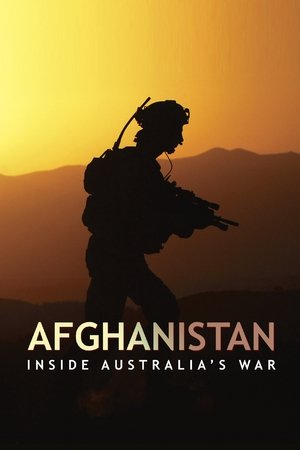
In their own words and their own extraordinary, never-before-seen helmet-cam battle footage, Australia's fighting men and women lay bare their hearts in an epic series - not just how they waged a war, but why and to what end.
The story of an empire: From its founding in 1922 to its dissolution in 1991, the Soviet Union was shaped by revolutionary idealism, but also by oppression and decay. The USSR evolved from Stalinist terror through the Thaw under Khrushchev to political processes such as glasnost and perestroika under Gorbachev. Finally, in 1991, it collapsed.
Ross Kemp in Afghanistan, also known as Ross Kemp: Return to Afghanistan for series 2, is a Sky One British documentary series fronted by actor Ross Kemp about the British soldiers fighting in the War in Afghanistan as part of the International Security Assistance Force mission against the Taliban. The two series involved Kemp and a small embedded film crew following troops fighting in Helmand Province, documenting their part in the ongoing Operation Herrick.
Afghanistan is at a crossroads between traditions and a contemporary lifestyle.
After the West left Afghanistan in August 2021, the Taliban returned to power. Thomas Erdbrink, who speaks fluent Persian (and therefore Dari) after years as a correspondent in Iran, presents various stories of Afghans. He speaks with Taliban fighters, courageous women, and the victims of the American bombings, among others.
Rory Stewart tells the story of foreign intervention in Afghanistan from the 19th century to the present day.
Onze missie in Afghanistan
From the streets of Afghanistan comes an all-new series profiling the U.S. military's most dangerous job. The first of its kind, Bomb Patrol Afghanistan is a groundbreaking docu-series giving viewers an unprecedented first person view of one of the most dangerous jobs in the world in one of the most dangerous places on earth. G4 embeds viewers within the U.S. Navy E.O.D. (Explosive Ordnance Disposal) Unit as it trains state-side prior to deployment. Outside the wire in war-torn Afghanistan, helmet and body mounted cameras and state-of-the-art robotics bring you a never before seen look at the intensity of war. Viewers will witness as the elite team searches out, disarms and destroys an array of deadly explosives with one goal: to save civilian and military lives and return home safely. This is war like you've never seen before.
Norge i krig: Oppdrag Afghanistan
Tusen dagar i Sverige
Afghanistan: War Without End
This two-part series tells the story of the conflict in Afghanistan and asks what has been achieved and whether the British have the will to fight in distant lands again.
A Journey Across Afghanistan: Opium and Roses
A documentary series following a U.S. Marine captain and his team as they battle Taliban forces in Afghanistan.
Finding a way to end a war. Insiders tell the long and troubled story of a chaotic conflict, revealing the political pressures that helped seal the fate of Afghanistan.
Three iconic adventurers - newsman John Simpson, polar explorer Ranulph Fiennes and solo yachtsman Robin Knox-Johnston - go on a newsgathering trip to war-torn Afghanistan, attempt to sail around the most notorious of all maritime landmarks, Cape Horn, situated at the southernmost tip of South America, and man-haul sledges across the frozen sea ice of the Canadian Arctic.
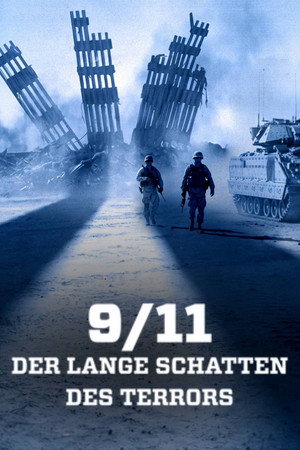
The terrorist attacks of September 11, 2001, reshaped the world far beyond the day itself. The ensuing “War on Terror” transformed warfare and intelligence operations, expanded surveillance and the use of drones, and raised fundamental questions about torture, human rights and the rule of law. At the same time, 9/11 fuelled racism, radicalisation and conspiracy theories, while contributing to growing distrust in political institutions and the media. From the wars in Afghanistan and Iraq and Guantánamo to the rise of right-wing populism and increasing political and social division, the long-term consequences of 9/11 continue to shape global politics and society today.