Shot from land and air, in trees and cliff-blinds, on ice floes and underwater, this documentary tells the powerful stories of many of the planet's species and their movements, while revealing new scientific insights with breathtaking high-definition clarity and emotional impact. The beauty of these stories is underscored by a new focus into these species; fragile existence and their life-and-death quest for survival in an ever-changing world.
A major wildlife series on the sharks of the world with over thirty species filmed, showing how they hunt, intricate social lives, courtship, growing up and the threats they face.
Peltsin toinen luonto
Rakkaudesta villieläimiin
Welcome to 'Pantdora', my 1000 gallon cloud rainforest vivarium.
Witness the lives of whales and the urgent environmental crisis reflected in their demise.
Profiles of some of the men who choose to live off the grid in the unspoiled wilderness, where dangers like mudslides, falling trees and bears are all part of everyday life.
This nature documentary introduces viewers to the fauna and flora of Britain and Ireland across four main areas: woodlands, grasslands, freshwater and marine.
The seven episodes explore North America: where civilization collides with untamed wilderness. Just feet beyond our own backyards rages a spectacle we never see. Join us as we step into this hidden world teaming with life - across impossible mountains and endless deserts. Dive into unexplored forests and crash into rugged coasts. This vast continent offers boundless rewards for those brave enough to take on this land - and call her home.
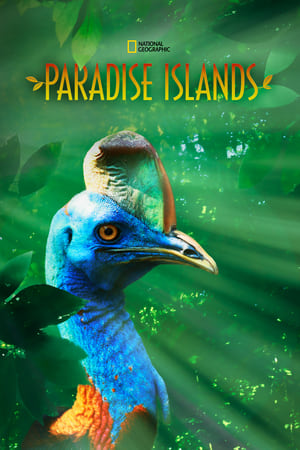
The tropical islands that lie between Asia and Australia are among the biologically richest on earth, and home to a vast number of plants and animals. From tree kangaroos to tarsiers, manta rays to mudskippers, the region abounds with life. But why? The answer lies deep in time, due to the many millions of years these islands have existed - and the power of the earth, the sun and the moon.
See It Now is an American newsmagazine and documentary series broadcast by CBS from 1951 to 1958. It was created by Edward R. Murrow and Fred W. Friendly, Murrow being the host of the show. From 1952 to 1957, See It Now won four Emmy Awards and was nominated three other times. It also won a 1952 Peabody Award, which cited its
Tanzanie, la nature à l'état sauvage
Animales en peligro
Biologist and naturalist Dan O'Neill embarks on a groundbreaking mission to protect one of the world's most elusive creatures—the snow leopard. Set against the stunning backdrop of Kyrgyzstan's rugged mountains, this two-part adventure follows Dan as he works to build a new research center dedicated to studying these majestic cats.
Islands can be home to the most extreme examples of life and the some of the most dramatic landscapes. Natural selection fuels evolution in the most extraordinary way. Isolated for hundreds of thousands of years, pockets of individuals survive, thrive and adapt to fill all available niches fuelling a rapid development of new species. Wildest Islands, a stunning five-part series featuring the world’s most spectacular island locations. Dive into the crystal clear waters of the Caribbean; journey through the lush forests of Zanzibar; discover the unspoilt environs of the Hebrides; and uncover the enduring wonders of the Galapagos Islands as Wildest Islands investigates the rich history of these pristine paradises.
Produced by South Florida PBS in Miami, Florida, Changing Seas gives viewers a fish-eye view of life in the deep blue. Join scientists as they study earth’s last frontier and discover the mysteries of our liquid planet.
All In Earth's 4 billion year history, nature has solved all of lifes problems, from the highest mountain to the deepest ocean. Evolution is the ultimate inventor and many of mans most clever engineering solutions have exact counterparts in nature. In three amazing episodes, NatureTech views our world with fresh eyes, where nature and technology stand hand in hand.
Meerkat Manor is a British television programme produced by Oxford Scientific Films for Animal Planet International that premiered in September 2005 and ran for four series until its cancellation in August 2008. Blending more traditional animal documentary style footage with dramatic narration, the series told the story of the Whiskers, one of more than a dozen families of meerkats in the Kalahari Desert being studied as part of the Kalahari Meerkat Project, a long-term field study into the ecological causes and evolutionary consequences of the cooperative nature of meerkats. The original programme was narrated by Bill Nighy, with the narration redubbed by Mike Goldman for the Australian airings and Sean Astin for the American broadcasts. The fourth series, subtitled The Next Generation, saw Stockard Channing replacing Astin as the narrator in the American dubbing.
Few countries in South America can boast to have such contrast and variety as Argentina. Diverse habitats such as Patagonia's bleak steppe, soaring Andean snowcaps, vast salt pans, lush rainforest around Iguazu Falls, steamy marshlands of Ibera, and grasslands of the Pampas support an astonishing range of wildlife - from penguins, whales and seals to condors, armadillos and guanacos.
Australian host Steve Irwin and his wife Terri run a wildlife refuge. Their shared passion is educating the world about wildlife, including the much feared crocodile and numerous venomous snakes. Steve's specialty is the capture and relocation of crocodiles. No animal appears too threatening to Steve, his true respect for animals is the foundation for everything he does.