A new Channel 4 series takes archaeology to the edge this summer as a team of experts tackles sites across the country that are beyond the reach of normal investigations. In Extreme Archaeology, an eight-part series starting on 20 June, a team of archaeologists with help from top climbers, cavers and divers investigates amazing and unique archaeological sites throughout the UK. Many archaeological locations are beyond the reach of your average archaeologist. They are found in inaccessible caves, on treacherous cliffs, deep under water, or in locations simply too remote or dangerous for normal investigation. Their remoteness often means that their secrets are unique, but they can also be under threat from erosion or other factors and this adds a rescue element to any investigation. Using some of the most advanced scientific equipment available, and high-tech miniature cameras and communication systems to record the action, Extreme Archaeology's experts are dropped into extreme and inaccessible environments under time and other pressures that test their personal and professional skills to the limit.
Dan Snow joins military archaelogists as they investigate the former battlegrounds of the Second World War, uncovering little-known stories through excavations and dives across Europe
Traveling the Roman Empire is a matchless grand tour covering an astonishing range of landscapes, cultures, and history. Even if you have explored many of these places before, Darius will give you fresh insights and a new appreciation for the remarkable achievements of a single-minded city on the Tiber that had the vision, discipline, and institutions to conquer the known world and make it prosper.
1984 Channel 4 documentary series surveying the history of New Testament scholarship, giving an overview of the contemporary New Testament scholarship, and finally a tracing of the history of the development of Christianity.
In 90 A.D., ancient Rome played host to a sporting spectacle that attracted crowds three times the size of the Colosseum?s gladiator games: chariot racing. Every week, 150,000 fans packed the massive Circus Maximus, not just to cheer on the speed, fury, and danger of the races, but to witness the champion charioteer, Flavius Scorpus. Examine his improbable rise from young slave to arguably the most successful competitor in the sport?s history.
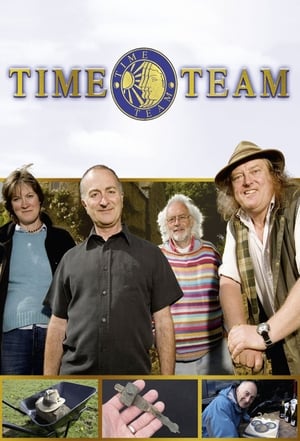
Time Team is a British television series which has been aired on British Channel 4 from 1994. Created by television producer Tim Taylor and presented by actor Tony Robinson, each episode featured a team of specialists carrying out an archaeological dig over a period of three days, with Robinson explaining the process in layman's terms. This team of specialists changed throughout the series' run, although has consistently included professional archaeologists such as Mick Aston, Carenza Lewis, Francis Pryor and Phil Harding. The sites excavated over the show's run have ranged in date from the Palaeolithic right through to the Second World War.
Millions of tourists visit Angkor Wat in Cambodia every year to marvel at its remarkable architecture, yet most are probably unaware that when it was built nearly 1,000 years ago it was even more impressive. Using remote sensing technology, scientists now know what is hidden beneath the nearby paddy fields and jungle: a sophisticated metropolis with an elaborate network of houses, canals, boulevards and temples covering 30 square kilometres that housed three-quarters of a million people. To put that into perspective, London at that time was home to just 18,000. These previously hidden finds tell us a great deal about life during the golden age of the powerful Khmer dynasty.
Three-part documentary series in which anthropologist professor Alice Roberts and archaeologist Neil Oliver go in search of the Celts - one of the world's most mysterious ancient civilisations.
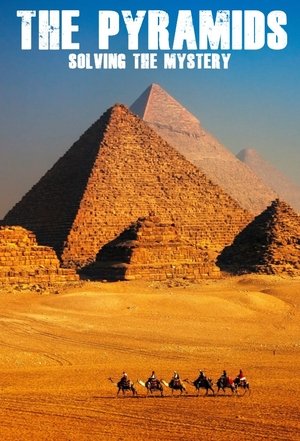
The construction of the Egyptian pyramids remains an enigma, an unsolved mystery. But today, Egyptologists and archaeologists have developed a new tool which uses aerial and satellite images to provide valuable fresh clues about the position, construction, and evolution of these edifices. This series sets out to decode the mysteries of the pyramids' construction, and to recreate Egypt as it was more than 5000 years ago.
Explore a world never seen before a world hidden under miles of water, the landscape of the seabed. Join expeditions to dive long-lost vessels, discover ancient sites and follow the scientists who are probing the darkest and deepest corners of this underwater world. Computer generated, three-dimensional maps and imagery will offer a first glimpse of these mysteries.
This stylish mix of documentary and historical epic chronicles the reign of Commodus, the emperor whose rule marked the beginning of Rome's fall.
A mission to discover and re-create unexcavated worlds still hidden beneath the earth.
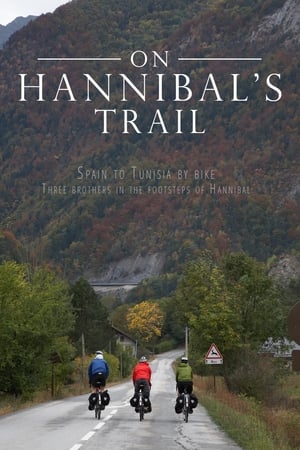
Series in which three Australian brothers - Danny, Ben and Sam Wood - set out cycling on the trail of Hannibal, the warrior who marched from Spain to Rome at the head of an invading army.
A documentary series hosted by John Rhys-Davies based on the articles published in the magazine "Archaeology".
It was an archaeological find that became global news. An extraordinary mega-tomb, filled with the largest concentration of coffins ever unearthed in Saqqara, Egypt. This four-part series places you at the site to witness this ground-breaking discovery as it happened and follows Egyptologists as they try to determine why all of these mummies were buried together and what this ancient cemetery can tell us about the Egyptian civilization's way of death 2,500 years ago.
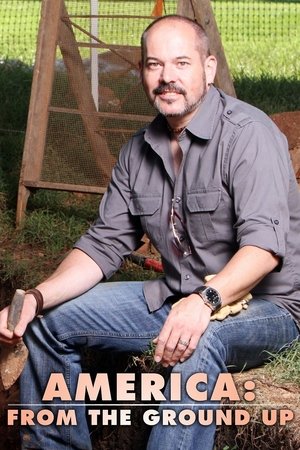
America from the Ground Up was filmed on location at archaeological and historical sites throughout the U.S. and Canada. Join us in the search for clues to America's hidden history: from exploring the ruins of America's lost civilizations, to the settlement of the North American continent in the 19th Century.
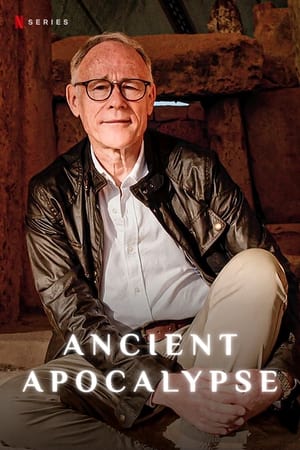
Journalist and writer Graham Hancock travels the globe hunting for evidence of mysterious, lost civilizations dating back to the last Ice Age. He attempts to prove that a climatic event 12,000 years ago wiped out an entire civilization far more sophisticated than the simple hunter-gatherers some archaeologists believe lived at that time.
Terra X - Deutschlands Supergrabungen
At its height, the Roman Empire encompassed Europe, the Middle East and North Africa. How did it keep prospering for over 400 years? And why did it come to a rapid end? What can we learn from the Roman Empire and what guiding principles does it offer us today?
Bettany Hughes follows in the footsteps of 18th century aristocrats going on a Grand Tour as she travels through France and Italy to see how travel, the arts and culture and the finest foods can enrich and inspire our lives.