Dolly is a television variety show that ran on ABC during the 1987-1988 season featuring Dolly Parton.
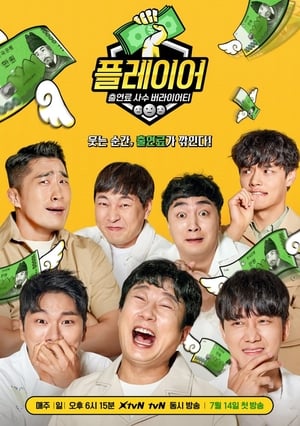
There will be different scenarios for the cast members to go through, but there is a rule that they have to follow without fail: they are not allowed to laugh throughout. For every time a cast member laughs, ₩10,000 will be deducted instantly from his appearance fee, and get wet from his head by water coming out from the water backpack that each cast member will carry throughout. At the end of each scenario, the cast member with the least amount of money deducted will have his appearance fee paid in full.
The Amanda Show is an American live action sketch comedy and variety show that aired on Nickelodeon from October 16, 1999 to September 21, 2002. It starred Amanda Bynes, Drake Bell, and Nancy Sullivan, along with several performing artists who came and left at different points, such as John Kassir, Raquel Lee, and Josh Peck. The show was a spin-off from All That, in which Bynes had co-starred for several years. The show was unexpectedly cancelled at the end of 2002, according to creator Dan Schneider's blog. Writers for the show included John Hoberg, Steven Molaro, Andrew Hill Newman, and Dan Schneider. Two years after the end of The Amanda Show, Dan Schneider created a new series, called Drake & Josh, featuring Drake Bell, Josh Peck and Nancy Sullivan.
Faites-moi rire!
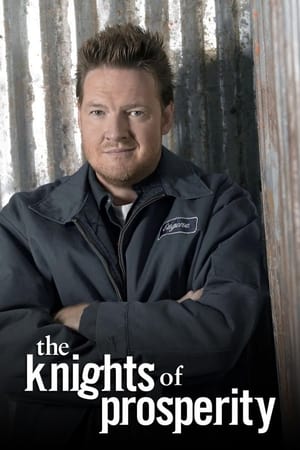
Eugene Gurkin has dreamt of opening his own bar for years, but his dead-end job as a janitor won't even fund a bottle of booze. In a serendipitous moment, he catches an episode of "E! News" and his passion is ignited. Soon Eugene recruits a group of average joes into his gang, The Knights of Prosperity, for a heist to finance their dreams. The initial target: rock icon Mick Jagger's super-luxe Central Park West apartment.
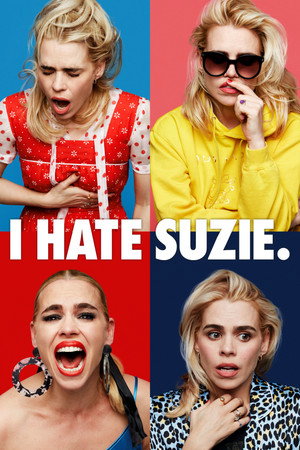
Suzie Pickles, a star on the wane, has her whole life upended when her phone is hacked and a photo of her emerges in an extremely compromising position.
Dinner for Five is a television program in which actor/filmmaker Jon Favreau and a revolving guest list of celebrities eat, drink and talk about life on and off the set and swap stories about projects past and present. The program seats screen legends next to a variety of personalities from film, television, music and comedy, resulting in an unpredictable free-for-all. The program aired on the Independent Film Channel with Favreau the co-Executive Producer with Peter Billingsley. The show format is a spontaneous, open forum for people in the entertainment community. The idea, originally conceived by Favreau, originated from a time when he went out to dinner with colleagues on a film location and exchanged filming anecdotes. Favreau said, "I thought it would be interesting to show people that side of the business". He did not want to present them in a "sensationalized way [that] they're presented in the press, but as normal people". The format featured Favreau and four guests from the entertainment industry in a restaurant with no other diners. They ordered actual food from real menus and were served by authentic waiters. There were no cue cards or previous research on the participants that would have allowed him to orchestrate the conversation and the guests were allowed to talk about whatever they wanted. The show used five cameras with the operators using long lenses so that they could be at least ten feet away from the table and not intrude on the conversation or make the guests self-conscious. The conversations lasted until the film ran out. A 25-minutes episode would be edited from the two-hour dinner.
The Ray Stevens Show is an American variety series hosted by Ray Stevens that aired on NBC in the summer of 1970.
Texaco Star Theater is an American comedy-variety show, broadcast on radio from 1938 to 1949 and telecast from 1948 to 1956. It was one of the first successful examples of American television broadcasting, remembered as the show that gave Milton Berle the nickname "Mr. Television". The classic 1940–44 version of the program, hosted by radio's Fred Allen, was followed by a radio series on ABC in the spring of 1948. When Texaco first took it to television on NBC on June 8, 1948, the show had a huge cultural impact.
Every week, Quebec’s top improv artists compete in an epic battle where anything goes. Punch Club features supercharged one-on-one face-offs between the province’s brightest comedy talents.
A drunken New Year's Eve hook-up becomes far more complicated for Jessie when she discovers her one night stand is actually a film star.
Hollywood Squares is an American panel game show, in which two contestants play tic-tac-toe to win cash and prizes. The "board" for the game is a 3 × 3 vertical stack of open-faced cubes, each occupied by a celebrity seated at a desk and facing the contestants. The stars are asked questions by the host, or "Square-Master", and the contestants judge the veracity of their answers in order to win the game. Although Hollywood Squares was a legitimate game show, the game largely acted as the background for the show's comedy in the form of joke answers, often given by the stars prior to their "real" answer. The show's writers usually supplied the jokes. In addition, the stars were given question subjects and plausible incorrect answers prior to the show. The show was scripted in this sense, but the gameplay was not. In any case, as host Peter Marshall, the best-known "Square-Master" and the man in whose honor the show's first announcer, Kenny Williams, actually "coined" the term, would explain at the beginning of the Secret Square game, the celebrities were briefed prior to show to help them with bluff answers, but they otherwise heard the actual questions for the first time as they were asked on air.
After Jay Leno's second retirement from the program, Jimmy Fallon stepped in as his permanent replacement. After 42 years in Los Angeles the program was brought back to New York.
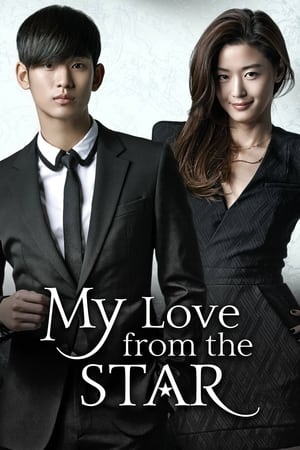
An alien who came to Earth 400 years ago is almost able to return to his own planet, but when he meets a famous actress, he doesn't want to go home.
The Tracey Ullman Show is an American television variety show, hosted by British-born actress and onetime pop singer Tracey Ullman. It debuted on April 5, 1987 as the Fox network's second primetime series after Married... with Children (1987–1997), and ran until May 26, 1990. The show is produced by Gracie Films and 20th Century Fox Television. The show blended sketch comedy shorts with many musical numbers, featuring choreography by Paula Abdul. The show also produced The Simpsons shorts before it spun off into its own show, which was also produced by Gracie Films and 20th Century Fox Television.
"I Love Kindergarten" is a child growth reality show. It focuses on children aged 2 to 4, and records the children and teachers while in school. It shows them adapting to the process of developing their identities and lets viewers see the world through the perspective of a child.
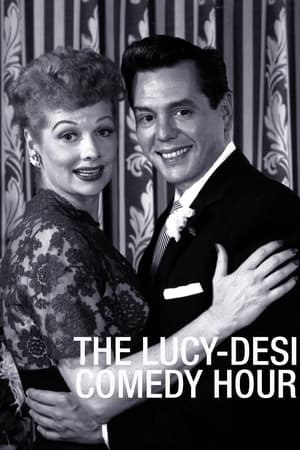
The Lucy–Desi Comedy Hour is a collection of thirteen one-hour specials airing occasionally from 1957 to 1960, and originally served as part of Westinghouse Desilu Playhouse. Its original network title was The Ford Lucille Ball-Desi Arnaz Show for the first season, and The Westinghouse Desilu Playhouse Presents The Lucille Ball-Desi Arnaz Show for the following seasons. It was the successor to the classic comedy, I Love Lucy, and featured the same major cast members. The production schedule avoided the grind of a regular weekly series. Desilu produced the show, which was mostly filmed at their Los Angeles studios with occasional on-location shoots at Lake Arrowhead, Las Vegas and Sun Valley, Idaho. CBS reran the show under the "Lucy-Desi" title during the summers of 1962-1967, after which it went into syndication.
Jonathan Ross's take on current topics of conversation, guest interviews and live music from both a guest music group and the house band.
2DTV is a British satirical animated television show that was broadcast on ITV in the United Kingdom from March 2001 to December 2004. Lasting a total of five series and thirty-three episodes, 2DTV became the successor of popular 80's TV series Spitting Image, and the predecessor of 2008 ITV satirical animation Headcases.
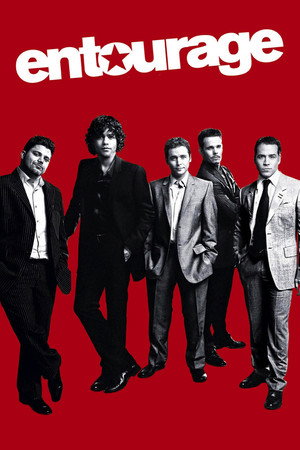
Film star Vince Chase navigates the vapid terrain of Los Angeles with a close circle of friends and his trusty agent.