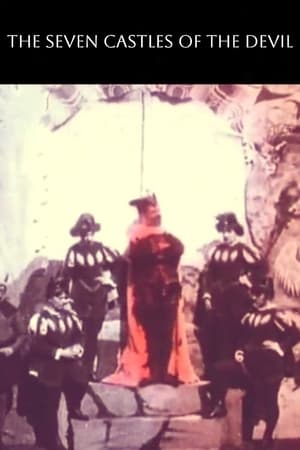
A green-skinned demon places a woman and two courtiers into a flaming cauldron.
During a game of hide and seek, a new bride hides in a chest and remains undiscovered until a strange visitation thirty years later.
A man dreams he is the 'demon barber' who cuts sailors' throats for jewels and uses the corpses for pies.
The mysterious Count Orlok summons a happily married real estate agent to his castle, located up in the Transylvanian mountains, to finalise a terrifying deal.
A young woman who lives with her uncle begins to dream about a monster that lurks in the shadows of the night.
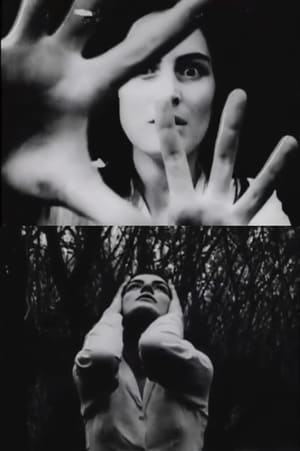
The film is about a woman who experiences frightening visions after visiting an insane asylum where one of the inmates claims to be Count Dracula (here following the Hungarian spelling Drakula). She has trouble determining whether the inmate's visions are real or merely nightmares.
A world-famous pianist loses both hands in an accident. When new hands are grafted on, he is horrified to learn they once belonged to a murderer.
Frankenstein, a young medical student, trying to create the perfect human being, instead creates a misshapen monster. Made ill by what he has done, Frankenstein is comforted by his fiancée; but on his wedding night he is visited by the monster.
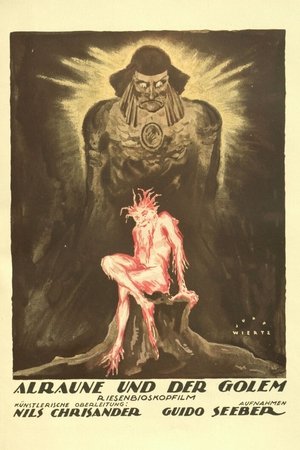
Hanns Heinz Ewers' grim science-fiction novel Alraune has already been filmed twice when this version was assembled in 1928. In another of his "mad doctor" roles, Paul Wegener plays Professor Brinken, sociopathic scientist who combines the genes of an executed murderer with those of a prostitute. The result is a beautiful young woman named Alraune (Brigitte Helm), who is incapable of feeling any real emotions -- least of all guilt or regret. Upon attaining adulthood, Alraune sets about to seduce and destroy every male who crosses her path. Ultimately, Professor Brinken is hoist on his own petard when he falls hopelessly in love with Alraune himself. Alraune was remade in 1930, with Brigitte Helm repeating her role, and again in 1951, with Hildegarde Knef as the "heroine" and Erich von Stroheim as her misguided mentor.
In 16th-century Prague, a rabbi creates the Golem - a giant creature made of clay. Using sorcery, he brings the creature to life in order to protect the Jews of Prague from persecution.
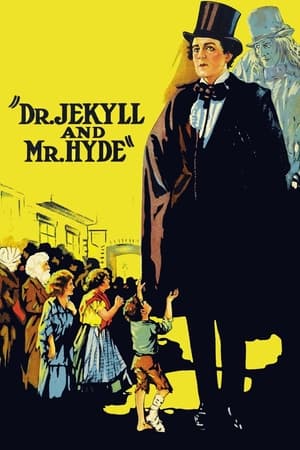
A doctor's research into the roots of evil turns him into a hideous depraved fiend.
Mad scientist, doctor Ten Brinken artificially inseminates a prostitute with a dead man's semen. The resulting child grows up to be a beautiful, evil woman who turns against her creator.
The plot is the embodiment of everyday belief about the impact of a certain evil force on a person. The action develops in a peasant environment.
Set off by a traumatic breakup, Paul Fisher (Poissonnier) spirals into a vicious underworld of sex, drugs and violence. Broke and clamoring for his next fix, Paul is lured into the clutches of pornographic film producer Ralph Beavers (Himself), where he is betrothed to none other than his own ex-girlfriend! Can Paul escape the malevolent forces that hunger for the flesh of his soul? Find out the mind-melting conclusion in this phantasmagoric journey into the heart of the unknown. Welcome to WASTERVILLE.
This mostly lost film is often confused with director Paul Wegener third and readily available interpretation of the legend; Der Golem, wie er in die Welt kam (1920). In this version of the golem legend, the golem, a clay statue brought to life by Rabbi Loew in 16th century Prague to save the Jews from the ongoing brutal persecution by the city's rulers, is found in the rubble of an old synagogue in the 20th century. Brought to life by an antique dealer, the golem is used as a menial servant. Eventually falling in love with the dealer's wife, it goes on a murderous rampage when its love for her goes unanswered.
God and Satan wager on the soul of a learned and prayerful alchemist as part of their eternal war over Earth.
On a quiet night, a young couple find themselves caught up in a nightmarish ordeal after they witness a murderer disposing of a body in this claustrophobic thriller.
A dying professor leaves his great-nephew a collection of documents pertaining to the Cthulhu Cult. The nephew begins to learn why the study of the cult so fascinated his grandfather. Bit-by-bit he begins piecing together the dread implications of his grandfather's inquiries, and soon he takes on investigating the Cthulhu cult as a crusade of his own.
An alcohol/drug abuser re-examines his life until he nearly dies from an overdose. Then a friend convinces him to join a self-help group which turns out to be demonic.
A reel of the Noh drama Momiji-gari, in which Danjuro Ichikawa played opposite Onoe Kikugoro V as an ogress who has disguised herself as the Princess Sarashina. Filmed by Shibata Tsunekichi in the open air on a windy day in November 1899, Danjuro would allow only the one take, so that when his fan blew away in mid-performance the scene had to stay. The film re-emerged at the Kikikan theatre in 1907 where it was a great success and inspired a wave of fiction filmmaking based on traditional Japanese narratives.