Two sisters from Indiana, the wide-eyed and innocent Mae Thorpe, and her more streetwise sister June, move into the Rolf House for Homeless Girls in New York. With June's help, Mae obtains a job as a stenographer for the scientist Joseph von Schraeder, while June gets work as a telegraph operator at Western Union.
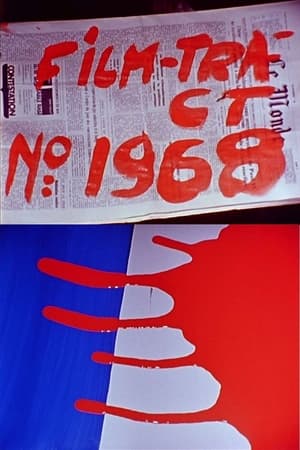
In the 1968 movement in Paris, Jean-Luc Godard made a 16mm, 3-minute long film, Film-tract No.1968, Le Rouge, in collaboration with French artist Gérard Fromanger. Starting with the shot identifying its title written in red paint on the Le Monde for 31 July 1968, the film shows the process of making Fromanger’s poster image, which is thick red paint flows over a tri-color French flag. —Hye Young Min
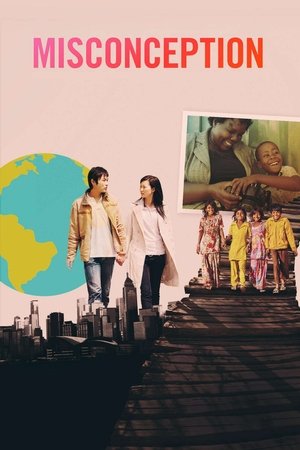
For almost 50 years, the world's population has grown at an alarming rate, raising fears about strains on the Earth's resources. But how true are these claims? Taking cues from statistics guru Hans Rosling, Misconception offers a provocative glimpse at how the world—and women in particular— are tackling a subject at once personal and global. Following three individuals, director Jessica Yu focuses on the human implications of this highly charged political issue, inspiring a fresh look at the consequences of population growth. In English, Hindi, Mandarin, and Russian with subtitles.
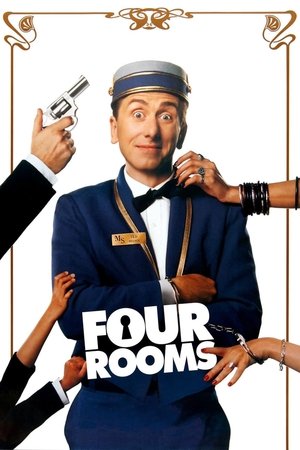
It's Ted the Bellhop's first night on the job...and the hotel's very unusual guests are about to place him in some outrageous predicaments. It seems that this evening's room service is serving up one unbelievable happening after another.
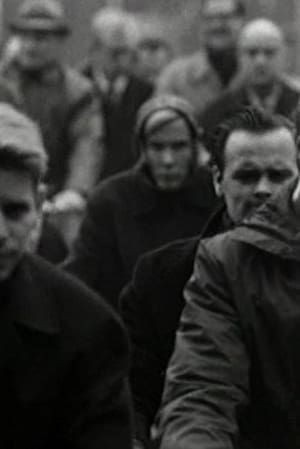
Rhythmic composition of moving photographs of cyclists in Amsterdam, ‘set’ to Vivaldi’s The Four Seasons.
The untold tragedy and scandal of what happened to a vibrant community of immigrants from the Cape Verde Islands in the Fox Point section of Providence, Rhode Island who were forcibly displaced by urban renewal to make way for fancy coffee shops, antique stores and elegantly restored houses. Poignant, heartfelt and warm, in a timeless snapshot SKFPR captures the essence, spirit and heart of a community whose history was erased before it was written.
Lucy Daniels believes that a family secret told to her as a four year-old radically impacted the trajectory of her life, and set in motion a life-long debilitating mental illness. Born into a powerful newspaper-magnate family, from an early age Lucy defined her worth by her ability to write. Despite early success, she was struck with severe anorexia and underwent brutal treatment in mental institutions, only to survive, pen her first best-seller, and ultimately win a Guggenheim Prize in literature - all before the age of 22. The first of its kind, this hybrid documentary weaves together 'relational' recreations, animated dream sequences, constructed worlds and intimate interviews to tell a worthwhile story of survival and creativity, filtered through the eyes of filmmaker and subject.
Clouds 1969 by the British filmmaker Peter Gidal is a film comprised of ten minutes of looped footage of the sky, shot with a handheld camera using a zoom to achieve close-up images. Aside from the amorphous shapes of the clouds, the only forms to appear in the film are an aeroplane flying overhead and the side of a building, and these only as fleeting glimpses. The formless image of the sky and the repetition of the footage on a loop prevent any clear narrative development within the film. The minimal soundtrack consists of a sustained oscillating sine wave, consistently audible throughout the film without progression or climax. The work is shown as a projection and was not produced in an edition. The subject of the film can be said to be the material qualities of film itself: the grain, the light, the shadow and inconsistencies in the print.
In this film, Sara Gómez documents the everyday life of the Isla de Pinos, the discussions about the problems of construction, the school and the leisure activities of the youth in 1968 and contextualizes these images with Frantz Fanon's thoughts about the construction of a nation through decolonization.
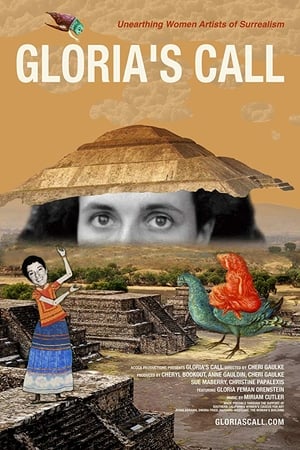
In 1971, graduate student Gloria Orenstein received a call from Surrealist artist Leonora Carrington that sparked a lifelong journey into art, ecofeminism and shamanism. This short film uses art, animation and storytelling to celebrate this wild adventure. Now more than 40 years later, award-winning Dr. Gloria Feman Orenstein is a feminist art critic and pioneer scholar of women in Surrealism and ecofeminism in the arts. Her delightful tale brings alive an often unseen history of women in the arts.
An intimate video work depicting a Nepali family’s struggles for cohesion, despite everyday travails and the absence of a beloved son.
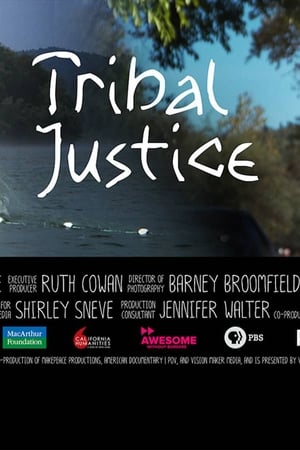
Two formidable Native American women, both chief judges in their tribe's courts, strive to reduce incarceration rates and heal their people by restoring rather than punishing offenders, modeling restorative justice in action.
A stressed father, a bride-to-be with a secret, a smitten event planner, and relatives from around the world create much ado about the preparations for an arranged marriage in India.
Rahul Seth is a dashing young millionaire who believes he is "western" enough to rebel against his mother and grandmother. They are not too keen about his Caucasian girlfriend Kimberly who, to make matters worse, is a pop star. Before you can say "karmic intervention," Kimberly dies in a freak accident and Rahul is devastated. Instead of allowing him to mourn in peace, Rahul's mother sees the opportunity she's been waiting for. She threatens to call off his sister's wedding unless he finds himself a "nice Indian girl." Rahul enlists the services of Sue, a fiercely independent escort whom he believes to be Hispanic, and therefore not "married" to the conventions taught to young Indian women. With a wink in her eye, Sue accepts the deal to pose as his Indian bride-to-be. She needs the money and having never been a fan of the typical Indian male, she feels her heart is safe. The charade begins....
The film follows teenage girls Mairéad Mc Ilkenny and Christine Savage. The two young women live in the same city but at the same time in two different worlds, cut off from each other by high walls that separate people.
A day in the city of Berlin, which experienced an industrial boom in the 1920s, and still provides an insight into the living and working conditions at that time. Germany had just recovered a little from the worst consequences of the First World War, the great economic crisis was still a few years away and Hitler was not yet an issue at the time.
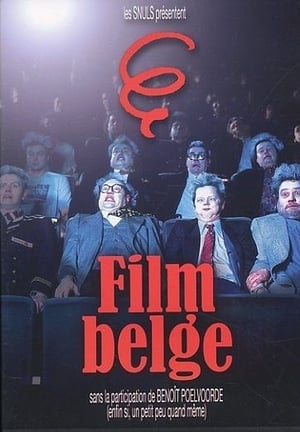
Scene 23, Slow pan The wind whistles over the dykes of the Willebroek Canal. Armand sighs. The viewer should feel goose bumps under their thick sweater. Make it clear that at this moment, Armand is craving a cup of Borain coffee. Scene 456, Armand's farm Armand puts down his coffee cup. Through the window, he sees a beautiful Romanian refugee with AIDS playing the cello in the beet field. Behind Armand, his wife, a former RTBF announcer, commits suicide by hitting herself with hot potatoes. Scene 2,347, sublime landscape of Flanders Armand can't take it anymore: will he choose the position of deputy for the Vlaamse Blok or that of puppeteer subsidized by the CUCF? No one can say.
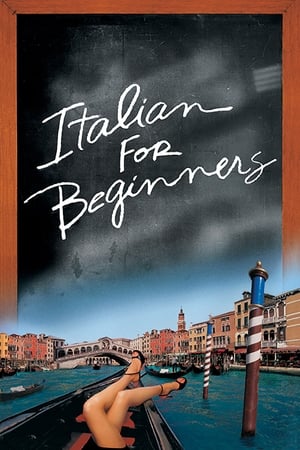
Several lonely hearts in a semi-provincial suburb of a town in Denmark use a beginner's course in Italian as the platform to meet the romance of their lives. The film, which unspools the connections and family drama shared between the students, complies with several aesthetic principles of Dogme 95 movement.
Warsaw's Central Railway Station. 'Someone has fallen asleep, someone's waiting for somebody else. Maybe they'll come, maybe they won't. The film is about people looking for something.
On the Sorrento peninsula, orange and lemon groves stretch all the way to the coast. In the orange plantations, the high wooden frames are covered with mats to protect the trees from intense sunlight. The function of the artificial irrigation system is demonstrated. The oculation of trees is demonstrated in a young plantation. The oranges are cleaned on the spot, then sent to the laundry, cleaned, dried and made ready for dispatch. In a lemon plantation, many pickers stand on ladders on a tall tree and remove the fruit. The lemons are sorted, wrapped in tissue paper and packaged in home and large-scale factories. Before being exported, the goods are checked again for quality.