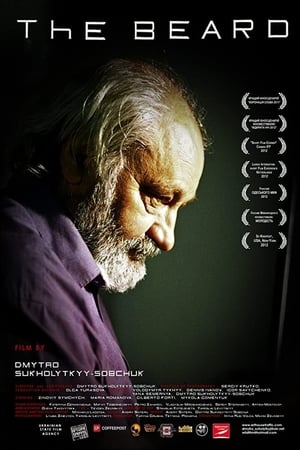
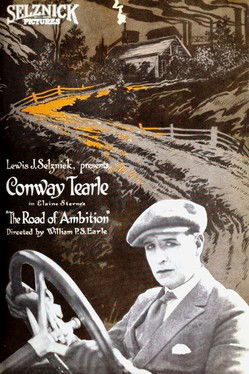
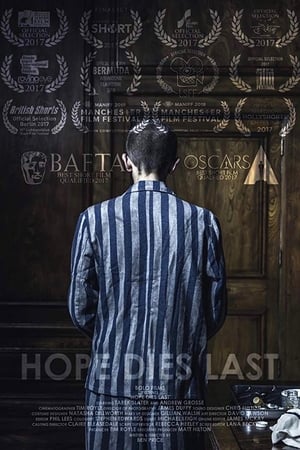
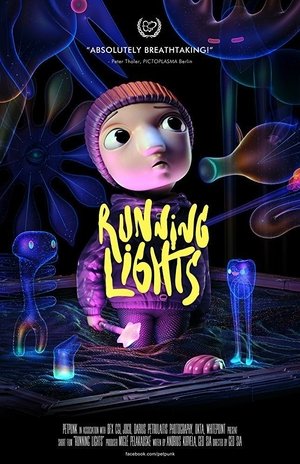
A son tries to overturn the disgrace of his father, who committed suicide.
In a world where Greek mythology is reality, Ben, a lonely reporter, finds his morals swayed by his desperation for affection.
A son loves his mother, because her hands were the first to welcome him. At her funeral, he steals the hearse and drives away. During the journey, the boy reminds the last weekend they spent together. Agnese takes care but doesn’t love, she’s lost in her thoughts and doesn’t let anyone get closer, not even Giulio. Two days to understand each other, two days to love each other, and to leave in the end.
Aurora is setting up a special anniversary dinner for her husband. She goes about her day, alone, reminiscing about her lover, but a truth hangs over her like a dark cloud.
John despises his father for being a failure in life. When John returns home to facilitate his father's funeral, his life comes to a turning point, as he discovers the true motivation of his misjudged father.
After a dreadful incident coupled with an ungovernable paroxysm of violence, a butcher will fall into a downward spiral that will burn to the ground whatever dignity still remained in him.
Robin Hood is a 1912 film made by Eclair Studios when it and many other early film studios in America's first motion picture industry were based in Fort Lee, New Jersey at the beginning of the 20th century. The movie's costumes feature enormous versions of the familiar hats of Robin and his merry men, and uses the unusual effect of momentarily superimposing images different animals over each character to emphasize their good or evil qualities. The film was directed by Étienne Arnaud and Herbert Blaché, and written by Eustace Hale Ball. A restored copy of the 30-minute film exists and was exhibited in 2006 at the Museum of Modern Art in New York City.
Conflict develops when two old friends, who represent each other's path not taken, unexpectedly go fishing together.
In a near-future where a virus has turned the population into rabid monsters, a desperate mother forms an unlikely friendship in order to return home and save her family.
Theatre students André and Gabriel drum up support for resistance against the dismantling of culture policies in Brazil.
Edgar Allan Poe’s ill-fated hero meets his double.
Therese Roger, daughter of a West Indian planter, whose parents are murdered while she is a baby, becomes the adopted daughter of her aunt, Madame Roger, keeper of a haberdashery shop in one of the smaller villages in southern France. She grows up with Camille, Madame Roger's son, a sickly, sexless creature, whom she ultimately marries in deference to her aunt's wishes.
A young woman of humble origins hides her family's lack of wealth and prestige from her boarding school friends.
Captain of the Yale football team, Paul Potter becomes engaged to his small-town Indiana sweetheart Sylvia Castle but once in the big city he becomes involved with married society girl Muriel Evers and finds Sylvia too provincial, ending their engagement. In time Sylvia meets alcoholic actor, Henry Leamington, who encourages her to become an actress while she helps him get sober. In New York she finds success and becomes reacquainted with Paul for whom she still has feelings, but comes to realize he is a lout and returns to Henry.
Lisza Tapenko (Bara) is governess in the household of Prince Arbasoff (Charles Clary). After the death of his wife, Lisza and he become involved, but because of the difference in social station he refuses to marry her. Lisza's former lover, Vassya (Richard Ordynski), convinces her to join the revolution and she goes off to the group headquarters in Switzerland. But the prince's little boy begs to have Lisza come back, so he goes after her and marries her.
Tidens Barn
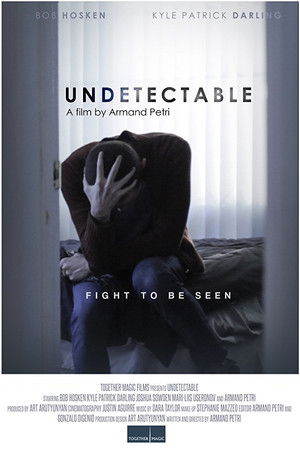
A down and out professional tries and fails to commit suicide. He wanders the streets and bumps into the man who caused his hardships...
A male artist indulges in his love of the female form. That love is tainted when the female subjects make a choice to admire their own beauty. A short that loudly echoes society's treatment of black beauty. Infatuation is an experimental short film lasting just over four minutes.
Bessie Barriscale and Nigel Barrie play Ellen and Gibbs Josselyn, a young married couple who have spent several years in Europe while Gibbs, an artist, developed his talent. When they return to the States, they stay with Gibbs' father (Tom Guise) and stepmother (Kathleen Kirkham). Gibbs had never cared much for his stepmother, Lillian, but now he warms up to her -- a lot. Lillian is much younger than her husband and begins spending a suspicious amount of time with her stepson.
Oscar is a child germinating in its parent’s garden. Its body is developping underground. Nobody knows its biological sex but he wants to be a boy. One day, Oscar gets out of the ground and discovers his female body. After this painful discovery, is his desired identity finally going to be accepted?