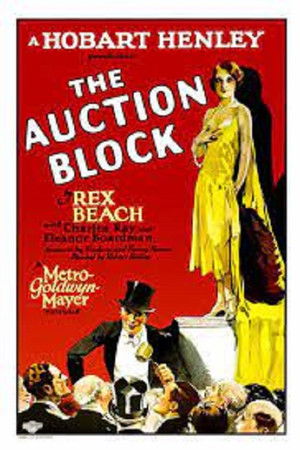
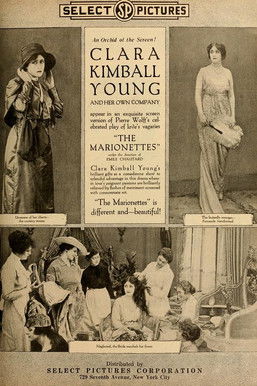
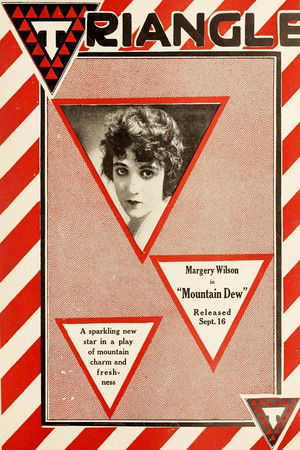
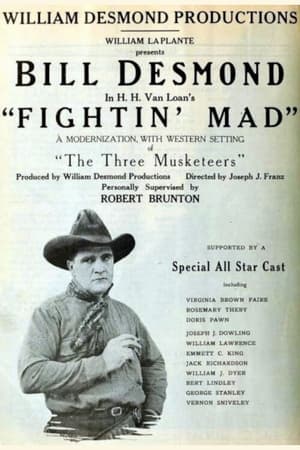
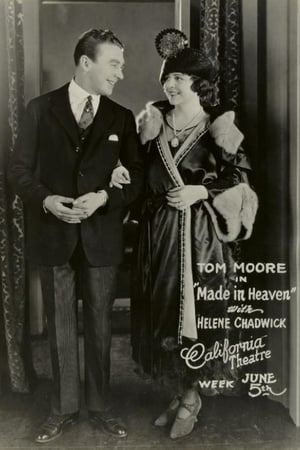
Wealthy heiress Clover Dean has three suitors: Duke Boris, promoted by her aunt, Bucky Raine, a wealthy idler sponsored by her uncle, and struggling young doctor William Dunn, who is her own choice. Clover's engagement to the duke is to be announced at a dance, but she rebels before the gathering and refuses to go on with the marriage. Clover leaves hurriedly, a shot is heard and the duke found dead. Bucky Raine, discovered wandering about the garden with a revolver in his hand, is arrested for the crime, but his testimony convicts the doctor as the person who had possession of the gun during the shooting. The doctor and Clover are both arrested for suspicion, but a guilty conscience forces Rita, a former sweetheart of the duke to confess to the crime. Clover then has her own way and marries the doctor.
The lovely and wealthy Gladys Barnes is pursued by many young men though she favors the persistent Earle. Her head is turned when her father tells her a foreign Count has written with the request to marry her. An amateur artist Gladys paints a portrait of the Count from a photo but the young men at the studio first tease her and then decide to play a joke on her and her father. Sending a telegram that he is arriving early they all dress as different versions of the Count and comic complications ensue until Gladys realizes her folly and returns to Earle.
Returning to his father's cattle ranch after the excitement of serving in combat overseas, Bud McGraw becomes restless, and his father decides to send him to an old friend who commands the Border Police in Texas. On the way he meets Peggy Hughes, accompanying her Uncle Graham, a customs inspector, and he retrieves her hat from the rails of a train. At the headquarters, numerous scrapes and fights win him the admiration of, and friendship with, the men. Lazaro, a Secret Service agent, invites Mrs. Graham and Peggy, who are staying at the border station, for an automobile ride, and they are captured by bandits and held for ransom. Bud and his pals deliver the ransom and discover that Lazaro is the bandit chief. Lazaro refuses to release Peggy, but a jealous rival, Nita de Garma, causes his downfall and shoots him as the Border Police arrive to rescue the party.
Samson Brown is a lazy and shiftless husband who lets his wife, Hannah, support the family. He is constantly insulted and annoyed by his in-laws, who live with them, and finally takes off for points unknown. At home, life goes on as usual with the exception of a former suitor who shows up to court Hannah when it is believed Samson is dead. While wandering around the desert Samson discovers a valuable radium deposit. The now-rich Samson plans to return home and sort out the family matters but first he buys a nightclub.
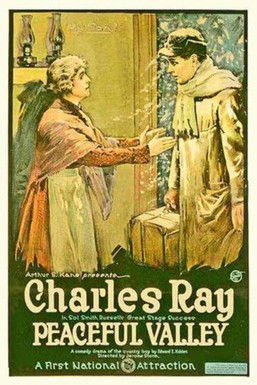
The city chap arrives in a flivver and makes love to the daughter of the proprietor. The rival plays a strong hand but is not quite strong enough to regain the girl. Little brother plays his part with tact and gets the regulation quarter for allowing the spooners to be alone. An elopement in moonlight provides a good finish.
Goldwyn produced a 1923 film adaptation of Potash and Perlmutter, and a 1924 sequel called In Hollywood with Potash and Perlmutter. In Partners Again the two are in the automobile industry -- This is a lost Film.
Women They Talk About is a part-talkie Vitaphone film, with talking, music and sound effects sequences, starring Irene Rich, directed by Lloyd Bacon and produced and distributed by Warner Bros. It is considered to be a lost film.
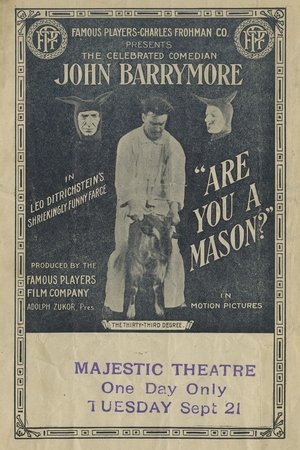
Mr. and Mrs. Jones and their six children start out for a picnic in the woods with youngest son Jimmie’s beloved Great Dane pup along. The animal proves to be a white elephant as soon as they try to board a trolley car, and they must walk to the picnic grounds. That’s only the beginning of their troubles with Mr. Jones trying everything to get rid of the pup, but when they get home from their "quiet little picnic," Mr. Pup is quietly sitting on the doorstep, and Jones disgustedly gives up.
During the COVID-19 pandemic, two college students set out to make a revolutionary television show. The pilot episode was uncovered and presented alongside exclusive interviews with the cast and crew.
Drama in the Futurists' Cabaret No. 13
A 1919 film directed by Sidney Franklin.
Lizzie Stokes, an obscure and colorless actress, is elevated to stardom through publicity and better coaching from Daniel Hoffman, a theatrical producer. As Olga Rostova, an exotic Russian, she meets Norman Brooke, whose infatuation turns to love. Hoffman suggests that Norman could never care for Lizzie and proves his point. Heartbroken, Lizzie decides to see no more of him. On closing night, when he proposes to her in her dressing room and she refuses, Norman declares he must believe all the lurid details of her past; in desperation, she bares her true identity, only to find it is not her glamorous image but rather her real self that he loves.
Clarence Brooks is a shy, timid man working for Mr. Flavell. He is love with Flavell's daughter, Nancy. Nancy is shallow and fickle, always chasing after other, less-upstanding men. Clarence enlists when World War I erupts. While Clarence is off defending his country, Nancy's mother arranges for her daughter to marry the wealthy Mr. Braille. When Braille is drafted, Nancy's mother starts arranging a rush wedding, against Nancy's wishes. Nancy claims that she and Clarence are already secretly married. When the war is over and Clarence returns home, he refuses to be a part of her charade. When Clarence declines the offer to marry Nancy for real, she must mature to win his affections back. A lost film.
Ann, a 19-year-old girl who looks much younger, meets a dashing army major on a boat sailing from Liverpool to Bombay, India, and falls in love with him. Her love appears to be unrequited, though, because the major thinks she is far too young--and also, unknown to her, because he had once been in love with her mother. When a fellow passenger on the ship takes advantage of the naive girl the major comes to her rescue, but in the process the girl finds out about the past relationship between he and her mother.
Mary Sundale is a young woman who spurns her childhood sweetheart to attach herself to a large group of riotous, semi-artistic young people and becomes infatuated with a superficial poet and critic. One night this poet becomes too bold in his advances and is thrashed by the man who has been rejected. On a later night, the group holds a party in a dirigible. The ship crashes and fear grips the revelers. Mary, now disgusted with the group and all it represents, mends her manner of living and plans a future with the man who has always sincerely loved her. A lost film.
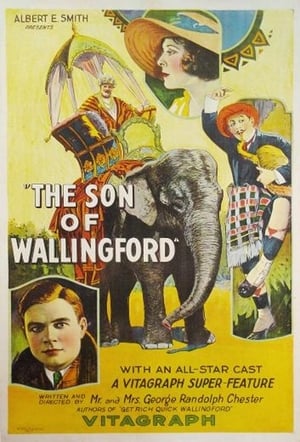
A young man's journey into adulthood, love, and ambition, inspired by a serial by George Randolph Chester exploring themes of love, ambition, and self-discovery, set against the backdrop of the Roaring Twenties.
Because of the circumstances of her parents' marriage her grandfather rejects their child, Mary. Following her their deaths she is placed in an orphanage where Mary finds hardship.
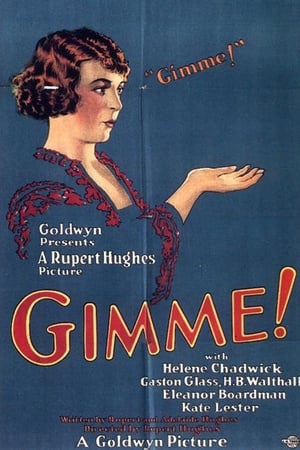
Amy Lindel, a church choir singer, goes to the city to pursue a singing career, but finds herself only able to get cabaret gigs. She then becomes entangled in a situation involving stolen diamonds, and is saved by the "good guy" whom she later marries.
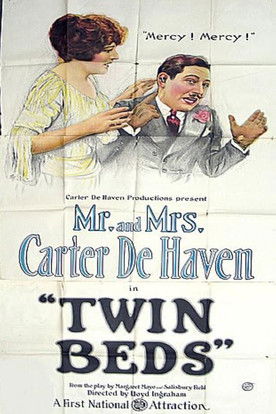
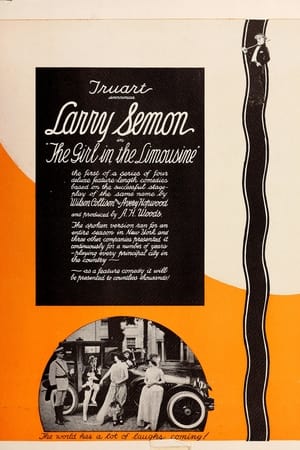
A young woman borrows money from her boss for her wedding dress. After the marriage he asks to be repaid, and she--not liking to ask her husband for money--writes a check on her husband's account. When he discovers that his wife has written a check to another man and not told him, complications ensue.
When Harlan Carr inherited his Uncle Ebenezer's "Jack-O Lantern" house and too his bride there to live, he found himself the unwilling host of a score of hungry relatives within a week. Soon, strange things began to happen. A black cat made the house his headquarters, unexplained sounds could be heard and a shadowy figure floated through the halls at night.