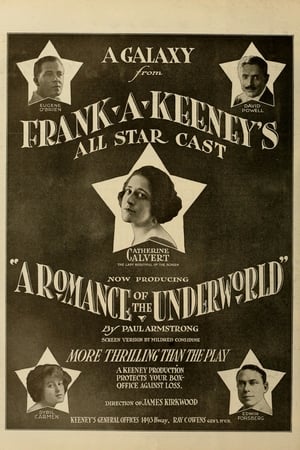
A man searches for a cursed emerald belonging to his ancestor. Lost film, minor fragments survive
Early silent movie adaptation of Shakespeare's play, focused on key moments: the arrest of the Duke of Buckingham, Henry's infatuation with Anne Boleyn at a banquet, the Trial of Queen Katharine, Cardinal Wolsey's downfall, and Anne's coronation.
Today and Tomorrow (Hungarian: Ma és holnap) is a 1912 film directed by Michael Curtiz and starring Gyula Abonyi and Jenőné Veszprémy.
Havasi Magdolna
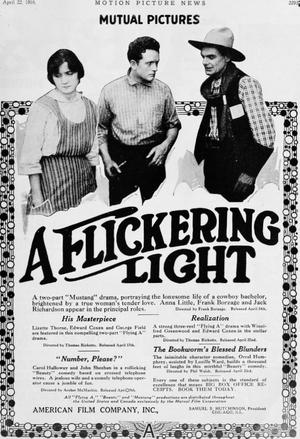
The cowboys and gamblers of Curzon are very much interested in a placard which appears one day in the saloon, giving the information that the Rev. A.B. Cole is due to arrive from Glue Gulch, and that services will be held in the schoolhouse. The cowboys plan to give the preacher a warm reception, but are surprised and chagrined when the new minister turns out to be a pretty woman. The immediately apologize and agree that religion must be a good thing if taught by such a charming woman. The attendance at the schoolhouse is large, and the barroom is almost deserted. The bartender is in despair and is on the point of closing out his business. He is urged against this, however, by one steady patron, Joe Lane, who tries his best to bring the deserters back into camp.
West Indian born Corinne La Force, who is biracial, is raised by Henry Hasbrook after her father's death. Corinne loves Hasbrook's nephew, Arnold Curtis. When Hasbrook tries to prevent the match because of her heritage she murders him. Arnold is arrested though Marcia Fleming, a married woman who is Arnold’s mistress and her mother-in-law fall under suspicion. Defending Arnold John Fleming discovers the affair and renounces his wife. Arnold is about to confess in hopes of saving Marcia's reputation when Corinne admits her guilt and stabs herself.
When Grace Raymond follows Neil Garth, her hard-drinking fiancé, West, she finds him living in a squalid desert cabin. Forced to choose between being raped by outlaws or giving in to Neil's sexual demands, Grace moves in with her fiancé. A year later, Grace rescues James Stapleton, a gold miner, from a desert death and helps him to escape from Neil's greedy clutches. Before Neil can punish her, she knocks him out and flees to New York, where she meets and then marries Oliver West, a jeweler with failing vision. To help with his medical bills, Grace sells a short story, but Neil shows up and threatens to expose her past unless she gives him her earnings. Eventually, Oliver finds out about Grace and Neil and goes blind from the shock. Determined to win Oliver back, Grace enlists the help of Stapleton, now a rich broker, to thwart Neil and secure a sight-restoring operation for Oliver. When Oliver hears Neil's confession of Grace's difficult past, he finally forgives her.
Newland Archer is engaged to May Mingott of a prominent New York family. Shortly after the engagement is announced, Newland finds himself attracted to May's older married cousin Countess Ellen Olenska.
A woman takes the place of a wife who had died seven years earlier.
A gang of crooks evade the police by moving their operations to a small town. There the gang's leader encounters a faith healer and uses him to scam gullible public of funds for a supposed chapel. But when a real healing takes place, a change comes over the gang. Lost film, only the most famous scene has survived.
A family suffers greatly during the First World War.
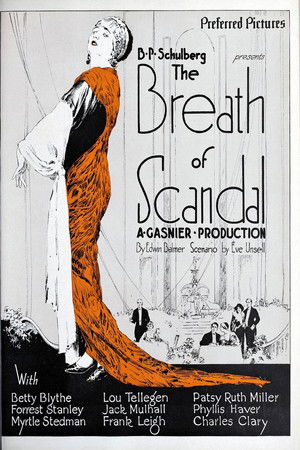
Princess Cecelie of Capra, a small Alpine nation, visits the U.S. with her mother, Queen Charlotte, and becomes enamored with Jazz Age culture. The princess refuses an arranged marriage with Prince Boris of Dacia, unaware that they have already fallen in love during a chance meeting.
The old nunnery owns the best lands. Nuns rent out the land to local rich men, and exploiting peasants they have a wealthy life. The peasants live in misery. Especially, the family of the peasant named Levin. He is forced to give away his last horse, his son Andrii is imprisoned, his daughter Nastia becomes a maid of a rich landlord. Trying to prevent the master’s harassment, Nastia escapes and gets to the nunnery. She can see the other life of the nuns who manufacture false relics, drink alcohol and kill children. Nastia ends up in the basement for resisting one of the “spiritual pastors.” Meanwhile, her brother Andrii escapes from prison. He stirs up a rebellion and saves his sister. The film is lost.
Joe Brooks is taken advantage of by his employer, Captain Williams, who is a jealous former suitor of Joe's wife, Emma. Williams puts Joe in charge of the company's payroll money and has detectives set a trap for him.
A film adaptation (funded by Ken Togo) based on an expose book by a person involved in the Japanese entertainment industry of the time. The book describes among other things the drug-fueled parties, orgies of the entertainment business and what some celebrities like Johnny Kitagawa among others were allegedly up to in their free time. Basically giving an open-book about the secrets of the entertainment-world. The film adapts and portrays some of the shocking scenes of this book, focussing more on the gay-aspect of the expose.
In 1871, a Chicago undercover detective gets a job as a porter in a disreputable saloon to get information on a stolen painting, which he believes will be fenced there by thieves. He soon falls in love with the saloon owner's daughter, who believes him to be just a porter. Soon his undercover work puts him and the girl in danger, from both the criminals who stole the painting and the infamous Chicago Fire of 1871.
A novelist living in a boarding house imagines a murder that involves his fellow boarders.
Joe and Eve are engaged, but Joe cannot help contrasting the drabness of her attire with the dressy clothes of their friends. Eve overhears him talking of this and breaks with him. Then, with the help of her friend, Mazie, she metamorphoses into a ravishing beauty. Joe is remorseful, but the situation is made more complex when he suspects Eve of questionable relations with her boss.
A woman with a sordid past is redeemed by love in this silent melodrama from low-budget Sanford Productions.
Four sisters come of age in America in the aftermath of the Civil War.