Caravan of Death (German: Die Todeskarawane) is a 1920 silent German film, it was an adaptation of the latter half of the Karl May novel From Baghdad to Stamboul, and is now considered to be lost. The film featured Bela Lugosi playing an Arab Sheik pitted against European travellers in an adventure story set in the Sahara. It was the second of three films released by Ustad based on desert adventure novels by Karl May. Although Karl May’s widow praised the film, critics were unimpressed and it was a commercial failure.
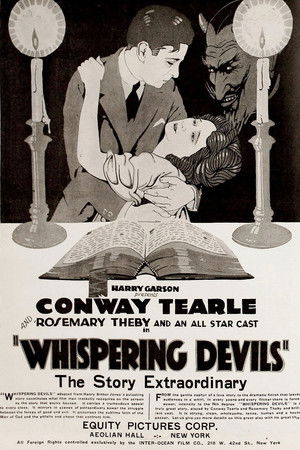
When doctors fail to cure the young and beautiful Claire Raven, who for inexplicable reasons seems to have fallen under a spell, Professor Mors, an expert in the field of hypnosis, is called in to help.
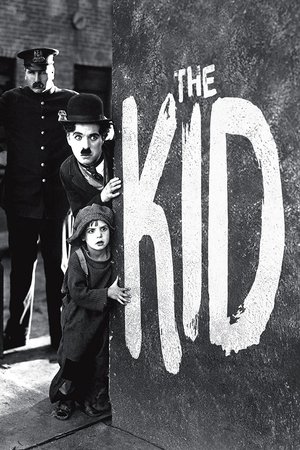
A tramp cares for a boy after he's abandoned as a newborn by his mother. Later the mother has a change of heart and aches to be reunited with her son.
A father sacrifices an animal on the day of Eid al-Adha according to the traditions and customs of the past. According to the old custom, he gives the last bowl of water to the goat, but his son tries to save the goat. The father angrily looks for them. The boy makes the goat run away and puts the rope around his neck instead of the goat. This short film refers to the story of Ismail and Ibrahim in Islam.
A young man fakes his identity to impress a girl.
Robert Skalski passionately confesses Ludwice's love and begs her to marry him. The girl resists because she does not want to conflict with her uncle and aunt who raised her.
The plot revolves around a love triangle: Nela, the lead character, falls in love with Jorge, who in turn is seduced by Clarisa, the daughter of a doctor who treats Nela's tuberculosis.
When her grandson is kidnapped during the Tour de France, Madame Souza and her beloved pooch Bruno team up with the Belleville Sisters—an aged song-and-dance team from the days of Fred Astaire—to rescue him.
Neglected by her grief-stricken father, a doctor, after the tragic death of his wife, little Eileen Homer changes the wording of her father's ad for a governess to read: "Wanted, a mother." After much melodrama that’s just what she gets.
A sheep farmer brings his new wife to his father's ranch and the old man takes an instant dislike to her.
Gambler "On-the Level" Leigh (William S. Hart) is forced to leave his high rolling lifestyle to move his ailing sister Alice (Mildred Harris) to the healing climate the mountains. Financial strain compels him to resume his favored vocation. Unfortunately for Level, the dance hall girl Coralie (Alma Rubens) doesn't take rejection well and convinces the dealer to clean him out with a "cold deck". A desperate robbery ensues, leading to Level wanted for murder!
During an annual celebration in which English peasants and aristocrats mingle, the Duke of Loame is thrown from his horse and saved by Ivis Benson, the daughter of a tenant farmer. Both injured, they fall in love, to the dismay of his mother and Lady Eileen, his intended bride.
The house next door to Mr. Cobb is rented by Mrs. Rose, a widow who moves in with her little girl Helen. Mr. Cobb is a widower with a little boy, Phil.
A semi-documentary experimental 1930 German silent film created by amateurs with a small budget. With authentic scenes of the metropolis city of Berlin, it's the first film from the later famous screenwriters/directors Billy Wilder and Fred Zinnemann.
Francis, a young man, recalls in his memory the horrible experiences he and his fiancée Jane recently went through. Francis and his friend Alan visit The Cabinet of Dr. Caligari, an exhibit where the mysterious doctor shows the somnambulist Cesare, and awakens him for some moments from his death-like sleep.
Lydia Jansen is happily married to a young customs inspector, but she harbors a dark secret. She is addicted to smoking opium or in slang parlance “hop.” To keep her secret, she willingly pays the blackmail her maid extorts from her having learned of Lydia’s habit through her own fiancée who is part of the ring importing the devil’s brew. Something unknown to all is that the operation is run by Lydia’s father an important politician in the city where this all occurs. As her husband’s investigation tightens the noose on the organization Lydia faces a crisis.
Isabel Bradford, an orphan, keeps house for her grandfather, her sisters Ina and Marie, 18 and 10 years old, respectively, and her brother Harry, aged 16. Harry and his grandfather answer the call to arms. Ina meets a wounded volunteer carrying a message to the American general that the British are preparing to attack. She undertakes to carry the message and after a trying experience reaches the American camp and the soldiers advance to meet the enemy. In the meantime the British have attacked the settlement and a pair of drunken soldiers enter the Bradford cabin and attempt to force caresses upon Isabel. Capt. Burton, a British officer, arrives and hurls them aside. Isabel's heart flutters with emotion as she thanks the dashing officer, and he in turn is smitten with her charms. Later another detachment of soldiers make an attack and Isabel barricades the heavy door and fired the guns which her tiny sister loads.
Set during the 16th-century Spanish occupation of Flanders, the story concentrates on the fiercely patriotic Mark Van Ryke (Colman). Donning the guise of "Leatherface," a swashbuckling masked avenger, Van Ryke performs his derring-do on behalf of the Prince of Orange (Nigel de Brulier). Naturally, Van Ruke considers beautiful Spanish aristocrat Donna Leonora de Vargas (Vilma Banky) to be a bitter enemy, and the feeling is mutual. To no one's surprise, however, Van Ryke and Donna Leonara eventually fall in love (hence the title). The pulse-pounding climax finds Van Ryke riding hell-for-leather through a rainstorm to warn the Flemish troops about the Spaniards' plans to burn the city of Ghent to the ground. Two Lovers was based on Madame Orczy's novel Leatherface, and adapted for the screen by Alice Duer Miller.
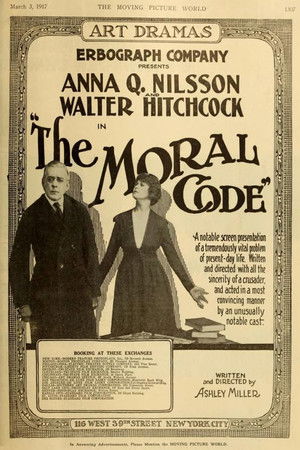
Murray, the president of the union, hides the papers in the house containing plans for a big strike. He thoughtlessly tells his wife that the boss would give much to know the contents of the papers. Extremely vain, and yearning for fine raiment, she sells the papers to the boss, who informs the men of his knowledge, forestalling the strike. Murray is accused of being a traitor, and the men agree to continue under present conditions if he is discharged. When Mrs. Murray realizes the enormity of her offense she burns the money and confesses to her husband. He refuses to forgive her, and parts from her in a dramatic scene.
The story depicts a youth at the crossroads of life, listening to the call of the church, renouncing love and worldly pleasure which beckon him and consecrating himself to the priesthood. It shows a woman of the world with ideal, pure-hearted love within her grasp, surrendering her lover to a sanctified existence.