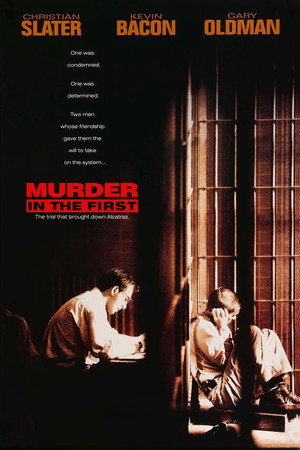
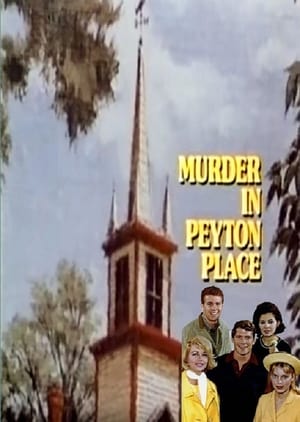
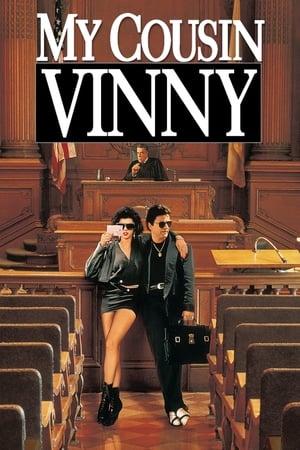
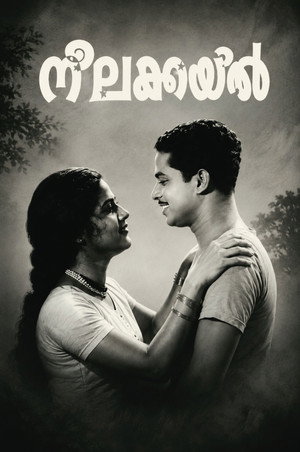
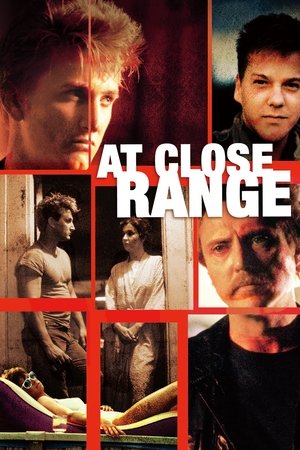
Brad Whitewood Jr. lives in rural Pennsylvania and has few prospects. Against his mother's wishes, he seeks out his estranged father, the head of a gang of thieves in a nearby town. Though his new girlfriend supports his criminal ambitions, Brad Jr. soon learns that his father is a dangerous man. Inspired by the real events that led to the end of the Johnston Gang, who operated in the northeastern United States in the 1970s.
Semi-retired Michigan lawyer Paul Biegler takes the case of Army Lt. Manion, who murdered a local innkeeper after his wife claimed that he raped her. Over the course of an extensive trial, Biegler parries with District Attorney Lodwick and out-of-town prosecutor Claude Dancer to set his client free, but his case rests on the victim's mysterious business partner, who's hiding a dark secret.
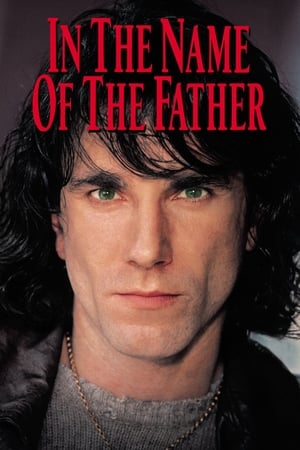
A lawyer tasked with defending a robbery-and-murder suspect begins developing doubts about what truly happened.
Will Hunting is a headstrong, working-class genius who is failing the lessons of life. After one too many run-ins with the law, Will's last chance is a psychology professor, who might be the only man who can reach him.
The defense and the prosecution have rested and the jury is filing into the jury room to decide if a young Spanish-American is guilty or innocent of murdering his father. What begins as an open and shut case soon becomes a mini-drama of each of the jurors' prejudices and preconceptions about the trial, the accused, and each other.
A wealthy ex-bootlegger comes to the rescue of a formerly rich society girl after her gold-digging fiancé leaves her stranded when he finds out she's broke. The bootlegger proposes a deal: he will settle her debts if she teaches him how to be "a gentleman".
The sensuous wife of a lunch wagon proprietor and a rootless drifter begin a sordidly steamy affair and conspire to murder her Greek husband.
To help with an upcoming election, a bookstore clerk is indicted for selling obscene material. The defense attorneys need to uncover the mystery of the original publication of the book.
The theatre as a courtroom, the courtroom as a theatre. Alejo Moguillansky’s film draws loosely on Raúl Quirós Molina’s El pan y la sal (The Bread and the Salt), a 2015 verbatim theatre piece compiled from the testimonies provided during the 2012 trial of Judge Baltasar Garzon, for investigating the forced disappearances of the Spanish Civil War and the Franco regime. Juxtaposing the testimonies of the relatives of those who lost loved ones with references to Argentina’s and Chile’s recent dictatorships, this film explores issues around international law and forced disappearance - tracing a line between Francisco Franco, Augusto Pinochet and Jorge Videla’s Military Junta: Garzón has investigated Argentine torturers and criminal perpetrators and had Pinochet arrested in London in 1998 for crimes against humanity.
Arrested for an unnamed crime, Josef K. is trapped in a surreal bureaucratic maze where justice is unknowable and guilt is assumed.
Jess Koster is a young attorney in Los Angeles, who is being stalked by the serial killer she is prosecuting.
The story deals with the story of the widow (Huda), who suffers from problems with her husband's brother who wants to take over her inheritance and her children, and the problems between them come to court, while trying to help a young student carrying a colleague from her, Upside down .
Danton and Robespierre were close friends and fought together in the French Revolution, but by 1793 Robespierre was France's ruler, determined to wipe out opposition with a series of mass executions that became known as the Reign of Terror. Danton, well known as a spokesman of the people, had been living in relative solitude in the French countryside, but he returned to Paris to challenge Robespierre's violent rule and call for the people to demand their rights. Robespierre, however, could not accept such a challenge, even from a friend and colleague, and he blocked out a plan for the capture and execution of Danton and his allies.
Ellen Neal, a young and inexperienced maid, becomes romantically involved with her employers son which causes various complications. The head butler also has an infatuation for the young girl but his intentions are not that good.
Christine, a village girl, raped by Jason Uqmadze, a local aristocrat, decides to take her own life but the villagers spot her body in the river and manage to save her. After the suicide fiasco, Christine befriends Sona, her alleged well-wisher in hope to start her life anew. Instead of helping her, as promised, Sona takes Christine to the brothel.
In 1930s England, a group of pretentious rich and famous gather together for a weekend of relaxation at a hunting resort. But when a murder occurs, each one of these interesting characters becomes a suspect.
In 17th-century Tuscany, a church play is performed for the benefit of young aristocrat Cosimo. In the play, a grotesque old woman gives birth to a beautiful baby boy. The child's older sister is quick to exploit the situation, selling blessings from the baby, and even claiming she's the true mother by virgin birth. However, when she attempts to seduce the bishop's son, the Church exacts a terrible revenge.
When a young woman is brutally raped and beaten, her mother sets out to find justice for her.
A tramp cares for a boy after he's abandoned as a newborn by his mother. Later the mother has a change of heart and aches to be reunited with her son.
1960s Japan—economic boom, Olympic pride, and a crackdown on “public morals.” An anti-prostitution law targets women but spares male sex workers, the so-called “blue boys.” When police arrest the doctor performing their sex reassignment surgeries, the sensational “Blue Boy Trial” begins. Three transgender women take the stand, igniting a national debate on identity, medicine, and happiness—long before the language of LGBT existed. Though the court ruled surgery legal, the verdict cast a shadow: no such operations would occur in Japan for 29 years. Half a century later, this buried history still reverberates in the lives of sexual minorities.