Vitturo Caggoni is a gay-hearted, rollicking Italian troubadour. He meets a young woman, Marjorie Holbrook, and falls in love with her, serenades her, and courts her in the old romantic troubadour way.
In a village where appearances reigned, a wealthy woman, known as "The Saint," presided from her grand estate, her charity a public spectacle. She professed devout Christianity and frequently reminded the community of her moral influence. In stark contrast stood "The Sinner," a young man unconcerned with piety. He frequented card games, and whispers of his atheism followed him. When a broken-hearted girl arrived, her nameless child clinging to her, "The Saint" dismissed her plea. Yet, "The Sinner" welcomed them into his home, offering refuge and care. His actions sparked immediate outrage among the villagers, further inflamed when he and the young woman attended church together that Sunday. Fortunately, the town's minister was a man of genuine faith, and through his tireless efforts, the outcast found acceptance and a place within the community.
Tom Allen, a hardworking young miner. He cautions his wife, Beatrice, about the presence of a "worthless chap" named Joe Hills, who frequently loiters around their cabin. Hills subsequently steals Allen's gold, and Beatrice discovers him in the act.
After finding her sister dead, Maria tries to find out who or what is to blame.
Owing to his father's illness, Cecil Crenwell is sent to inspect the family rice plantation in Hawaii. While there he falls in love with Hawai'ian girl Uana and wins her away from her native beau Kau.
It is a variation on the original legend of Alraune in which a Mad Scientist creates a beautiful but demonic child from the forced union between a woman and a Mandrake root. Not to be confused with the 1918 German version of Alraune.
A US cavalry officer rescues a mulatto girl, raised in Africa, from slavers.
An escaped lunatic threatens the romance of his wife and her new suitor.
Joe Brooks is taken advantage of by his employer, Captain Williams, who is a jealous former suitor of Joe's wife, Emma. Williams puts Joe in charge of the company's payroll money and has detectives set a trap for him.
A foppish Londoner joins the Royal Canadian Mounties and tries to break a smuggling ring.
Sergeant Malone of the Mounties and effeminate Etienne Doray are both in love with Rose-Marie, but she doesn't light up until soldier of fortune Jim Kenyon drifts into the post. Soon Jim is accused of murder but he escapes.
L. Frank Baum would appear in a white suit and present his live actors, slide shows and films as a live travelogue presentation of his popular fantasies. Highlights include Dorothy being swept to Oz in various ways, such as with back-projection tornadoes and storms in a chicken coop. Lack of financial backing forced the show to fold after appearing in only two cities, despite being a critical and commercial success. This film is lost.
Bobby, the doughboy, has left his sweetheart behind in Paris. He returns for her and has the greatest difficulty locating her. In his hunt he runs into the tough White Rat Cafe, where the Darling of Paris becomes enamored of him, thereby arousing the jealousy of her lover, who threatens Bobby with dire consequences. Bobby escapes, runs into his sweetheart, and in the chase, the villain at his heels is captured by the police as a badly wanted criminal.
Sad sack gob Billy finds himself challenged to two duels at the same time in the French countryside over two different women. Hilarity ensues when he tries desperately to avoid either!
Bingville is holding a beauty contest and the three finalists are Mary, Dora, and the Village Vamp. Dora's beau Eddie asks Walter, the contest judge, who will win, and is told that Dora will. Walter goes to the barber shop where the Village Vamp is the manicurist and her father is the barber, and advises them she will win. When they all arrive at the contest, Walter announces Mary as the winner. The mêlée that follows destroys the roadster that was the winner's prize.
This mostly lost film is often confused with director Paul Wegener third and readily available interpretation of the legend; Der Golem, wie er in die Welt kam (1920). In this version of the golem legend, the golem, a clay statue brought to life by Rabbi Loew in 16th century Prague to save the Jews from the ongoing brutal persecution by the city's rulers, is found in the rubble of an old synagogue in the 20th century. Brought to life by an antique dealer, the golem is used as a menial servant. Eventually falling in love with the dealer's wife, it goes on a murderous rampage when its love for her goes unanswered.
In this recently found and restored banned underground classic from 1984, four girls go into a bathroom to hide in the middle of a war and, after an impulsive act by one of them, they find themselves trapped there. As panic gives way to despair, tragedy approaches.
Henry Warner (Herbert Rawlinson) is so broke that he has sold his overcoat and now his landlady won't leave him alone about the rent. When he sees a wallet sticking out of a rich man's pocket, he's desperate enough to steal it. The police give pursuit, and Henry winds up in someone's study. The man who lives there, Middleton (Alfred Allen) has been looking for someone with Henry's nerve and offers him a job (along with an overcoat and some cash): He must steal back a will that Middleton's nephew, Craig (Harry Carter) stole from him.
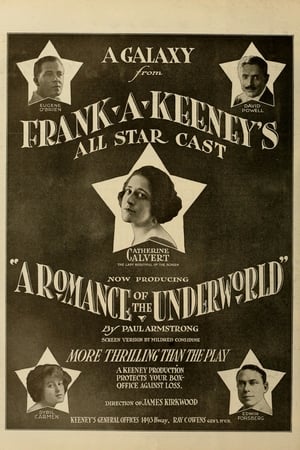
A girl from Paris' underworld fights for love and survival during a time of international turmoil.
Silent adaptation of the Victor Hugo classic focusing on the character of Esmeralda rather than Quasimodo.