After Daniel's mistakes are revealed, he abandons the life set out for him and meets Tom, a simple fisherman who helps Daniel to achieve his true potential in life.
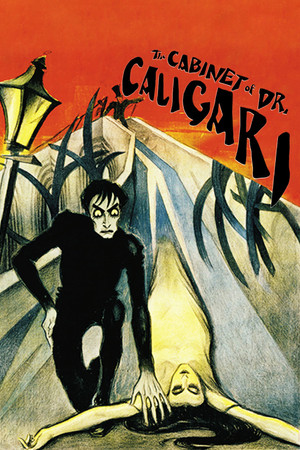
Francis, a young man, recalls in his memory the horrible experiences he and his fiancée Jane recently went through. Francis and his friend Alan visit The Cabinet of Dr. Caligari, an exhibit where the mysterious doctor shows the somnambulist Cesare, and awakens him for some moments from his death-like sleep.
Most of the scenes are laid in a parrot-and-monkey country in South America, a land where "it is always after dinner." The Llano Kid, a Texas bad man, flees there from justice. The consul persuades him to play the long-lost son of a Castilian family, and tattoos a coat of arms on the back of the Kid's hand to make the deception complete. The Kid is taken into the household, trusted and loved by the gladdened mother. For the first time he has a home. The romance develops. And when the time comes to rob and flee he has too much manhood to break the loving mother's heart. The surprise comes when it is revealed that the man the Kid killed in Texas was the real son.
Set during the 16th-century Spanish occupation of Flanders, the story concentrates on the fiercely patriotic Mark Van Ryke (Colman). Donning the guise of "Leatherface," a swashbuckling masked avenger, Van Ryke performs his derring-do on behalf of the Prince of Orange (Nigel de Brulier). Naturally, Van Ruke considers beautiful Spanish aristocrat Donna Leonora de Vargas (Vilma Banky) to be a bitter enemy, and the feeling is mutual. To no one's surprise, however, Van Ryke and Donna Leonara eventually fall in love (hence the title). The pulse-pounding climax finds Van Ryke riding hell-for-leather through a rainstorm to warn the Flemish troops about the Spaniards' plans to burn the city of Ghent to the ground. Two Lovers was based on Madame Orczy's novel Leatherface, and adapted for the screen by Alice Duer Miller.
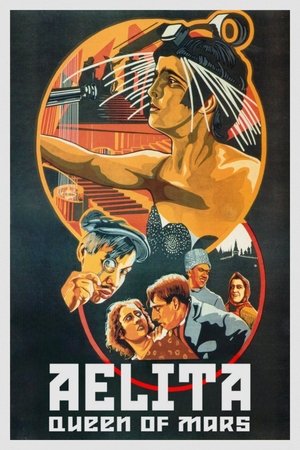
In a futuristic city sharply divided between the rich and the poor, the son of the city's mastermind meets a prophet who predicts the coming of a savior to mediate their differences.
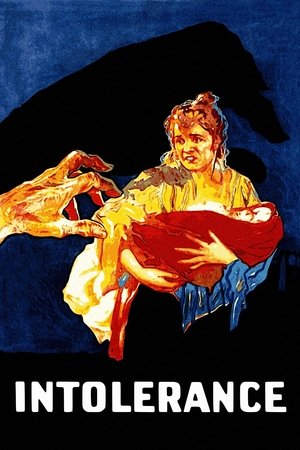
The film consists of a series of tightly interlinked vignettes, the most sustained of which details the story of a man and a woman who are passionately in love. Their attempts to consummate their passion are constantly thwarted, by their families, by the Church and bourgeois society in general.
A sheep farmer brings his new wife to his father's ranch and the old man takes an instant dislike to her.
An aging doorman, after being fired from his prestigious job at a luxurious hotel, is forced to face the scorn of his friends, neighbours and society.
Gambler "On-the Level" Leigh (William S. Hart) is forced to leave his high rolling lifestyle to move his ailing sister Alice (Mildred Harris) to the healing climate the mountains. Financial strain compels him to resume his favored vocation. Unfortunately for Level, the dance hall girl Coralie (Alma Rubens) doesn't take rejection well and convinces the dealer to clean him out with a "cold deck". A desperate robbery ensues, leading to Level wanted for murder!
Children's Souls Accuse You is a 1927 German silent drama film directed by Curtis Bernhardt and starring Albert Steinrück, Nathalie Lissenko and Walter Rilla. It was made with an anti-abortion theme.
This partially-extant silent film focuses on the lives of people in rural China during the early twentieth century. Wang Guisheng (played by Wang Yuanlong) is an orphan who grew up at his uncle's, working as a farmhand. Since childhood, he has been close with his female cousin, Li Ah Zhen (played by Li Minghui), and they expect to marry. But when her mother dies of illness and overwork, Ah Zhen's father re-marries, and the evil stepmother connives to marry Ah Zhen off to the stepmother's nephew. Then a government representative comes to the village recruiting peasants to establish a new settlement on the borderlands, she persuades the despondent Guisheng to sign up. Guisheng leaves his love behind, only to find hardship on the frontier. Ah Zhen, who has fallen ill, is set upon by her groom on her wedding night...BUT the next morning his stabbed corpse is found in the bridal chamber and a body in a bridal gown is found down a well. WHAT HAS HAPPENED?!?!?!?!!
Silent film from 1915 which draws on the story of Carmen
A widowed Greek fisherman and a teenage refugee form an emotional bond while sailing the azure waters of the Aegean Sea.
In 15th century France, a gypsy girl is framed for murder by the infatuated Chief Justice, and only the deformed bellringer of Notre Dame Cathedral can save her.
The Talbots, formerly one of the Eastern Shore's first families, have gone to seed: Pap is a drunk, soddenly decaying in his ruined ancestral home, and three of his sons (William, Carol, and Ezra) are lazy, shiftless young men. Mulligan, Pap's second son who supports the entire family by oyster fishing, falls in love with wealthy Anna Lee, but when he first kisses her, she calls him "white trash."
When a British army officer, Harry Faversham, resigns his commission on the eve of his regiment's departure for service in the Sudan he is sent four white feathers of cowardice by his comrades and fiancee. In an attempt to redeem himself, Faversham travels out to the Sudan where he saves the lives of his former comrades.
An old knight weds his dead friend's daughter but she gives herself to an Italian Don to bear an heir.
A fisherman and a rising lawyer who grew up together as brothers fall in love with the same woman.
Just as Galeen and Wegener's Der Golem (1915) can be seen as a testament to early German film artistry, The Story of the Kelly Gang (1906) symbolizes both the birth of the Australian film industry and the emergence of an Australian cinema identity. Even more significantly, it heralds the emergence of the feature film format. However, only fragments of the original production of more than one hour are known to exist, preserved at the National Film and Sound Archive, Canberra; Efforts at reconstruction have made the film available to modern audiences.
In this realistic, unsentimental portrait of Germany’s dire economic situation, a middle-aged payroll clerk loses his job due to technological advances and, unable to find another, descends into despair. The film’s director, Marie Harder, was one of only a few women directors of the time and was also the head of the German Social Democratic Film Office. She made only two known films before her accidental death in exile in Mexico in 1936.