Pyrenees mountain range, 17th century. Before dying, Diego de Robles, leader of a ruthless gang of highwaymen, has his daughter Carmen, a beautiful young woman full of courage, recognized as the new leader of the gang. (Partially preserved film: with a running time of approximately twenty-five minutes, about nineteen survive. There are doubts about the true identities of those involved in the production, both technical and artistic crew.)
A British army officer refuses to avenge the death of a general who was murdered years earlier. He is awarded three feathers by his officers. When his fiancée fails to defend his stance, he plucks a feather from her fan. He proves his courage by rescuing his comrades in dangerous and life-threatening situations. Later he returns each feather as proof of his redemption and courage.
This film begins with the invocation of 'almighty god' at a river where several people are gathered. The child god Krishna rises out of the water astride the demon snake Kaliya. Then we see Yashoda as she rocks the sleeping Krishna's crib and imagines the god as Gopala. The next scene shows Kamsa fantasizing about Krishna threateningly duplicated many times around him. Kamsa then imagines himself dead as his severed head rises up and descends again. People of all castes pay obeisance to the deity with the title-card: 'may this humble offering be accepted by the Lord'.
A married farmer falls under the spell of a slatternly woman from the city, who tries to convince him to drown his wife.
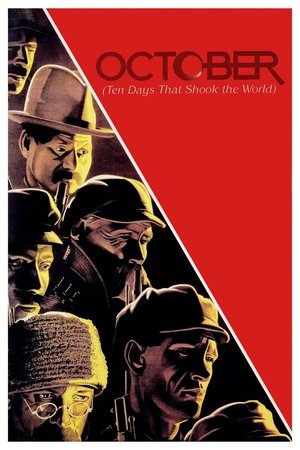
Sergei M. Eisenstein's docu-drama about the 1917 October Revolution in Russia. Made ten years after the events and edited in Eisenstein's 'Soviet Montage' style, it re-enacts in celebratory terms several key scenes from the revolution.
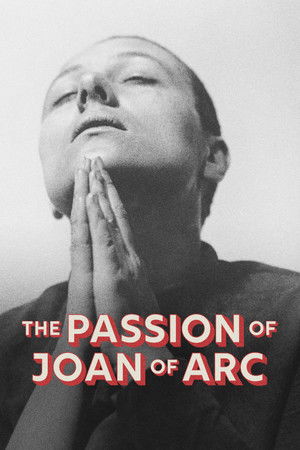
A classic of the silent age, this film tells the story of the doomed but ultimately canonized 15th-century teenage warrior. On trial for claiming she'd spoken to God, Jeanne d'Arc is subjected to inhumane treatment and scare tactics at the hands of church court officials. Initially bullied into changing her story, Jeanne eventually opts for what she sees as the truth. Her punishment, a famously brutal execution, earns her perpetual martyrdom.
Based on the novel by Allen Raine - In Wales, a girl loves a manager but weds her employer who dies in a fire lit by a jealous madwoman.
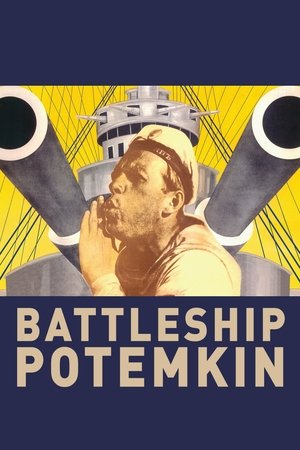
A dramatized account of a great Russian naval mutiny and a resultant public demonstration, showing support, which brought on a police massacre.
Two families, abolitionist Northerners the Stonemans and Southern landowners the Camerons, intertwine. When Confederate colonel Ben Cameron is captured in battle, nurse Elsie Stoneman petitions for his pardon. In Reconstruction-era South Carolina, Cameron founds the Ku Klux Klan, battling Elsie's congressman father and his African-American protégé, Silas Lynch.
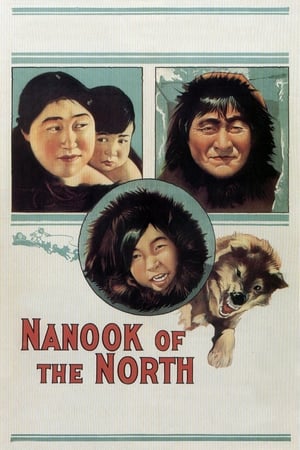
This pioneering documentary film depicts the lives of the indigenous Inuit people of Canada's northern Quebec region. Although the production contains some fictional elements, it vividly shows how its resourceful subjects survive in such a harsh climate, revealing how they construct their igloo homes and find food by hunting and fishing. The film also captures the beautiful, if unforgiving, frozen landscape of the Great White North, far removed from conventional civilization.
The love story of an abused English girl and a Chinese Buddhist in a time when London was a brutal and harsh place to live.
The rise and inevitable fall of an amoral but naive young woman whose insouciant eroticism inspires lust and violence in those around her.
A man dreams he is the 'demon barber' who cuts sailors' throats for jewels and uses the corpses for pies.
One out of three silent adaptations of the novella "Les quatre diables" written by Danish author Herman Bang. The most famous one, although unfortunately lost, is without any doubt F.W. Murnau's "4 Devils". This German version, by Danish director A.W. Sandberg, was done eight years prior to Murnau's American one, and was a big success at the time.
A tramp falls in love with a beautiful blind flower girl. His on-and-off friendship with a wealthy man allows him to be the girl's benefactor and suitor.
Bear (10 minutes, 35 seconds) was Steve McQueen's first major film. Although not an overtly political work, for many viewers it raises sensitive issues about race, homoeroticism and violence. It depicts two naked men – one of whom is the artist – tussling and teasing one another in an encounter which shifts between tenderness and aggression. The film is silent but a series of stares, glances and winks between the protagonists creates an optical language of flirtation and threat.
On a South Seas island, "three white derelicts drink away memories of the past. After many adventures during which a girl enters the picture, the three are rehabilitated and everything turns out happily."
When a British army officer, Harry Faversham, resigns his commission on the eve of his regiment's departure for service in the Sudan he is sent four white feathers of cowardice by his comrades and fiancee. In an attempt to redeem himself, Faversham travels out to the Sudan where he saves the lives of his former comrades.
An old knight weds his dead friend's daughter but she gives herself to an Italian Don to bear an heir.
The Vampire is a surviving 1915 silent film drama directed by Alice Guy and starring Olga Petrova. It is one of Petrova's and Guy's few surviving silent films.