The series of adventures and hardships experienced by the Chevalier de la Graverie as seen through the eyes of his devoted dog, Black.
The Key to Power
A young woman of wealth revenges herself on a young author whose peculiar ideas about women have led him to act and speak in an insulting manner. This young man isolates himself in the mountains for the purpose of writing a story on the primitive woman, where he is discovered by his friends, to whom he vows that no woman shall cross his threshold. The mischievous young woman of the story, determined to place him at her feet, goes secretly to the home of a mountain woman with whom she lives in the guise of a wild girl of the hills. Purposely sliding over an embankment where she knows she will fall in his path, she is rewarded by having him pick her up and carry her to his cabin, where she pretends to be too much injured to be moved that day. The mountain woman is sent for and the two remain in the cabin of the author for several days. Finally she is discovered by her people, when it also comes to light that the woman-hating author has fallen to the charms of his pretty visitor.
Madrid, Spain. A mutilated man, a war veteran, walks, leaning on a crutch, through the stadium of the Ciudad Universitaria, a place that still preserves in walls and buildings the terrifying traces of one of the bloodiest battles of the Spanish Civil War.
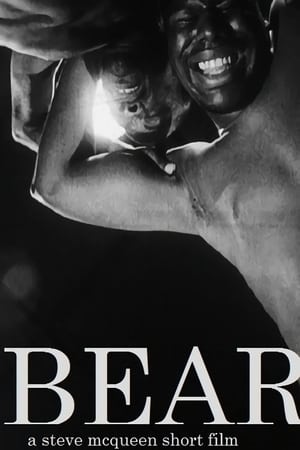
Bear (10 minutes, 35 seconds) was Steve McQueen's first major film. Although not an overtly political work, for many viewers it raises sensitive issues about race, homoeroticism and violence. It depicts two naked men – one of whom is the artist – tussling and teasing one another in an encounter which shifts between tenderness and aggression. The film is silent but a series of stares, glances and winks between the protagonists creates an optical language of flirtation and threat.
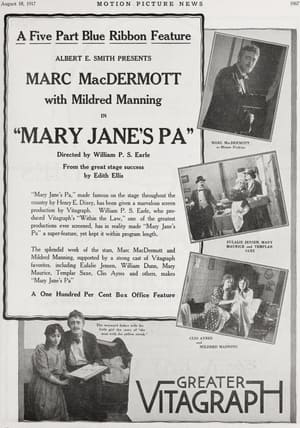
An uneducated young girl becomes suddenly wealthy and hires the disinherited son of an upper-class family to tutor her in the ways of society.
Handsome 25-year-old Cesar had it all -- a successful career, expensive cars, a swank bachelor's pad, and an endless string of beautiful and willing women -- until he is thrown into a strange psychological mystery after a car accident scars his face and lands him in prison.
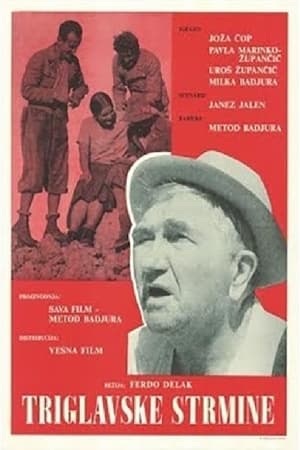
Miha invites his fiancée Minka to the dance, but he's tempted by another big desire of his - climbing. Frustrated Minka insists on the festivity, where she finds herself in a company of older hiker. However, all ends happily, as Minka and Miha, after many smaller adventures, meet at the top of Mount Triglav, where they sign the marriage contract, but also confirming their love for the mountains. In addition to its charming story, the movie features footage of picturesque Slovenian mountains.
Ana, a teenager artist, is raised in Ibiza by her German father Klaus in a naturalist lifestyle. She meets Justine, who invites her to move to Madrid and get an artistic education and financial support. Ana befriends Linda, meets the problematic Said, a Saharawi youngster, and later she is hypnotized by Anglo, who opens a door to her memories and past lives.
Impresario Thomas Sullivan arrives in Ossawatomie, Kansas, to debut a new musical show written by local boy Gene Harris. After auditioning with a song by her bookkeeper boyfriend Brian McBride Sullivan hires Millicent Lloyd and takes her to New York City, where she becomes a famous singer. Brian, arriving in the city with a new opera, keeps his presence secret from Millicent until he has achieved success. But Harris suffering writer’s block steals Brian's work and presents it to Sullivan as his own. With the help of music publisher Gus Hertz, Brian exposes Harris and reclaims his composition. He and Millicent are reunited, and the opera goes on to enormous success.
A Russian peasant girl becomes a member of the Imperial Ballet.
An Orphan’s Cry
1952 reconstruction of Gelabert’s Café Brawl (1897). This remake is the only surviving version, recreating the original lost film’s café fight scene.
A conflicted youth confesses to crimes he didn't commit while a man and woman aroused by death become obsessed with each other.
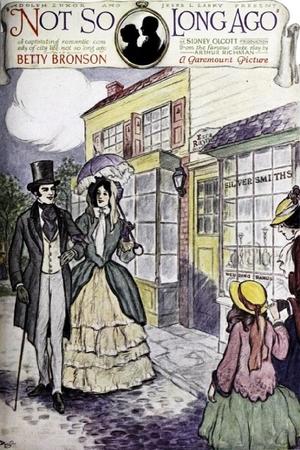
Against the backdrop of New York City of the early 1850s, a young woman -- naively seeking to win the love she reads about in the romance novels she devours -- finds one prospect in an earnest denizen of the Bowery, and another in an elegant young aristocrat. Focusing on the bygone era's fashions, the novelty of the bicycle-built-for-two, and an inventor's quest for the horseless carriage, the film gently stirs the audiences' nostalgia for simpler times.
Plant
After wandering the world for fifteen years, Hiram Perkins returns home to find his wife running a small town newspaper to support their two daughters. With pity in her heart, Mrs. Perkins allows her husband to stay in the house providing that he not disclose his identity. Mrs. Perkins is waging a battle against the re-election of Joel Skinner for a seat in the assembly, and when she learns that Skinner has mistreated old Mrs. Miller, she is determined to expose his actions. Rome Preston, running in opposition to Skinner, requests that she stop the story, but Mrs. Perkins refuses and so Preston disables the press. With Hiram's help, Mrs. Perkins prints the story and Skinner is defeated. In revenge, Skinner's men burn the press and demand that Hiram be tarred and feathered. At this moment, Mrs. Perkins acknowledges that Hiram is her husband and all is forgiven as the Perkins family is reunited.
Harry Caine, a blind writer, reaches this moment in time when he has to heal his wounds from 14 years back. He was then still known by his real name, Mateo Blanco, and directing his last movie.
Ezry is a hardworking hired man who saves his money carefully in the hopes one day of going to college. But when his girlfriend's brother gets in trouble for bank robbery, Ezry tries to help out by offering his savings in exchange for the stolen funds.
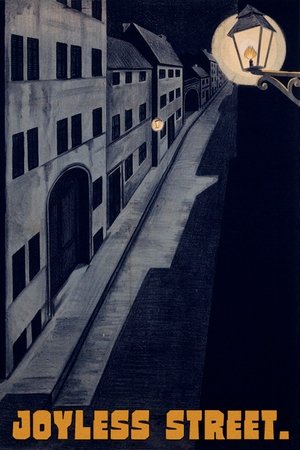
In 1921, we follow two women - Marie and Grete - from the same poor Viennese neighborhood, as they try to better the lives of themselves and their families during the period of Austrian postwar hyperinflation.