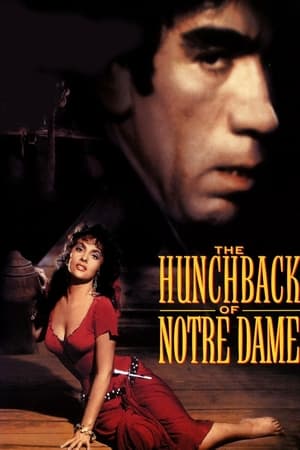
Paris, 1482. Today is the festival of the fools, taking place like each year in the square outside Cathedral Notre Dame. Among jugglers and other entertainers, Esmeralda, a sensuous gypsy, performs a bewitching dance in front of delighted spectators. From up in a tower of the cathedral, Frollo, an alchemist, gazes at her lustfully. Later in the night, Frollo orders Quasimodo, the deformed bell ringer and his faithful servant, to kidnap Esmeralda. But when the ugly freak comes close to her is touched by the young woman's beauty...
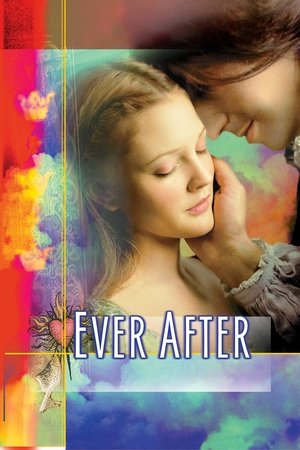
Danielle, a vibrant young woman, was forced into servitude after the death of her father when she was a young girl. Danielle's stepmother, Rodmilla, is a heartless woman who forces Danielle to do the cooking and cleaning, while she tries to marry off the eldest of her two daughters to the prince. But Danielle's life takes a wonderful turn when, under the guise of a visiting royal, she meets the charming Prince Henry.
When actress Nikki Grace gets the lead role in a cursed film, her world becomes more and more surreal, blending realities and ideas of infidelity, reincarnation, and supernatural forces.
Narcisus and Psyche is based on a novel by Sandor Weores which was adapted by Vilmos Csaplar and director Gabor Body for a feature-length film. Borrowing the character of Psyche from mythology and placing her in Europe in the 19th century, the authors give her a "modern" life. She is an attractive young woman - and remains so throughout the film, in spite of one hardship after another. Psyche is libidinous, and her prurient interests shock her staid contemporaries.
After a wonderful time in Hungary Sissi falls extremely ill and must retreat to a Mediterranean climate to rest. The young empress’ mother takes her from Austria to recover in Madeira.
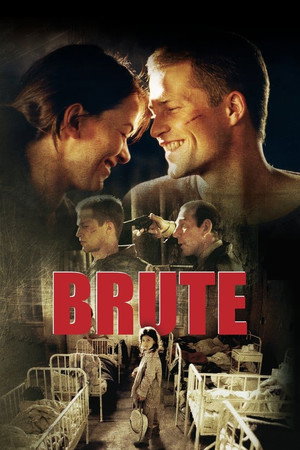
Shipped off to a Romanian orphanage to finish his sentence, a British criminal finds romance but also discovers corruption inside the facility.
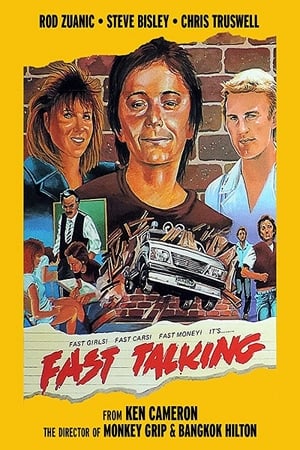
A socially awkward and volatile small business owner meets the love of his life after being threatened by a gang of scammers.
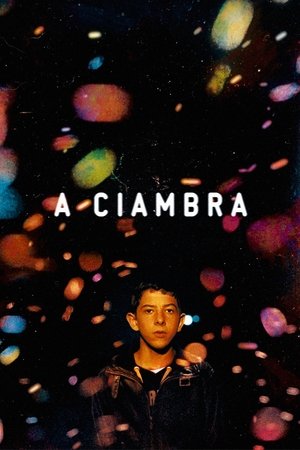
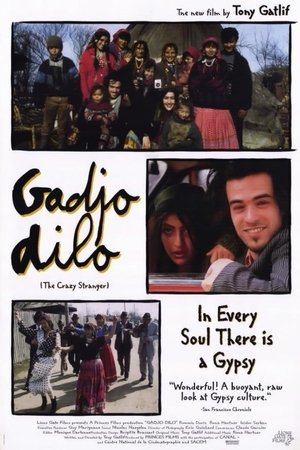
A man is looking for a singer he had heard on cassette. He finds much more.
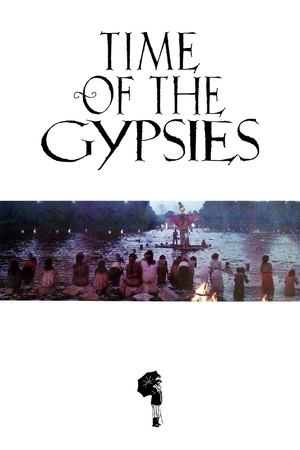
The protagonist, Bora, is a charming but mean-spirited gypsy, while his older wife, Lence, is submissive. Bora is in love with the younger Tisa, who is being offered in marriage by her father. The two get themselves in trouble and eventually have to flee. Tisa rejects her husband and she and Bora get married in the church, and their adventures continue.
The gypsy Azucena (Fiorenza Cossotto) takes revenge for her mother who was accused of putting a curse on one of the old Count di Luna's two sons: she decides to abduct the younger child and throw it in the flames. But when she is about to carry out this fatal act, the gypsy sacrifices her own child and keeps the old Count’s son, whom she names Manrico (IL TROVATORE, Plácido Domingo). Later, as adults, the troubadour Manrico and the Count di Luna’s elder son (Piero Cappucilli) do not know each other, but become rivals for the beautiful Leonora (Raina Kabaivanska). Manrico succeeds in winning the young woman’s heart, and she sacrifices herself for him, deceiving the Count’s son. Mad with jealousy, the latter orders the execution of the troubadour in front of his mother. Azucena reveals to him that Manrico was his brother. This legendary performance of Giuseppe Verdi's most successful opera was recorded at the Vienna State Opera under the baton of Herbert von Karajan.
The stoic, proper Rev. Gavin Dishart, newly assigned to a church in the small Scottish village of Thrums, finds himself unexpectedly falling for one of his parishioners, the hot-blooded Gypsy girl Babbie. A village-wide scandal soon erupts over the minister's relationship with this feisty, passionate young woman, who holds a secret about the village's nobleman, Lord Milford Rintoul, and his role in an increasingly fractious labor dispute.
Gypsy Carmen drives men wild in 1820s Spain, especially the dragoon Don Jose.
A musical adaptation of Victor Hugo's novel "Notre Dame de Paris" which follows the gypsy dancer Esmeralda and the three men who vie for her love: the kind hunchback Quadimodo, the twisted priest Frollo, and the unfaithful soldier Phoebus.
Somewhere in England, in the Autumn of 1955, a widowed father and his son live an idyllic life together. Only their gas station happens to sit on a piece of land that a local developer wants to buy. And when he won't take no for an answer, and sets government inspectors and social works onto Danny and his father, Danny and his father decide to get even with Hazell and his pheasant- shooting friends in a manner in keeping with their own family tradition.
A journalist investigates the smuggling of gypsy children on the black market and tries to save a young boy.
After a long night out two lonely people awake in unfamiliar places on opposite ends of the same city. Their eventual meeting in a city park can only be described as good fortune.
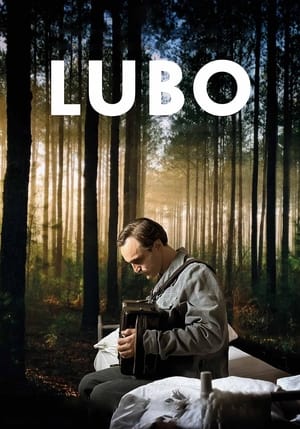
Lubo Moser is a jenisch, a gypsy. Mirana, who tried to oppose him, was killed. But how could this have happened? Why? Because Switzerland considers nomadism a social scourge, and, to eradicate it, it takes the children of the jenisch. Thus, without children, the Jenisch will be without a future. The mastermind is a state-run humanitarian institution, Pro Juventute, the arm the Street Children's Work: everything is perfectly legal and there is no opposition to the law. Lubo feels himself dying. And something about him really does die, on that night of wind and snow: it will be a new Lubo, tough and impenetrable, who will set up a project with unexpected implications to avenge his family and his people... and it will lead us to rethink the sense of justice, in the blurred boundaries between good and evil.
Verdi’s IL TROVATORE again storms the Met stage in a star-studded, anvil-wielding cast , including Sondra Radvanovsky, Dolora Zajick and Dmitri Hvorostovsky. Marcelo Álvarez sings Manrico, the troubadour of the title. The story is well-known already: The gypsy Azucena has harbored a grudge for thirty years, but she is about to have revenge at last. Meanwhile, her son Manrico is in love with Leonora, but so is his arch-enemy, the Count Di Luna. A pot-boiler, where every tune is a hit.
On Saturday, 5 April 1941, one day before the Invasion of Yugoslavia of the Kingdom of Yugoslavia, a colourful group of random passengers on a country road deep in the heart of Serbia board a dilapidated bus, headed for the capital Belgrade. The group includes two gypsy musicians, a World War I veteran, a Germanophile, a budding singer, a sickly looking man, and a hunter with a shotgun. The bus is owned by Krstic senior, and driven by his impressionable and dim-witted son Misko.
Seven short films - each one focused on the plight of a different child protagonist.