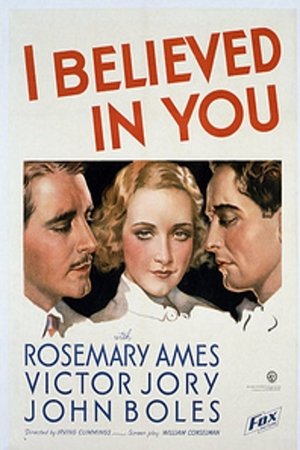
Young New York playboy Stephen Winthrop inherits the entire estate of his wealthy Canadian uncle but pays scant attention to it, preferring the "party" life in New York. He is unaware that the family attorney, Frank Garson, has forbidden hunting on the Winthrop lands in Canada, cutting off the livelihoods of the local villagers. Mary Cartier, goddaughter of the village priest, travels to New York to try to get Stephen to change the policy. He returns with her to Canada, sees what's going on, and lifts the ban, then decides to stay in Canada. Mary returns to New York to try to help Garson's abandoned and ill wife and child, but the wife dies, and Mary brings back the small child to Canada. The villagers, mistaking the child for Mary's, are outraged at this "scarlet woman" flaunting her illegitimate child and attempt to drive her out. Complications ensue.
A determined copy boy achieves his aspiration of becoming a journalist after unearthing the hideout of a criminal gang.
When Rosamond, a convent girl, discovers that her mother is Baby Brabant, a notorious queen of Petworth's gambling house, her ideals are shattered and she denounces her mother's life.
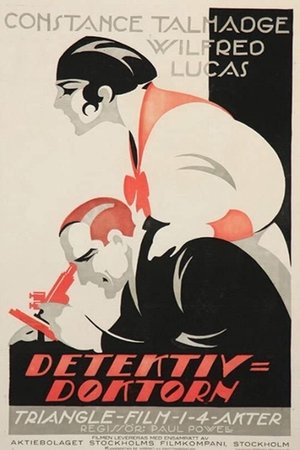
Rachael (Bessie Barriscale) marries Clarence Breckenridge (Hershel Mayall) a widower much older than herself. Although she tries to be a good wife, he ignores her for the bottle. In addition, his daughter, Billy (Ella Hall), who is not much younger than Rachael, is spoiled. When Rachael meets the family doctor, Warren Gregory (Herbert Heyes), they fall in love.
A press agent helps a honky tonk spot draw a new elite patronage but a troublemaker arrives on the scene as well and disrupts the romance between the male and female stars.
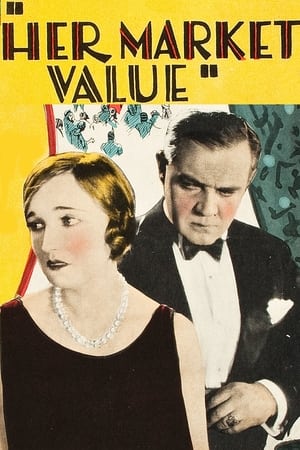
Her Market Value is a 1925 American silent melodrama film directed by Paul Powell and starring Agnes Ayres. Powell produced the picture and distributed through Producers Distributing Corporation.
An aspiring writer and her boyfriend, a professional agitator head off to the Big Apple in search of good fortune. Unfortunately, the agitator soon finds himself in trouble with the cops. Meanwhile the writer attempts to become a Greenwich Village Bohemian type. She and her new friends are all starving for their art until a kindly gent offers them financial assistant. They refuse on principle. Tragedy pays a call when the writer learns that her boyfriend has been untrue.
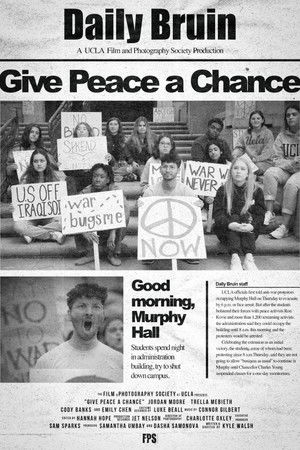
In protest of the Iraq war, student activists storm their admin building and sit in.
Ranch hand Tommy Dawes has a special bond with little Rosemary, the crippled daughter of his boss Bill Nyall. When Tommy accidentally breaks Rosemary's favorite doll one day, he borrows a $20 gold piece from the foreman's mattress to go to town and buy a new doll. However, on the way there he is ambushed and robbed by an escaped convict
A girl tends a garden planted with symbolic flowers: red roses for lust and white roses for love. Daddy Wisdom encourages the girl to cultivate the white roses instead of the red.
Spanish-language version of The Devil on Horseback (1936).
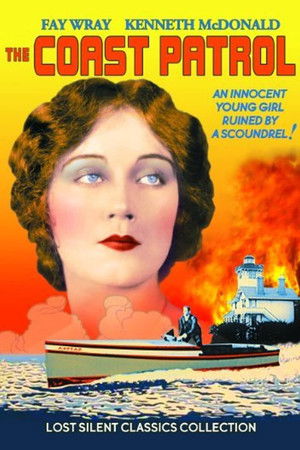
Coast Patrol was a threadbare silent 5-reeler starring Kenneth MacDonald as an officer in the titular patrol. Nothing much happens really, except for a few misunderstandings, fistfights and boat chases.
Alcoholic former artist David Stanley and impoverished violinist Judith Deering appear before Judge Henning. After the kindly judge dismisses the minor charges against the couple, Judith finds a job, after which she secretly sends money to David, using the judge as an intermediary. David soon stops drinking and successfully resumes his career.
Who Pays? was a series of twelve three-reel dramas, released between March and July 1915. Henry King and Ruth Roland starred in each episode, playing different roles each time, with a variety of supporting players who varied from one episode to another. Each episode told a complete and individual story, but they were all inter-related by a uniform theme. Although there were no cliff-hanger endings, each episode did, in fact, end with a challenge to the audience: Who was responsible for the misfortune of the principal characters? The titles of the twelve episodes were: #1: The Price of Fame; #2: The Pursuit of Pleasure; #3: When Justice Sleeps; #4: The Love Liar; #5: Unto Herself Alone; #6: Houses of Glass; #7: Blue Blood and Yellow; #8: Today and Tomorrow; #9: For the Commonwealth; #10: Pomp of Earth; #11: The Fruit of Folly; #12: Toil and Tyranny.
Ex-convict David Harvey attempts to go straight and settles in a small town where he meets and falls in love with Mary Carlyle. His former gang tries to persuade him to take part in a robbery of a wealthy woman but he refuses until discovering that Mary is in league with the gang.
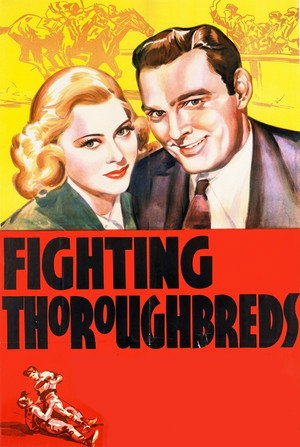
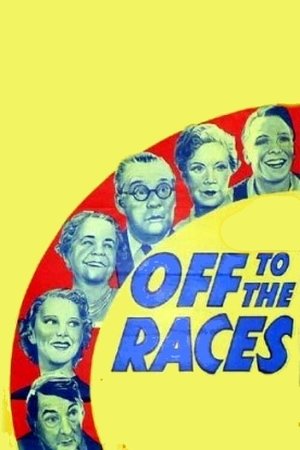
Claire Barrington falls heir to a famous racing stable with many debts, whose payment is dependent upon the sweepstakes in which the horse Wildfire is entered.
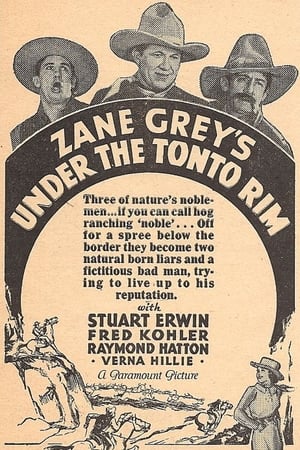
Tonto Daley (Stuart Erwin) is a failed ranch hand who accidentally causes a wagon accident, leading him to abandon his job. He becomes a hog farmer, but is framed for cattle rustling by a former foreman, prompting him to fight back and clear his name with the help of Nina Weston (Verna Hillie).
A reverend attempts to raise the money necessary to open up a boys' club and clashes with a wealthy grocer in the process.
Heiress Bonnie Parker, tired of newspaper stories about her society high-life, gives a false story to energetic reporter Bill Raymond, who has frequently pestered her for a scoop. When Bill is dismissed for the phony item, Bonnie realizes that she carried the prank too far.....
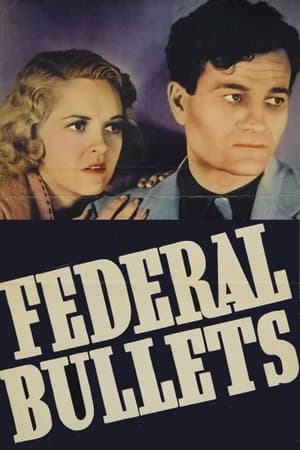
Federal Bullets is a leisurely paced Monogram crime melodrama with not a few clever plot twists. The FBI, represented by Milburn Stone and William Harrigan, investigates a seemingly respectable charitable organization. In fact, the enterprise is a front for a crime ring, headed by Ma Barker clone Zeffie Tilbury (Trivia note: Ms. Tilbury was totally blind, and had to learn her "blocking" by rote).