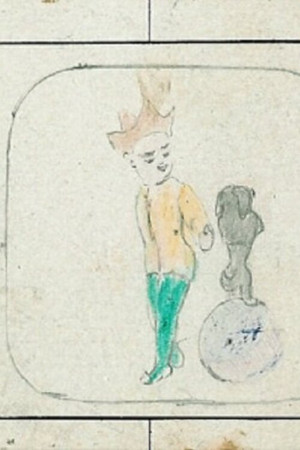
‘Departure of Love’ was inspired by the silent film comedy of Buster Keaton and the 1920s.
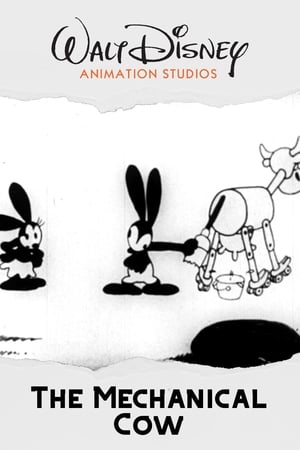
Oswald wakes up grumpy and takes it out on his alarm clock, afterward trying his best to wake up the mechanical cow sleeping in the bed beside him, with limited success. They finally do get going, sailing around the barnyard offering milk to denizens of the farm. When kidnappers arrive and takes Oswald's girlfriend away, he and the cow set off to rescue her.
Short film of 300 individually painted images. A lost film.
An animated comedy short from the 1920s. Preserved by the Academy Film Archive in 2008.
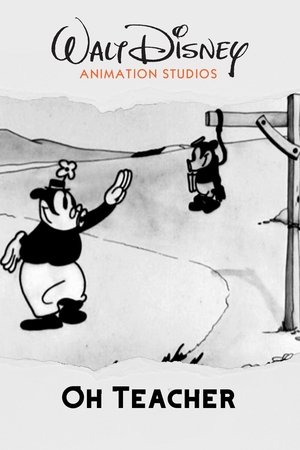
Oswald's sweetheart is stolen by a schoolyard bully, so he has to fight him during recess to win her back.
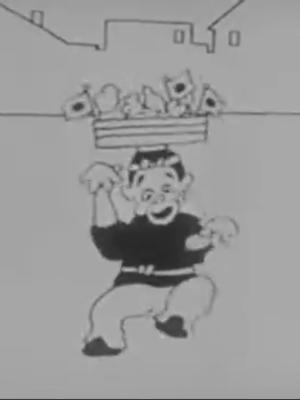
Comical interaction between a little girl who comes to buy sweets and a candy man.
This film is about the risk of tuberculosis and the importance of disease prevention; produced by the Home Ministry Public Health Division Health and Medical Bureau.
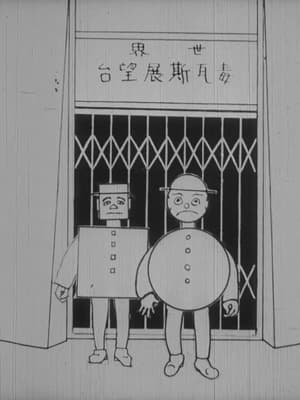
Maru-san and Kaku-san have grown complacent in the long peace. They go to view a military parade, but it turns into a comparison of the military strength of countries around the world. In the end, they listen in on an arms control conference to find out what each country is really thinking.
Chestnuts, bees, and a mortar join forces to punish a villainous monkey.
Kintaro, gentle and strong, is popular in the forest. He eventually becomes a great samurai with the name Sakata no Kintoki.
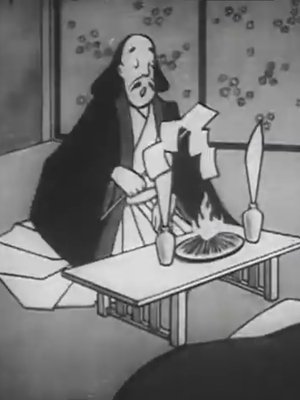
A picture-story showman is reading a story about a troublemaking tanuki on the street to children. A starving tanuki with nowhere to go plots to steal offerings from Mangokuzan Temple, which has a lot of offerings. The raccoon sneaks into the temple. While he is eating bean-paste buns, a child bonze comes. So, the tanuki turns himself into a statue of Buddha. A shortened and revised version of The "Enchanted Kettle". According to The History of Japanese Animation written by Katsunori Yamaguchi and Yasushi Watanabe, the picture-story scene at the beginning of the film and the scene of the raccoon dog dancing at the end were added in this version.
The lazy Tompei is still asleep past 10 o'clock and even at 11 o'clock. He finally wakes up at 12 o'clock at the deafening sound of the angry clock. Hungry, Tompei walks to Sarukichi's house and grabs food Sarukichi has harvested. The next day, while Sarukichi is working in the hills, Tompei beats Sarukichi's two children who are staying at home and tries to steal things from Sarukichi's house. Sarukichi, who is alerted of the situation via telephone from his children races home, is infuriated at the cruel Tompei and punches him so hard he falls down.
A touching story about human loneliness and a fight with self-esteem that leads to isolation.
Referred as the actual first Mickey Mouse short. Inspired by Lindbergh's flight from New York to Paris, Mickey builds a plane to take Minnie for a trip.
Krazy Kat is babysitting. The obnoxious whippersnapper can not be consoled and expresses his wish for Santa Claus. Krazy Kat decides to go to the North Pole to find him.
A man who no longer can afford his rent is forced to sell his beloved furniture. The furniture can not bear to be parted from their owner and decides to return home. Often confused with Bosetti's film Le Garde meuble automatique (1912).
Stop-motion animation of putty modeling itself into faces.
An "Out of the Inkwell" cartoon featuring Ko-Ko the Clown.
Koko likes to join Max and his friends for Thanksgiving dinner. He can, under the condition of screening his films.
This Mutt and Jeff cartoon was directed by Charley Bowers. It shows his typical care, both in the drawings of the characters and a surprisingly elaborate back ground. Mutt and Jeff are out looking for fire wood during a cold snap; the Devil appears and takes them to the Hot Place, where they are put in charge of making sure that the last fire there doesn't go out. Their job is complicated by the imps and demons, as well as the fire insisting on wandering around.