The story of a Czech national revivalist, writer and author of a famous cookbook... The story takes us to Litomyšl in 1836. The local bourgeois society, which does not fail to interject a German word into their conversation as proof of good upbringing and better origin, slanders Mrs. Rettigová. "Rettička" not only fights for standard Czech, is a patriot, but also attracts young girls and students to her and lends them Czech books. She simply disrupts the good old order. Another sensation in the town is caused by the announcement of a planned wedding. Maiden Lenka will marry old doctor Plavec. When Mrs. Rettigová finds out about it, she invites both fiancés to her, each separately. The hunter Valenta, Lenka's former admirer, who had been abroad with his master for a long time, asked her to help him get Lenka back...
Australian good girl Sandy and greaser Danny fell in love over the summer. But when they unexpectedly discover they're now in the same high school, will they be able to rekindle their romance despite their eccentric friends?
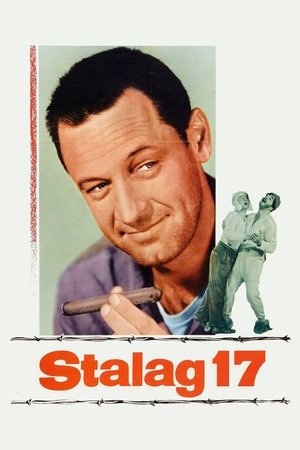
After two American prisoners are killed by guards in the act of escaping from a German POW camp in World War II, barracks black marketeer J.J. Sefton is suspected of being an informer.
Hate Mail is an epistolary play something like Love Letters, with two actors reading letters and other correspondence, but it's a little wilder and more hysterically funny. It tells the story of Preston, a spoiled rich kid who meets his match in Dahlia, an angst-filled artist. Their worlds collide when Preston sends a complaint letter that gets Dahlia fired from her job, and then there's no turning back. The play stays with their increasingly crazed correspondence as they move from hate to love, and then right back again.
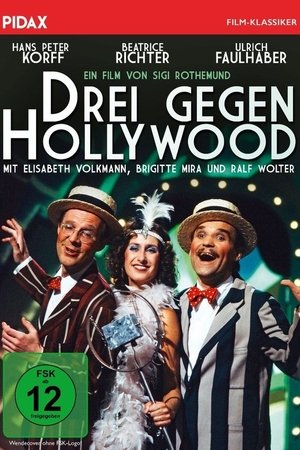
Three sisters take their small inheritance and move from Kansas to California in search of rich husbands. To start with, Pamela poses as a socialite and Moira and Elizabeth pretend to be her staff.
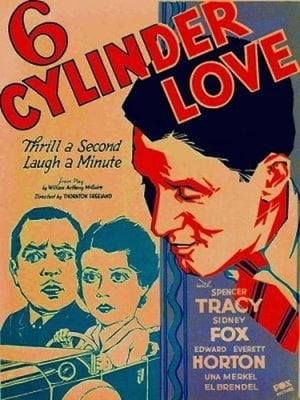
A wealthy family is thrown into turmoil when the daughter falls for the family chauffeur and the son begins to keep company with a chorus girl.
Půjčka za oplátku
Arnold Beckoff is looking for love and acceptance, but as a gay man working as a female impersonator in 1970s New York City, neither come easily. After a series of heartaches, Arnold believes he has found the love of his life in Alan, and the couple make plans to adopt. But when tragedy strikes, Arnold's life is shaken to its very core, leading to a confrontation with his overbearing mother, who has never approved of her son's lifestyle.
V zahradě jsou s láskou svou don Perlimplin s Belisou
A boy, obsessed with comparing himself with those less fortunate, experiences a different life at the home of his aunt and uncle in 1959 Sweden.
Trik aneb Jak dámu okouzlit aneb Jak manžela oblafnout
When Hamlet discovers his father’s deceased body, he finds himself pulled into a power struggle as his scheming uncle attempts to secure a monopoly on the Scandinavian rubber duck industry. Will Hamlet avenge his father? Will he become the king of rubber ducks? Does any of it really matter?
S čím kdo zachází
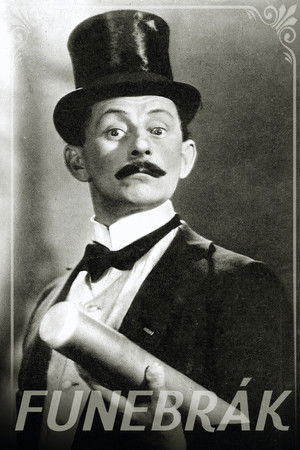
Cashier Ferdyš Pištora goes to rob the villa of banker Rosenštok. At that moment, a fire breaks out and Ferdyš saves the banker's two young children. He is hailed as a hero by everyone and Rosenštok makes him a messenger in the bank. This changes Ferdyš's entire life. He becomes a moralist and bullies the whole neighborhood with his sermons. He falls in love with Terezka, a member of the Salvation Army. Ferdyš's former lover Irma is jealous of Terezka. The two women argue and Terezka, in anger, claims that she killed her child and buried it in the cellar. Ferdyš believes this fabrication. In order to save her, he wants to give her the money that he was supposed to hand over to the bank. Out of jealousy, Irma tells the police that Ferdyš wanted to rob the banker's villa, and Ferdyš is arrested. However, Rosenštok intercedes for him and Ferdyš is acquitted. Terezka confesses that she made up the child's murder and celebrates her wedding with Ferdyš.
A little-known adaptation of Jaroslav Vrchlický's play is returning to the television screen, full of humorous plots, telling the story of the courage of two women in love who, because of their love, infiltrated Karlštejn Castle, where women are forbidden to enter by order of the monarch. It was created with a number of star actors eight years before the now legendary film adaptation by Zdeněk Podskalský. When it premiered in 1965, it aroused a stormy, positive and negative response. Quite naturally, because Filip's concept of this classic play, albeit in the authentic setting of Karlštejn Castle, was completely new and unconventional at the time. This adaptation of the classic original uses the melodies of popular Czech and foreign hits with lyrics by P. Kopta. For example, the ruler's arrival at the castle was announced by the melody of the popular song Jó, třešné zrály. However, professional singers mostly sing for the actors here.
Desperate to pay for his little sister's surgery, a young man takes part in a risky business venture - only to encounter some serious setbacks.
Tar Steam Princess Armada travels along Lake Saimaa to St. Petersburg and back during the years of Russian rule over Finland. The ship's crew gets tired of their sophisticated coffee maker and replaces her with Roma girl Veera, who has escaped from an arranged marriage. On the way back, mysterious passengers appear on the ship.
Two escaped cons' only prayer to escape is to pass themselves off as priests and pass by the police blockade at the border into the safety of Canada.
Brouk v hlavě
Hadrián z Římsů