After marrying a successful Parisian writer known commonly as Willy, Sidonie-Gabrielle Colette is transplanted from her childhood home in rural France to the intellectual and artistic splendor of Paris. Soon after, Willy convinces Colette to ghostwrite for him. She pens a semi-autobiographical novel about a witty and brazen country girl named Claudine, sparking a bestseller and a cultural sensation. After its success, Colette and Willy become the talk of Paris and their adventures inspire additional Claudine novels.
This reconstruction refers to a meeting that allegedly took place on 25 November 1804 at Fontainebleau between Pope Pius VII and Napoleon to discuss the coronation.
Fourty years ago, in May 1981, with François Mitterrand's election, some people were letting themselves dream about a better life while others were predicting the coming of soviet tanks upon the Champs-Élysées. If we gladly remember the turning point of austerity in 83, there were also the wage rises, the fifth week of paid leave, the abolition of death penalty, the decriminalisation of homosexuality, or the advent of independent radio stations. Rare archives and accounts by those who were at the heart of this story give an overview of it and shed light on lesser-known aspects.
Forty years after the death of Pierre Mendès France, Yves Jeuland and Alix Maurin reveal another side to this figure: the story of his life, told through the pages of his private notebooks. PMF led a romantic and extraordinary life as a French politician and Jew, both loved and hated.
After the defeat of 1940, and faced with the unexpected collapse of French power, all eyes turned to a horizon of both hope and uncertainty: the colonies. France had suddenly become an empire without a metropolis, reduced to two-thirds of its former size. Pétain saw the colonies as a "consoling myth" after the defeat, while de Gaulle considered them essential strategic locations for the Resistance. The two clashed in a propaganda war.
Vincent Miles, a gunsmith and shooting instructor at the National Police, is an expert in combat shooting who stubbornly refuses to join a field brigade, a choice which his colleagues do not understand. When he meets Milo Cardena, a mysterious and skilled cop, his life changes in such way that he cannot ignore his true nature anymore.
May 10th, 1981. François Mitterrand is elected President of the Republic. The “soviet tanks” supposedly coming upon the Champs-Élysées dressed in red, feared by some, did not march. Serge Moati takes a personal look at this episode, focusing on the relationship the president had with television, that he witnessed and played a role in.
In 1415, in the midst of the Hundred Years' War, the young King Henry V of England embarks on the conquest of France.
After a brief and unhappy marriage, Gladys Dale finds work as the companion to Diana Dorset, the daughter of a society matron. Mrs. Dorset also has a spendthrift son, Robert, who makes a number of unwelcome advances to Gladys. However, with the arrival of Edwin Fairfax, Mrs. Dorset's younger brother, Gladys finds a soul mate. But then Fairfax has to report for duty in France (being as World War I is going on) and he leaves.
On the occasion of the fourty years anniversary of François Mitterand's election, a look back to the relationship between the President and artists, from admiration to manipulation.
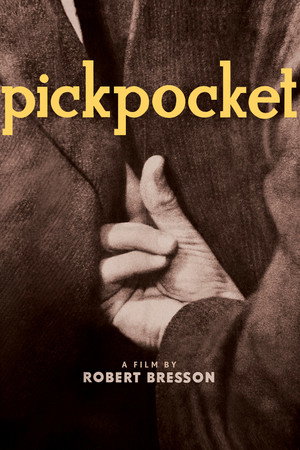
Michel takes up pickpocketing on a lark and is arrested soon after. His mother dies shortly after his release, and despite the objections of his only friend, Jacques, and his mother's neighbor Jeanne, Michel teams up with a couple of petty thieves in order to improve his craft. With a police inspector keeping an eye on him, Michel also tries to get a straight job, but the temptation to steal is hard to resist.
A group of French soldiers, including the patrician Captain de Boeldieu and the working-class Lieutenant Maréchal, grapple with their own class differences after being captured and held in a World War I German prison camp. When the men are transferred to a high-security fortress, they must concoct a plan to escape beneath the watchful eye of aristocratic German officer von Rauffenstein, who has formed an unexpected bond with de Boeldieu.
"Race d’Ep!" (which literally translates to "Breed of Faggots") was made by the “father of queer theory,” Guy Hocquenghem, in collaboration with radical queer filmmaker and provocateur Lionel Soukaz. The film traces the history of modern homosexuality through the twentieth century, from early sexology and the nudes of Baron von Gloeden to gay liberation and cruising on the streets of Paris. Influenced by the groundbreaking work of Michel Foucault on the history of sexuality and reflecting the revolutionary queer activism of its day, "Race d’Ep!" is a shockingly frank, sex-filled experimental documentary about gay culture emerging from the shadows.
Polish immigrant Karol Karol finds himself out of a marriage, a job and a country when his French wife, Dominique, divorces him after six months due to his impotence. Forced to leave France after losing the business they jointly owned, Karol enlists fellow Polish expatriate Mikołaj to smuggle him back to their homeland.
A group of people are standing along the platform of a railway station in La Ciotat, waiting for a train. One is seen coming, at some distance, and eventually stops at the platform. Doors of the railway-cars open and attendants help passengers off and on. Popular legend has it that, when this film was shown, the first-night audience fled the café in terror, fearing being run over by the "approaching" train. This legend has since been identified as promotional embellishment, though there is evidence to suggest that people were astounded at the capabilities of the Lumières' cinématographe.
The wife of a famous composer survives a car accident that kills her husband and daughter. Now alone, she shakes off her old identity and explores her newfound freedom but finds that she is unbreakably bound to other humans, including her husband’s mistress, whose existence she never suspected.
A commanding officer defends three scapegoats on trial for a failed offensive that occurred within the French Army in 1916.
In 1671, with war brewing with Holland, a penniless prince invites Louis XIV to three days of festivities at a chateau in Chantilly. The prince wants a commission as a general, so the extravagances are to impress the king. In charge of all is the steward, Vatel, a man of honor, talent, and low birth. The prince is craven in his longing for stature: no task is too menial or dishonorable for him to give Vatel. While Vatel tries to sustain dignity, he finds himself attracted to Anne de Montausier, the king's newest mistress. In Vatel, she finds someone who's authentic, living out his principles within the casual cruelties of court politics. Can the two of them escape unscathed?
The last vestiges of a family that has gone from cherry season to sorrow... Madame Ranevskaya is a spoiled, aging aristocrat who, upon returning from a trip to Paris, must face the loss of her magnificent Cherry Orchard estate after defaulting on her mortgage. In denial, she continues to live in the past, deluding herself and her family, while the magnificent cherry trees are chopped down by the new owner Lopakhin, her former serf, who has his own agenda.
After many years of confrontation, the treasures of Spain and France are empty. In 1721, the regent of France draws up an ambitious plan to inaugurate an era of peace and prosperity that will heal the economies of both nations: his intention is to build a solid network of marriage alliances that will involve four children of very different ages who know nothing of betrayals and power games…